


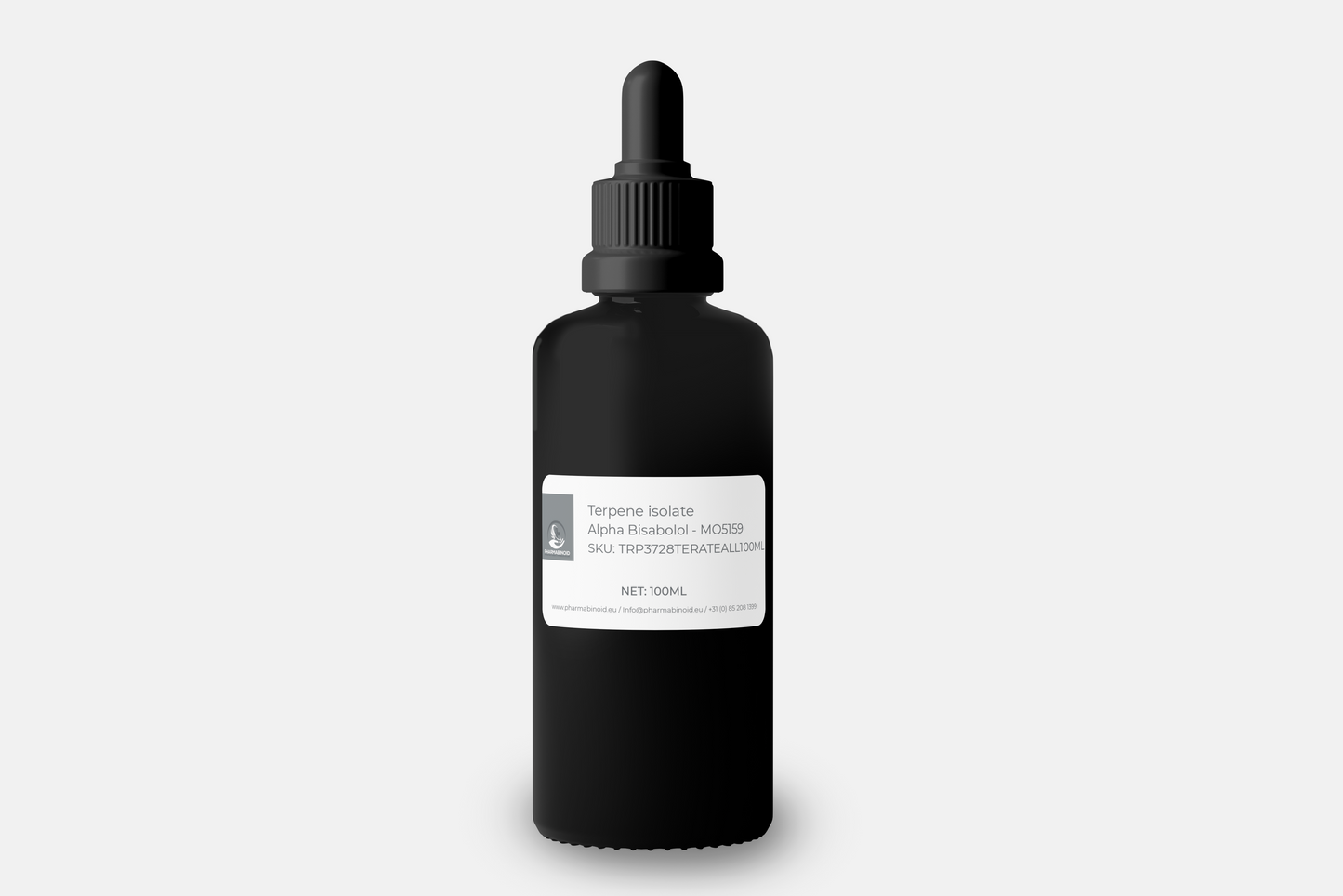
Terpene Isolate for controlled formulation work
Terpene Isolate is intended for professional buyers who want to evaluate a specific terpene option as an individual input in a formulation or product-development programme. Compared with a multi-component profile, an isolate can help a team assess one defined material at a time. Confirm the exact isolate and pack size shown in the product selector, and use the current product documentation—not the product name alone—to establish identity and specification.
This page supports B2B sourcing decisions for manufacturers, brands and formulators. It does not provide a universal concentration, recipe or finished-product claim. Formulation suitability depends on the intended product, other ingredients, process, packaging, applicable controls and destination market.
Choosing an isolate and pack size
Start by defining the purpose of the ingredient in the development brief: for example, evaluating an aroma direction, comparing a profile component or adjusting a prototype. Then select the specific option available in the product selector and confirm its supplied identity and documentation. Choose an evaluation quantity suited to your controlled trial; check the selector for current pack sizes rather than assuming a fixed assortment.
- Identity: Match the selected isolate to the current product specification and batch documentation.
- Objective: State what the trial is designed to assess and how the result will be measured.
- Compatibility: Test the material with the actual base, process equipment and packaging intended for the product.
- Scale: Estimate commercial requirements only after the formulation and acceptance criteria have been reviewed.
Isolates compared with terpene profiles
A single isolate and a broader terpene profile are different sourcing choices. An isolate supports evaluation of one selected component, while a profile can present a multi-component sensory direction. The appropriate format depends on the development objective, the supplier’s current specification and the team’s ability to test and control the final formulation. To compare alternatives, review Botanical Terpenes and browse the wider terpene collection.
Trial design and formulation records
Use your organization’s validated formulation and safety procedures. Conduct appropriately controlled trials, changing one parameter at a time when possible. Keep a record of the isolate identity, batch reference, amount used, base material, preparation sequence, equipment, packaging and evaluation conditions. Avoid applying a generic dose recommendation: the suitable level, if any, must be established within the specific product-development process and applicable requirements.
Assess relevant characteristics in the intended format. Teams may review aroma, flavour, appearance, mixing or dispersion, viscosity, filling behaviour and stability. Results from one base or process do not automatically transfer to another. Retain a sample of the approved trial and document the review criteria so subsequent batches can be assessed consistently.
Specifications and quality documentation
Before procurement approval, request the current specification and available documents for the selected product and batch. Confirm that the material identity, batch or lot reference, storage information and any analytical data meet your internal requirements. If a certificate of analysis is supplied, check its scope, methods, sample or batch identification and date; it describes the testing represented by that document and does not certify a finished formulation by itself.
Align quality, regulatory and purchasing teams on incoming checks, document retention and change control. For practical background, see our third-party lab testing guidance. For general chemical identity information, consult the PubChem database, while relying on product-specific records for purchase and batch approval.
Storage, handling and regulatory review
Follow the current product-specific storage directions, keep containers identified and closed as instructed, and use the workplace controls established by your organization. Before using an isolate in a commercial product, verify the ingredient, product-category, labelling, claims and import requirements in each intended market. These obligations depend on the final formulation and destination; a raw-material description does not determine finished-product compliance.
Prepare a clear wholesale enquiry
To help purchasing move efficiently, provide the selected isolate, evaluation or production quantity, intended format, destination market, required documentation and expected timeline. If you are comparing a single terpene with a multi-component option, include the development objective and compatibility questions. Pharmabinoid can then discuss the relevant supply route and quotation through Request a Quote.


Free Sample
Discover the benefits of our products firsthand by visiting our website to obtain your exclusive TryPharma code. When you place an order using this special code, not only will you secure your desired products, but we will also include a complimentary sample with each purchase. This opportunity allows you to experience the quality of our offerings before you commit to the main shipment. Our goal is to ensure that you are completely satisfied with your selection, and this process provides a risk-free way to explore our extensive range of products. Contact us today to get started and take the first step towards a rewarding experience with our premium offerings.

Shipping Insurance
When you purchase bulk CBD isolates, oils, and other products from us, your shipment is fully insured by us at no additional cost to you. We utilize reputable shipping companies like FedEx and UPS for transportation, while managing the insurance coverage ourselves to secure every shipment from our warehouse to your doorstep. At TryPharma, we are committed to fostering business growth by offering a risk-free wholesale service. In the unlikely event of a shipping issue, we guarantee a refund within five business days from the date the incident is confirmed. Our comprehensive approach effectively eliminates 99.9% of all potential risks associated with bulk CBD shipping, ensuring your complete peace of mind.
30 Day Return
We invite you to test the complimentary sample included with your order before opening the main shipment. If the quality does not meet your expectations, you can benefit from our 30-day return policy. This policy permits you to return the product within 30 days for a full refund, guaranteeing your complete satisfaction. Contact us today to explore our exceptional range of products and experience our dedicated customer service.
