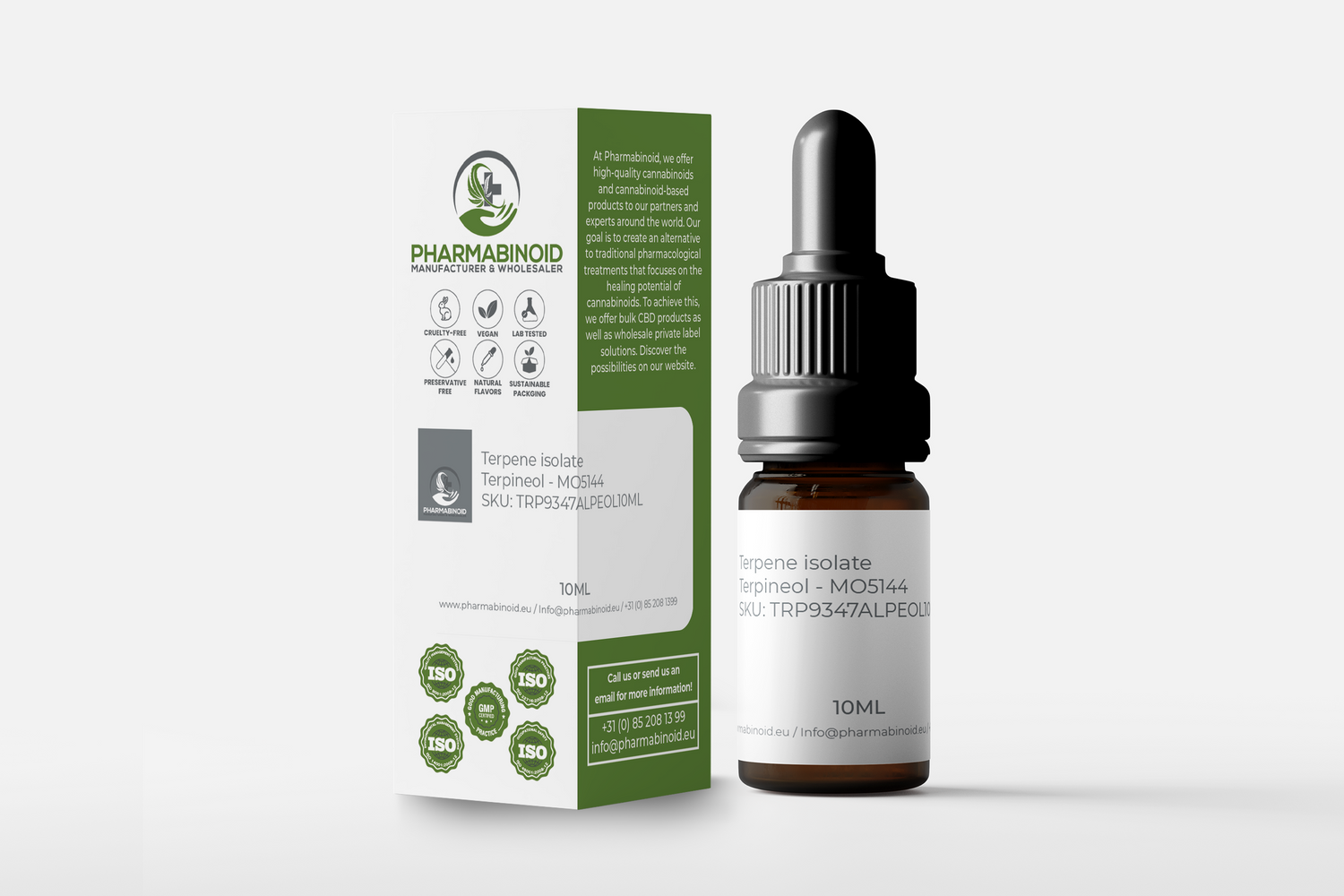
Terpineol Studies: Research and Evidence Overview
Terpineol studies investigate a family of related monoterpenoid alcohols found in essential oils and other botanical materials. The name may refer to different isomers, including α-terpineol, so research findings should be interpreted only after confirming which substance was tested, its purity, concentration and experimental context. This overview summarizes how to read the evidence without treating early laboratory observations as proven human outcomes.
What is terpineol?
Terpineol is commonly discussed as a terpene-derived alcohol, and α-terpineol is one well-studied isomer. For terminology, see What Is Terpineol?. Distinguishing isomers matters: a result for α-terpineol cannot automatically be attributed to every terpineol isomer, a botanical oil containing multiple constituents, or a finished formulation.
Current scientific understanding of terpineol studies
The literature includes chemical characterization, in-vitro experiments, animal models and reviews of biological activity. Such studies can help generate hypotheses about mechanisms and identify questions for future work. They do not, by themselves, demonstrate that terpineol produces a clinically meaningful effect in people or that an ingredient will perform the same way in a different product matrix.
For example, recent preclinical research has examined α-terpineol in cancer-cell and animal models. These are experimental findings, not evidence that terpineol is a cancer treatment or that a consumer product can provide a health outcome. Any interpretation must stay within the model studied and should not be converted into medical or therapeutic claims.
Mechanisms and experimental models
Studies may examine cell viability, signaling pathways, oxidative processes, microbial activity or other endpoints. In-vitro work exposes cells or molecular systems to controlled concentrations, often unlike the exposure achieved through a commercial product. Animal research adds biological complexity but remains distinct from human clinical evidence. Differences in dose, metabolism, route and formulation limit direct extrapolation.
To evaluate a proposed mechanism, look for the tested isomer, analytical identity, concentration range, controls, exposure duration, measured endpoints and independent replication. A pathway association or molecular docking result is not proof of a causal mechanism in people.
Key research areas and evidence gaps
- Botanical chemistry: Characterizing terpineol isomers and their presence in essential-oil mixtures, while accounting for source and batch variation.
- Preclinical biological activity: Testing defined compounds in cellular or animal models to generate hypotheses, with careful attention to concentration and model relevance.
- Formulation and stability: Studying volatility, oxidation, matrix compatibility, packaging and storage effects in the actual formulation.
- Human evidence: Determining whether controlled studies establish exposure, tolerability and reproducible outcomes for specific formulations; this evidence remains limited.
- Analytical methods: Improving identification and quantification so that studies and product specifications can be compared reliably.
Research limitations
Common limitations include small or non-human studies, variable extract composition, inconsistent nomenclature, different analytical methods, and incomplete reporting of concentration or exposure. A botanical extract may contain multiple compounds, making it difficult to attribute an observation to terpineol alone. Publication of a positive preclinical result does not establish effectiveness, safety or regulatory suitability for a finished product.
One recent α-terpineol investigation reported findings in melanoma models. Its experimental design is relevant to laboratory research, but it does not establish a human treatment effect. The correct conclusion is that further independent research would be required before making any human-health inference.
Industrial and formulation relevance
For manufacturers and formulators, terpineol research can inform ingredient identity, sensory profile, compatibility testing and analytical specification. It does not replace product-specific validation. Projects should distinguish pure compounds from complex botanical materials and document source, lot, composition, processing and storage. The broader terpene collection can provide context for sourcing related formulation ingredients, but each product must be evaluated on its own specification.
Testing, quality and compliance considerations
Confirm the analytical method is appropriate for the material and that the report identifies the relevant isomer, sample and batch. Review purity, potential contaminants, stability and any relevant safety documentation. Results apply to the tested sample and method, not automatically to a later lot or the finished product. Before commercial use, independently assess the requirements for the product category and destination market; research publication is not regulatory authorization.
Related research and authoritative sources
Read the primary report on α-terpineol in melanoma experimental models alongside the broader review of cannabis terpene chemistry and profile diversity. These sources address different questions and should not be treated as equivalent evidence. For the definition and formulation context, return to the terpineol glossary page.
FAQ about terpineol research
Are terpineol research results confirmed in humans?
Many findings are preclinical. They do not establish a human outcome, and evidence must be assessed for the exact isomer, formulation, route and measured endpoint.
Is α-terpineol the same as every terpineol?
No. Terpineol is a name used for related isomers. A result for one identified isomer should not be generalized without evidence to other isomers or mixed botanical products.
Can laboratory findings support product claims?
Not on their own. A product claim requires appropriate evidence for the specific product and must meet applicable market requirements. Cell or animal findings should be described as preclinical research.
Conclusion
Terpineol studies offer useful directions for chemical, preclinical and formulation research, but the strength of evidence varies by isomer and study design. For now, the most reliable practice is careful compound identification, transparent methods, batch-level analytical controls and restrained interpretation. Further well-designed and replicated work—including human research where appropriate—is needed to clarify which findings translate beyond experimental models.
Free Sample
Discover the benefits of our products firsthand by visiting our website to obtain your exclusive TryPharma code. When you place an order using this special code, not only will you secure your desired products, but we will also include a complimentary sample with each purchase. This opportunity allows you to experience the quality of our offerings before you commit to the main shipment. Our goal is to ensure that you are completely satisfied with your selection, and this process provides a risk-free way to explore our extensive range of products. Contact us today to get started and take the first step towards a rewarding experience with our premium offerings.

Shipping Insurance
When you purchase bulk CBD isolates, oils, and other products from us, your shipment is fully insured by us at no additional cost to you. We utilize reputable shipping companies like FedEx and UPS for transportation, while managing the insurance coverage ourselves to secure every shipment from our warehouse to your doorstep. At TryPharma, we are committed to fostering business growth by offering a risk-free wholesale service. In the unlikely event of a shipping issue, we guarantee a refund within five business days from the date the incident is confirmed. Our comprehensive approach effectively eliminates 99.9% of all potential risks associated with bulk CBD shipping, ensuring your complete peace of mind.

30 Day Return
We invite you to test the complimentary sample included with your order before opening the main shipment. If the quality does not meet your expectations, you can benefit from our 30-day return policy. This policy permits you to return the product within 30 days for a full refund, guaranteeing your complete satisfaction. Contact us today to explore our exceptional range of products and experience our dedicated customer service.
Cannabinoid Isolates
-
CBD Isolate - Cannabidiol
Regular price From €24.99 to €369.99Regular priceUnit price / per€0.00Sale price €24.99 -
CBG - Cannabigerol
Regular price From €49.99 to €799.99Regular priceUnit price / per€0.00Sale price €49.99 -
CBN - Cannabinol
Regular price From €79.99 to €1,299.99Regular priceUnit price / per€0.00Sale price €79.99 -
CBC - Cannabichromene
Regular price From €99.99 to €1,999.99Regular priceUnit price / per€0.00Sale price €99.99 -
CBDV - Cannabidivarin
Regular price From €13.99 to €3,149.99Regular priceUnit price / per€0.00Sale price €13.99 -
Cannabicitran Isolate - CBT
Regular price From €49.99 to €4,349.99Regular priceUnit price / per€0.00Sale price €49.99 -
CBDA Isolate - Cannabidiolic Acid
Regular price From €49.99 to €1,499.99Regular priceUnit price / per€0.00Sale price €49.99 -
Cannabigerolic Acid - CBGA
Regular price From €59.99 to €1,749.99Regular priceUnit price / per€0.00Sale price €59.99
Collections
-
PPB - Pharmabinoid's Psychoactive Blends
PPB Psychoactive Blends for Professional Buyers Explore Pharmabinoid's PPB collection of psychoactive...
-
CBD Oil Wholesale Europe
CBD Oil Wholesale Europe for Brands and ManufacturersSource CBD oil wholesale in...
-

CBD Vape Liquids
CBD vape liquids and vape products for B2B buyersThis collection helps brands,...
-
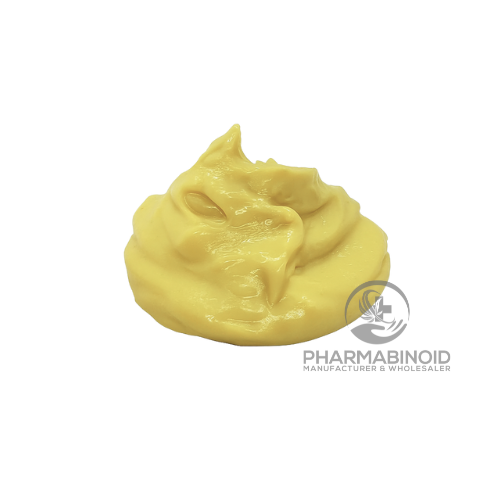
CBD Cosmetics
CBD Cosmetics Wholesale Buyer Guide CBD Cosmetics is the canonical commercial collection...
-
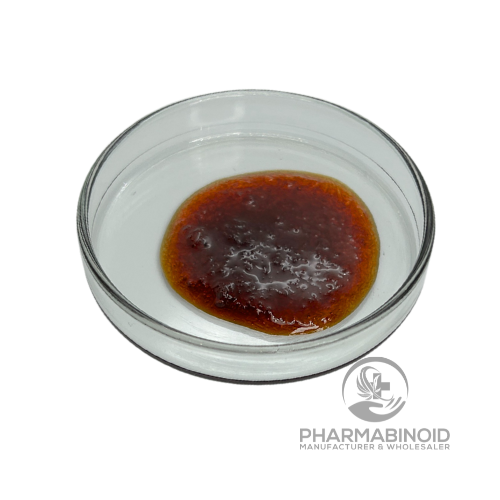
CBD Distillate Wholesale
CBD Distillate Wholesale for European BuyersCompare CBD distillates for professional formulation, private-label...
Blog posts
View all-
Terpene Effects: What Research Can—and Cannot—T...
A research-aware guide to terpene aroma, proposed effects and terpene–cannabinoid interactions, separating established observations from limited or emerging evidence.
Terpene Effects: What Research Can—and Cannot—T...
A research-aware guide to terpene aroma, proposed effects and terpene–cannabinoid interactions, separating established observations from limited or emerging evidence.
-
D8-THCV Dosage: Evidence Limits and Safety Context
A research-focused guide to why no established D8-THCV dosage can be recommended, what current studies do and do not show, and how to interpret compound identity and evidence limits.
D8-THCV Dosage: Evidence Limits and Safety Context
A research-focused guide to why no established D8-THCV dosage can be recommended, what current studies do and do not show, and how to interpret compound identity and evidence limits.
-
Risks of D8-THCP: Evidence Limits and Safety Co...
A cautious review of what is and is not known about D8-THCP risks, why evidence from related cannabinoids cannot be substituted, and how analytical identity and batch quality matter.
Risks of D8-THCP: Evidence Limits and Safety Co...
A cautious review of what is and is not known about D8-THCP risks, why evidence from related cannabinoids cannot be substituted, and how analytical identity and batch quality matter.