Nerolidol Research and Studies
Nerolidol studies examine a naturally occurring sesquiterpene alcohol found in a range of plants and discussed in research on aroma chemistry, biological activity, and formulation. The published literature includes laboratory and preclinical work, alongside reviews that organize proposed mechanisms and research areas. These findings help define questions for further study; they do not establish clinical benefits or prove effects in people.
What is nerolidol?
Nerolidol, also called peruviol, is an acyclic sesquiterpene alcohol. It occurs in different plants and has a floral, woody aroma. The molecule has geometric isomers, commonly described as cis and trans forms, and research results may depend on which form, purity, preparation, and experimental system were used. For a concise sourcing and formulation overview, see What Is Nerolidol?.
What nerolidol research currently covers
A frequently cited review in Molecules catalogues nerolidolās chemical and biological research, including studies of antimicrobial, antioxidant, anti-inflammatory, and other proposed activities. These topic labels describe what researchers have investigated; they should not be read as evidence that nerolidol prevents, treats, or cures a health condition. Much of the literature is preclinical, and outcomes from cells or animals cannot be directly translated into human outcomes.
The review also discusses nerolidolās use in fragrance and cosmetic contexts and its investigation as a formulation component. Those applications raise different questions from pharmacology: product category, composition, exposure route, concentration, stability, and applicable safety requirements all matter. A substanceās presence in a product category does not mean every preparation or use is appropriate.
Pharmacology and proposed mechanisms
Researchers have explored several biological pathways in experimental models, including oxidative processes, inflammatory signaling, and microbial growth. Such investigations can identify hypotheses and help prioritize future experiments. They do not, by themselves, demonstrate that a mechanism operates at relevant exposure levels in humans. Results should be interpreted in light of study design, dose and route used in the model, controls, replication, and whether the tested material was chemically characterized.
Nerolidol is also discussed as a potential aid to the movement of other compounds across biological barriers in some experimental settings. This is a research question rather than a general formulation instruction or a proven human effect. Any proposed carrier or penetration-enhancing function requires product-specific safety assessment and evidence for the intended route of exposure.
Key research areas
- Antimicrobial activity: laboratory studies have tested nerolidol against selected microorganisms. In-vitro findings do not establish effectiveness in a finished product or in people.
- Oxidative and inflammatory pathways: preclinical experiments have examined biochemical markers and model-specific responses. These endpoints are not equivalent to a demonstrated health benefit.
- Delivery and formulation: researchers have examined its physicochemical and formulation-related properties. Compatibility, stability, and safety must be verified for each finished formulation.
- Plant and aroma science: work also considers nerolidolās occurrence, isomer profile, role in plant volatile chemistry, and sensory characteristics.
Research limitations and evidence gaps
The evidence base is not a single, uniform body of clinical data. Studies may use different nerolidol isomers, sources, concentrations, vehicles, exposure routes, and model systems. Reviews are useful maps of a field, but conclusions inherit the strengths and weaknesses of the studies they summarize. A reported laboratory effect should therefore be described with its model and context rather than presented as a consumer-facing outcome.
Human evidence is limited compared with the volume of laboratory and animal research. The literature does not justify claims that nerolidol treats disease, produces a reliable effect, or is safe at any arbitrary concentration or route. More work would be needed to establish exposure-response relationships, metabolism, tolerability, interactions, and the relevance of preclinical findings to specific human uses.
Industrial and formulation relevance
For manufacturers and analytical teams, nerolidol research can inform questions about material identity, isomer composition, sensory contribution, compatibility, and stability. A useful development plan identifies the intended product category and route of exposure, defines a target specification, evaluates the material in the complete formula, and documents stability under realistic packaging and storage conditions. Sensory assessment alone cannot substitute for analytical or safety review.
When evaluating a bulk ingredient, request batch-specific documentation and confirm that the analytical method is suitable for the stated identity and specification. Where relevant, review purity, potential contaminants, storage conditions, and applicable technical and safety documentation. Finished-product compliance depends on the formulation, claims, intended use, and destination marketānot simply on the identity of one ingredient.
Testing, quality, and compliance considerations
Research summaries do not replace a current specification, safety data, or a product-specific regulatory assessment. Buyers should check that documentation corresponds to the supplied batch and that analytical results are interpretable for the intended application. Confirm identity and composition with appropriate methods, assess stability and compatibility in the finished matrix, and obtain qualified regulatory advice for the relevant jurisdiction and product category.
Scientific evidence and regulatory status are separate questions. A compoundās appearance in published studies does not authorize a particular food, cosmetic, or other product use. Requirements can differ by jurisdiction and can change; verify current rules before placing a product on the market.
Frequently asked questions about nerolidol studies
Do nerolidol studies prove health benefits in humans?
No. Much of the commonly discussed evidence is laboratory or preclinical research. It can generate hypotheses but does not establish clinical efficacy or a health outcome in people.
Why do nerolidol study results differ?
Studies can use different isomers, material sources, concentrations, vehicles, exposure routes, and biological models. These differences affect what can reasonably be compared or concluded.
What does nerolidol research mean for product developers?
It can help shape testable questions about identity, sensory profile, compatibility, and stability. It does not replace batch verification, finished-formula testing, safety review, or market-specific compliance checks.
Conclusion
Nerolidol studies span plant chemistry, preclinical biology, and formulation research. The literature is useful for understanding research directions and designing careful follow-up work, but it remains important to distinguish experimental observations from demonstrated human outcomes. For manufacturers, the practical next step is disciplined material characterization, product-specific testing, and evidence-led claims.
Selected scientific source: Chan W-K, Tan L T-H, Chan K-G, Lee L-H, Goh B-H. Nerolidol: A Sesquiterpene Alcohol with Multi-Faceted Pharmacological and Biological Activities, Molecules (2016).
Free Sample
Discover the benefits of our products firsthand by visiting our website to obtain your exclusive TryPharma code. When you place an order using this special code, not only will you secure your desired products, but we will also include a complimentary sample with each purchase. This opportunity allows you to experience the quality of our offerings before you commit to the main shipment. Our goal is to ensure that you are completely satisfied with your selection, and this process provides a risk-free way to explore our extensive range of products. Contact us today to get started and take the first step towards a rewarding experience with our premium offerings.

Shipping Insurance
When you purchase bulk CBD isolates, oils, and other products from us, your shipment is fully insured by us at no additional cost to you. We utilize reputable shipping companies like FedEx and UPS for transportation, while managing the insurance coverage ourselves to secure every shipment from our warehouse to your doorstep. At TryPharma, we are committed to fostering business growth by offering a risk-free wholesale service. In the unlikely event of a shipping issue, we guarantee a refund within five business days from the date the incident is confirmed. Our comprehensive approach effectively eliminates 99.9% of all potential risks associated with bulk CBD shipping, ensuring your complete peace of mind.

30 Day Return
We invite you to test the complimentary sample included with your order before opening the main shipment. If the quality does not meet your expectations, you can benefit from our 30-day return policy. This policy permits you to return the product within 30 days for a full refund, guaranteeing your complete satisfaction. Contact us today to explore our exceptional range of products and experience our dedicated customer service.
Cannabinoid Isolates
-
CBD Isolate - Cannabidiol
Regular price From ā¬24.99 to ā¬369.99Regular priceUnit price / perā¬0.00Sale price ā¬24.99 -
CBG - Cannabigerol
Regular price From ā¬49.99 to ā¬799.99Regular priceUnit price / perā¬0.00Sale price ā¬49.99 -
CBN - Cannabinol
Regular price From ā¬79.99 to ā¬1,299.99Regular priceUnit price / perā¬0.00Sale price ā¬79.99 -
CBC - Cannabichromene
Regular price From ā¬99.99 to ā¬1,999.99Regular priceUnit price / perā¬0.00Sale price ā¬99.99 -
CBDV - Cannabidivarin
Regular price From ā¬13.99 to ā¬3,149.99Regular priceUnit price / perā¬0.00Sale price ā¬13.99 -
Cannabicitran Isolate - CBT
Regular price From ā¬49.99 to ā¬4,349.99Regular priceUnit price / perā¬0.00Sale price ā¬49.99 -
CBDA Isolate - Cannabidiolic Acid
Regular price From ā¬49.99 to ā¬1,499.99Regular priceUnit price / perā¬0.00Sale price ā¬49.99 -
Cannabigerolic Acid - CBGA
Regular price From ā¬59.99 to ā¬1,749.99Regular priceUnit price / perā¬0.00Sale price ā¬59.99
Collections
-
PPB - Pharmabinoid's Psychoactive Blends
PPB Psychoactive Blends for Professional Buyers Explore Pharmabinoid's PPB collection of psychoactive...
-
CBD Oil Wholesale Europe
CBD Oil Wholesale Europe for Brands and ManufacturersSource CBD oil wholesale in...
-
CBD Cosmetics
CBD Cosmetics Wholesale Buyer Guide CBD Cosmetics is the canonical commercial collection...
-
CBD Distillate Wholesale
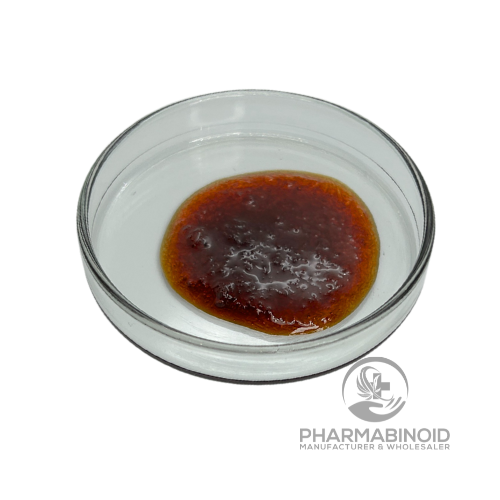
CBD Distillate Wholesale for European BuyersCompare CBD distillates for professional formulation, private-label...
Blog posts
View all-
Risks of Myrcene: What the Safety Evidence Shows
A balanced review of myrcene safety evidence, including animal toxicology, exposure routes, human-data limitations and practical considerations for handling concentrated materials.
Risks of Myrcene: What the Safety Evidence Shows
A balanced review of myrcene safety evidence, including animal toxicology, exposure routes, human-data limitations and practical considerations for handling concentrated materials.
-
CBD Distillate vs. CBD Isolate: Key Differences...
CBD distillate vs. CBD isolate is primarily a question of composition, purity targets, formulation behavior, and compliance strategy. Both are refined, hemp-derived CBD ingredients, but they are not interchangeable. CBD...
CBD Distillate vs. CBD Isolate: Key Differences...
CBD distillate vs. CBD isolate is primarily a question of composition, purity targets, formulation behavior, and compliance strategy. Both are refined, hemp-derived CBD ingredients, but they are not interchangeable. CBD...
-
CBD Distillate vs. CBD Isolate: Differences, Ap...
CBD distillate vs. CBD isolate is an important comparison for brands, formulators, and buyers working with hemp-derived ingredients. Both materials can be rich in cannabidiol, but they differ in composition,...
CBD Distillate vs. CBD Isolate: Differences, Ap...
CBD distillate vs. CBD isolate is an important comparison for brands, formulators, and buyers working with hemp-derived ingredients. Both materials can be rich in cannabidiol, but they differ in composition,...