Limonene Studies
Limonene studies span analytical chemistry, pharmacology, formulation science and limited human research. Limonene is a cyclic monoterpene found in citrus oils and in some cannabis terpene profiles. The research question depends on the material and setting: purified D-limonene, a complex essential oil, an oxidized sample and a cannabinoid formulation are not interchangeable. This evidence overview distinguishes laboratory findings from human data and explains what they can—and cannot—tell researchers, formulators and B2B ingredient buyers.
What limonene research investigates
Scientific studies examine limonene as a volatile plant compound, a fragrance or flavour constituent, a formulation ingredient, and a candidate for further pharmacological investigation. Researchers may study its identity and purity, volatility, oxidation, metabolism, tissue distribution, biological activity or interaction with other compounds. Results can vary with stereochemistry, source, purity, concentration, route of administration, carrier and experimental model. A whole citrus oil or cannabis extract contains multiple constituents, so an effect observed with that mixture cannot automatically be attributed to limonene alone.
For foundational context, see what limonene is and our overview of cannabis terpenes.
Current scientific understanding of limonene studies
The literature includes in-vitro experiments, animal studies, narrative and systematic reviews, and a smaller set of human investigations. Reviews describe several biological pathways under study, but preclinical signals do not establish a clinical benefit. For example, systematic reviews of laboratory and animal cancer models discuss proposed cell-signalling mechanisms while also noting methodological limitations and risk of bias. These findings are research leads, not evidence that limonene prevents or treats cancer in people.
Human research provides a narrower evidence base. A small, open-label pilot study examined limonene disposition in breast tissue among 43 women with early-stage breast cancer who took limonene before surgery. The investigators reported tissue measurements and biomarker observations; the design did not establish a treatment effect. An earlier phase I study in patients with advanced cancer assessed pharmacokinetics and tolerability at investigational oral exposures. Its results are specific to that clinical protocol and do not establish a general consumer use, safety threshold or therapeutic recommendation.
In cannabis-related research, a controlled study with 20 healthy adults who intermittently used cannabis examined vaporised D-limonene with THC. In that study’s specific conditions, the combination affected some self-reported anxiety-related ratings, while other acute effects were not similarly changed. The authors called for further work, including other routes and combinations. This small, controlled experiment does not establish a general “entourage effect,” a product claim, or a safe use recommendation.
Pharmacology and proposed mechanisms
Researchers investigate limonene and its metabolites through several proposed mechanisms, including interactions with cellular signalling, oxidative processes and inflammatory pathways. Mechanistic findings often come from cell systems or animals, where dose, exposure and biological context differ from real-world human use. A proposed mechanism is not proof of a meaningful clinical outcome, and the term “pharmacology” should not be used to imply that ordinary terpene products have demonstrated medicinal effects.
Limonene is also studied in relation to formulation and delivery. Its hydrophobicity, volatility and sensitivity to environmental conditions can affect dispersion, retention and stability. Reviews of terpene delivery systems discuss encapsulation and other approaches intended to address formulation challenges; performance must be established for the specific ingredient, carrier and finished product rather than inferred from a general review.
Key research areas
- Analytical identity and composition: Methods can distinguish limonene from other volatile constituents and support characterization of stereoisomers, purity and batch-to-batch composition.
- Preclinical pharmacology: Cell and animal models investigate biological activity and possible mechanisms. Translation to humans remains uncertain.
- Human pharmacokinetics: Early clinical studies examine absorption, metabolites and tissue distribution under defined protocols; these do not set universal use guidance.
- Cannabinoid–terpene interactions: Small controlled studies can test a specific combination and outcome, but findings require replication and cannot be generalized to all products or people.
- Stability and formulation: Work on oxidation, packaging and delivery systems can inform quality controls, but each finished formulation needs its own assessment.
Research limitations
Evidence differs substantially by research type. Cell experiments do not model a whole person; animal findings do not reliably predict human outcomes; small pilot studies may lack controls or statistical power; and a review’s conclusions depend on the quality and comparability of included studies. Human studies may involve particular populations, exposures and endpoints that do not represent commercial formulations. Mixed botanical extracts create additional attribution challenges.
Claims should therefore reflect the precise study design and outcome. “Investigated in a laboratory model” is not equivalent to “shown to work in people.” More independent, appropriately controlled studies are needed to clarify dose–exposure relationships, safety, interactions and the relevance of findings to specific products. This page is educational and is not medical advice, a treatment recommendation or a formulation specification.
Industrial and formulation relevance
For manufacturers and ingredient buyers, research is most useful when translated into practical questions about material identity, stability, compatibility and intended product category. Confirm whether a specification describes isolated limonene, a botanical oil or a terpene blend. Review the method and limits of any analytical result, assess the ingredient in the actual formulation, and document storage and packaging controls. A research paper does not substitute for supplier qualification or a finished-product safety assessment.
Explore Pharmabinoid’s terpenes collection for commercial ingredient context. Availability, specification and market suitability must be confirmed for each product and destination.
Testing, quality and compliance considerations
Analytical evaluation should be appropriate to the material and intended use. Buyers may request a batch-specific certificate of analysis and supporting identity, purity and contaminant information, along with relevant safety data and handling instructions. Review how the supplier controls sample traceability, storage conditions and shelf life; appearance or aroma alone cannot confirm chemical identity or stability. For products placed on the European market, requirements depend on product category, composition, claims and intended use. Obtain current, qualified regulatory advice for the target market.
Related research topics
Readers can continue with the limonene overview, the cannabis terpene guide and the terpenes collection. These pages provide ingredient and sourcing context rather than clinical guidance.
FAQ about limonene studies
Are limonene studies mainly laboratory studies?
The literature includes laboratory and animal research as well as a smaller number of human studies. Each type answers different questions, and results from one type should not be treated as proof of clinical effectiveness.
Has limonene been studied with THC in humans?
A small controlled study examined vaporised D-limonene with THC in healthy adults who intermittently used cannabis. Its findings apply to the specific study conditions and require further research; they do not establish general product effects or recommendations.
Can a limonene research paper validate a commercial ingredient?
No. A paper may inform a research question, but commercial decisions require verification of the actual ingredient, batch documentation, intended formulation, applicable safety assessment and destination-market requirements.
Conclusion
Limonene studies offer useful but varied evidence across chemistry, preclinical pharmacology, early human research and formulation science. The most responsible interpretation keeps those evidence levels distinct, avoids turning mechanisms or preliminary observations into health claims, and evaluates every material and finished product on its own merits. Continued controlled research and transparent analytical documentation are essential for sound scientific and commercial decisions.
Selected scientific sources
Free Sample
Discover the benefits of our products firsthand by visiting our website to obtain your exclusive TryPharma code. When you place an order using this special code, not only will you secure your desired products, but we will also include a complimentary sample with each purchase. This opportunity allows you to experience the quality of our offerings before you commit to the main shipment. Our goal is to ensure that you are completely satisfied with your selection, and this process provides a risk-free way to explore our extensive range of products. Contact us today to get started and take the first step towards a rewarding experience with our premium offerings.
Shipping Insurance
When you purchase bulk CBD isolates, oils, and other products from us, your shipment is fully insured by us at no additional cost to you. We utilize reputable shipping companies like FedEx and UPS for transportation, while managing the insurance coverage ourselves to secure every shipment from our warehouse to your doorstep. At TryPharma, we are committed to fostering business growth by offering a risk-free wholesale service. In the unlikely event of a shipping issue, we guarantee a refund within five business days from the date the incident is confirmed. Our comprehensive approach effectively eliminates 99.9% of all potential risks associated with bulk CBD shipping, ensuring your complete peace of mind.
30 Day Return
We invite you to test the complimentary sample included with your order before opening the main shipment. If the quality does not meet your expectations, you can benefit from our 30-day return policy. This policy permits you to return the product within 30 days for a full refund, guaranteeing your complete satisfaction. Contact us today to explore our exceptional range of products and experience our dedicated customer service.
Cannabinoid Isolates
-
CBD Isolate - Cannabidiol
Regular price From €24.99 to €369.99Regular priceUnit price / per€0.00Sale price €24.99 -
CBG - Cannabigerol
Regular price From €49.99 to €799.99Regular priceUnit price / per€0.00Sale price €49.99 -
CBN - Cannabinol
Regular price From €79.99 to €1,299.99Regular priceUnit price / per€0.00Sale price €79.99 -
CBC - Cannabichromene
Regular price From €99.99 to €1,999.99Regular priceUnit price / per€0.00Sale price €99.99 -
CBDV - Cannabidivarin
Regular price From €13.99 to €3,149.99Regular priceUnit price / per€0.00Sale price €13.99 -
Cannabicitran Isolate - CBT
Regular price From €49.99 to €4,349.99Regular priceUnit price / per€0.00Sale price €49.99 -
CBDA Isolate - Cannabidiolic Acid
Regular price From €49.99 to €1,499.99Regular priceUnit price / per€0.00Sale price €49.99 -
Cannabigerolic Acid - CBGA
Regular price From €59.99 to €1,749.99Regular priceUnit price / per€0.00Sale price €59.99
Collections
-
PPB - Pharmabinoid's Psychoactive Blends
PPB Psychoactive Blends for Professional Buyers Explore Pharmabinoid's PPB collection of psychoactive...
-
CBD Oil Wholesale Europe
CBD Oil Wholesale Europe for Brands and ManufacturersSource CBD oil wholesale in...
-
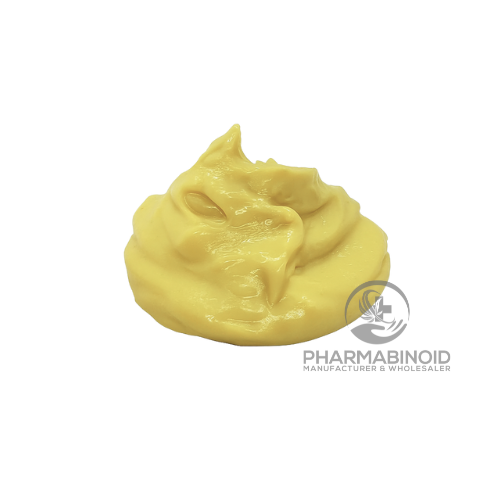
CBD Cosmetics
CBD Cosmetics Wholesale Buyer Guide CBD Cosmetics is the canonical commercial collection...
-
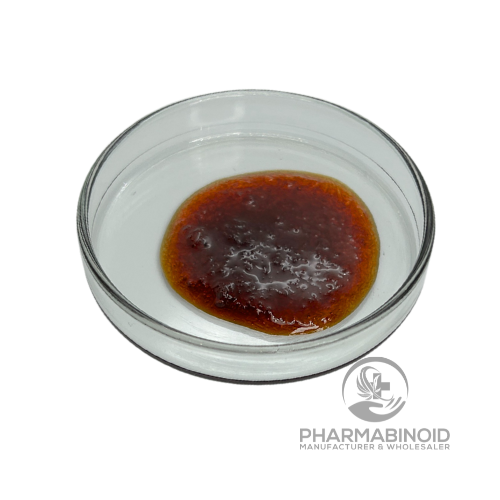
CBD Distillate Wholesale
CBD Distillate Wholesale for European BuyersCompare CBD distillates for professional formulation, private-label...
Blog posts
View all-
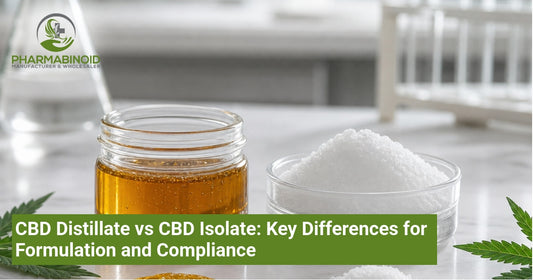
CBD Distillate vs. CBD Isolate: Key Differences...
CBD distillate vs. CBD isolate is primarily a question of composition, purity targets, formulation behavior, and compliance strategy. Both are refined, hemp-derived CBD ingredients, but they are not interchangeable. CBD...
CBD Distillate vs. CBD Isolate: Key Differences...
CBD distillate vs. CBD isolate is primarily a question of composition, purity targets, formulation behavior, and compliance strategy. Both are refined, hemp-derived CBD ingredients, but they are not interchangeable. CBD...
-
CBD Distillate vs. CBD Isolate: Differences, Ap...
CBD distillate vs. CBD isolate is an important comparison for brands, formulators, and buyers working with hemp-derived ingredients. Both materials can be rich in cannabidiol, but they differ in composition,...
CBD Distillate vs. CBD Isolate: Differences, Ap...
CBD distillate vs. CBD isolate is an important comparison for brands, formulators, and buyers working with hemp-derived ingredients. Both materials can be rich in cannabidiol, but they differ in composition,...
-
CBD Distillate vs. CBD Isolate: Key Differences...
CBD distillate vs. CBD isolate is a common comparison for brands, formulators, and buyers working with hemp-derived ingredients. Both can be high-quality CBD sources, but they differ in formulation behavior,...
CBD Distillate vs. CBD Isolate: Key Differences...
CBD distillate vs. CBD isolate is a common comparison for brands, formulators, and buyers working with hemp-derived ingredients. Both can be high-quality CBD sources, but they differ in formulation behavior,...