
Exploring the Endocannabinoid System: A Practical Guide

Exploring the endocannabinoid system offers a useful starting point for understanding how a network of signalling molecules, receptors and enzymes is studied in biological research. The topic is relevant to cannabinoid education, but it should not be treated as a promise of enhanced health or wellbeing. This guide explains the system’s principal components, how plant-derived cannabinoids differ from compounds made by the body, and how to interpret research responsibly.
What is the endocannabinoid system?
The endocannabinoid system (ECS) is a biological signalling network. Its commonly described components include endocannabinoids produced within the body, cannabinoid receptors and enzymes involved in the synthesis and breakdown of signalling molecules. Researchers study this network in multiple tissues and biological contexts. Its complexity means that a finding about one receptor, cell type or experimental model cannot by itself establish a predictable outcome for an individual or a finished consumer product.
The three commonly discussed ECS components
Endocannabinoids
Anandamide, also called N-arachidonoylethanolamine or AEA, and 2-arachidonoylglycerol (2-AG) are among the best-characterised endocannabinoids. They are lipid-derived signalling molecules made by the body. Their production and availability can vary with biological context; they are not simply interchangeable with plant-derived cannabinoids.
Receptors
CB1 and CB2 are the best-known cannabinoid receptors. CB1 is prominent in the central nervous system, while CB2 is found in several peripheral tissues, including immune-related contexts. Their distribution is not an absolute division: receptor expression and function depend on tissue, cell type and experimental conditions. A compound’s interaction with a receptor is only one part of its pharmacology and does not establish a health claim.
Enzymes and signalling
Enzymes help form and break down endocannabinoids. For example, fatty acid amide hydrolase (FAAH) is involved in anandamide degradation, while monoacylglycerol lipase (MAGL) is a major enzyme involved in 2-AG breakdown. These pathways help researchers investigate how signalling is regulated. They also underline why the ECS is better understood as a dynamic network than as a single receptor switch.
Endocannabinoids and phytocannabinoids are different
Endocannabinoids are produced by the body; phytocannabinoids are plant-derived compounds, including CBD, CBG, CBC and THC. Some phytocannabinoids can interact with ECS-related targets, as well as other molecular targets, but their actions are not identical to those of the body’s own signalling molecules. For a concise distinction, see our guide to phytocannabinoids and endocannabinoids.
Laboratory binding or cell findings do not automatically predict effects in humans. A compound’s identity, concentration, route of exposure, metabolism, formulation and the study design all influence how results should be interpreted. Avoid translating mechanistic descriptions into claims that a cannabinoid treats a condition or guarantees a particular feeling.
How to read endocannabinoid-system research
Study type matters. Receptor experiments can help explore molecular mechanisms; cell and animal models answer different questions from controlled human studies. Human research must still be assessed for sample size, population, comparator, route, duration, outcomes and independent replication. A review article can map a field, but it does not replace examination of the underlying studies.
When reviewing a claim, ask what was actually measured, in which model, at what exposure, and whether the result has been replicated. Distinguish an association from causation and a hypothesis from a demonstrated clinical outcome. Our cannabinoid research hub provides additional context for evaluating cannabinoid literature. For an overview of enzymatic pathways, consult this peer-reviewed review available through PubMed Central.
Why the ECS matters to product and formulation teams
For manufacturers and professional buyers, ECS knowledge is most useful as scientific context—not as a substitute for ingredient qualification. Start by confirming the exact material identity and intended product category. Then assess batch-specific specifications, analytical methods, cannabinoid profile, relevant contaminant testing, stability and formulation compatibility. Documentation should match the product and destination market rather than rely on broad category language.
Keep technical evidence separate from customer-facing claims. A biological pathway description is not proof that a finished product delivers a specific benefit. Teams should review applicable national and EU requirements, product classification, permitted claims and supporting documentation before launch. For sourcing context, see the pure cannabinoids range; availability and specifications should be confirmed for the specific product and batch.
Safety, quality and responsible communication
“Natural” does not by itself establish safety, suitability or quality. Safety assessment depends on the compound, exposure, route, formulation, population and available evidence. Product teams should use qualified regulatory and safety review for their target markets and avoid unsupported medical or wellness promises. This article is educational and is not medical, legal or regulatory advice.
- Verify ingredient identity and the relevant batch documentation.
- Read the methods and limitations of the evidence, not just a headline.
- Do not equate receptor activity with a proven human outcome.
- Check formulation, stability and destination-market requirements for the finished product.
- Use cautious, evidence-matched language in product and marketing materials.
Frequently asked questions
Does the ECS guarantee enhanced health and wellbeing?
No. The ECS is a subject of biological research. Its existence does not prove that a cannabinoid product improves health or wellbeing, and this guide makes no such promise.
Are endocannabinoids the same as CBD or THC?
No. Endocannabinoids are produced within the body; CBD and THC are plant-derived phytocannabinoids. They differ in origin and pharmacology.
Does interacting with CB1 or CB2 prove a product benefit?
No. Receptor interaction is one piece of mechanistic evidence. Product outcomes require appropriate evidence for the specific compound, formulation, route and intended use.
Conclusion
The endocannabinoid system provides a valuable framework for exploring cannabinoid biology, but it is not a shortcut from mechanism to health claims. Sound cannabinoid education combines accurate terminology, careful interpretation of evidence, product-specific quality review and market-aware compliance. If you are evaluating ingredients for a professional project, share the intended format, target market and documentation needs through our request-for-quote page.
Educational information only. This content does not diagnose, treat, cure or prevent any disease and is not a substitute for professional advice.

Free Sample
Discover the benefits of our products firsthand by visiting our website to obtain your exclusive TryPharma code. When you place an order using this special code, not only will you secure your desired products, but we will also include a complimentary sample with each purchase. This opportunity allows you to experience the quality of our offerings before you commit to the main shipment. Our goal is to ensure that you are completely satisfied with your selection, and this process provides a risk-free way to explore our extensive range of products. Contact us today to get started and take the first step towards a rewarding experience with our premium offerings.

Shipping Insurance
When you purchase bulk CBD isolates, oils, and other products from us, your shipment is fully insured by us at no additional cost to you. We utilize reputable shipping companies like FedEx and UPS for transportation, while managing the insurance coverage ourselves to secure every shipment from our warehouse to your doorstep. At TryPharma, we are committed to fostering business growth by offering a risk-free wholesale service. In the unlikely event of a shipping issue, we guarantee a refund within five business days from the date the incident is confirmed. Our comprehensive approach effectively eliminates 99.9% of all potential risks associated with bulk CBD shipping, ensuring your complete peace of mind.

30 Day Return
We invite you to test the complimentary sample included with your order before opening the main shipment. If the quality does not meet your expectations, you can benefit from our 30-day return policy. This policy permits you to return the product within 30 days for a full refund, guaranteeing your complete satisfaction. Contact us today to explore our exceptional range of products and experience our dedicated customer service.
Cannabinoid Isolates
-
CBD Isolate - Cannabidiol
Regular price From €24.99 to €369.99Regular priceUnit price per€0.00Sale price €24.99 -
CBG - Cannabigerol
Regular price From €49.99 to €799.99Regular priceUnit price per€0.00Sale price €49.99 -
CBN - Cannabinol
Regular price From €79.99 to €1,299.99Regular priceUnit price per€0.00Sale price €79.99 -
CBC - Cannabichromene
Regular price From €99.99 to €1,999.99Regular priceUnit price per€0.00Sale price €99.99 -
CBDV - Cannabidivarin
Regular price From €13.99 to €3,149.99Regular priceUnit price per€0.00Sale price €13.99 -
Cannabicitran Isolate - CBT
Regular price From €49.99 to €4,349.99Regular priceUnit price per€0.00Sale price €49.99 -
CBDA Isolate - Cannabidiolic Acid
Regular price From €49.99 to €1,499.99Regular priceUnit price per€0.00Sale price €49.99 -
Cannabigerolic Acid - CBGA
Regular price From €59.99 to €1,749.99Regular priceUnit price per€0.00Sale price €59.99


Collections
-

PPB - Pharmabinoid's Psychoactive Blends
PPB Psychoactive Blends for Professional Buyers Explore Pharmabinoid's PPB collection of psychoactive...
-

CBD Oil Wholesale Europe
CBD Oil Wholesale Europe for Brands and ManufacturersSource CBD oil wholesale in...
-
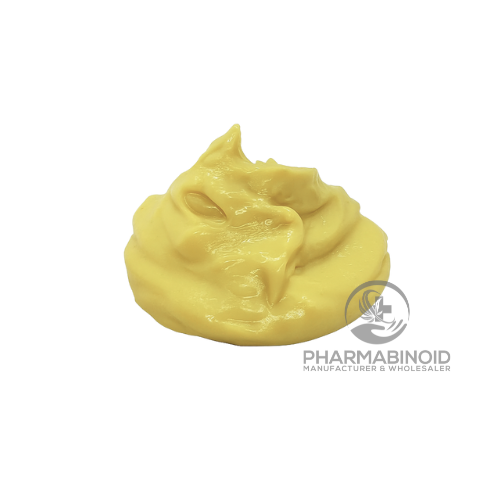
CBD Cosmetics
CBD Cosmetics Wholesale Buyer Guide CBD Cosmetics is the canonical commercial collection...
-
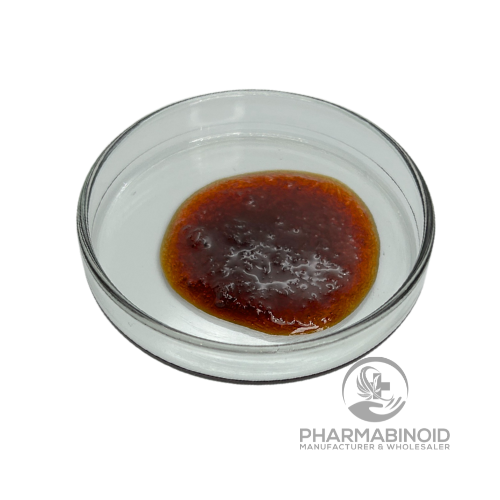
CBD Distillate Wholesale
CBD Distillate Wholesale for European BuyersCompare CBD distillates for professional formulation, private-label...



Blog posts
View all-
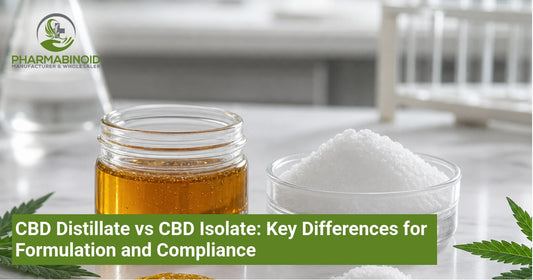
CBD Distillate vs. CBD Isolate: Key Differences...
CBD distillate vs. CBD isolate is primarily a question of composition, purity targets, formulation behavior, and compliance strategy. Both are refined, hemp-derived CBD ingredients, but they are not interchangeable. CBD...
CBD Distillate vs. CBD Isolate: Key Differences...
CBD distillate vs. CBD isolate is primarily a question of composition, purity targets, formulation behavior, and compliance strategy. Both are refined, hemp-derived CBD ingredients, but they are not interchangeable. CBD...
-
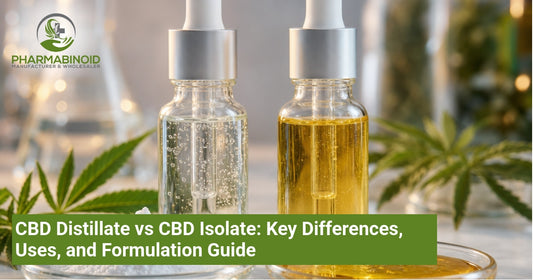
CBD Distillate vs. CBD Isolate: Differences, Ap...
CBD distillate vs. CBD isolate is an important comparison for brands, formulators, and buyers working with hemp-derived ingredients. Both materials can be rich in cannabidiol, but they differ in composition,...
CBD Distillate vs. CBD Isolate: Differences, Ap...
CBD distillate vs. CBD isolate is an important comparison for brands, formulators, and buyers working with hemp-derived ingredients. Both materials can be rich in cannabidiol, but they differ in composition,...
-
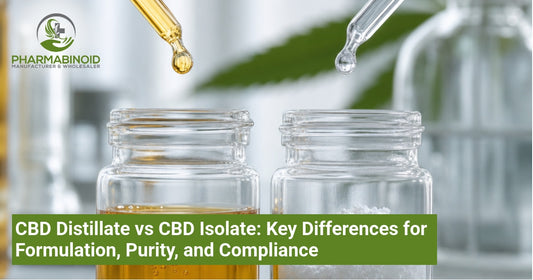
CBD Distillate vs. CBD Isolate: Key Differences...
CBD distillate vs. CBD isolate is a common comparison for brands, formulators, and buyers working with hemp-derived ingredients. Both can be high-quality CBD sources, but they differ in formulation behavior,...
CBD Distillate vs. CBD Isolate: Key Differences...
CBD distillate vs. CBD isolate is a common comparison for brands, formulators, and buyers working with hemp-derived ingredients. Both can be high-quality CBD sources, but they differ in formulation behavior,...
