
Emerging Trends in Cannabinoid Research: New Directions and Future Outlook

Emerging trends in cannabinoid research reflect a shift from broad claims about individual compounds toward more precise questions about identity, formulation, measurement and evidence quality. Researchers are studying diverse cannabinoids and product matrices, while manufacturers and professional buyers increasingly need reproducible specifications and transparent batch records. This overview examines developing research directions without treating early findings as established health outcomes or market authorization.
From single-compound questions to better-defined materials
One important direction is more rigorous characterization of the material being studied. “Cannabinoid product” can refer to a purified isolate, a distillate, a multi-component botanical extract or a finished formulation. These materials differ in cannabinoid profile, minor constituents, processing history and carrier matrix. Studies are more informative when they document the exact sample, its source and preparation, the batch, storage conditions and analytical method rather than relying on a product label or a headline potency value.
Research on minor and less frequently studied cannabinoids is also expanding. For many compounds, the evidence base remains uneven: analytical identification may be better established than pharmacological interpretation, and laboratory observations do not necessarily predict effects in people. A useful research question therefore specifies the compound, model, exposure conditions and outcome measured, and makes clear what cannot yet be concluded.
Analytical methods and reproducibility
As cannabinoid products become more compositionally diverse, fit-for-purpose analysis is central to interpreting findings. Targeted methods can quantify selected analytes, while broader profiling may help characterize mixtures and detect additional constituents. Method choice, reference standards, sample preparation, matrix effects and extraction recovery can all influence reported values. Comparing studies requires attention to these details, not just the numbers in an abstract.
Reproducibility also depends on representative sampling and clear reporting. Researchers and quality teams benefit from documenting sample identity, batch linkage, method validation, reporting limits and the laboratory’s role. Independent replication and shared reference materials can help determine whether an observation is robust across samples and laboratories. A certificate of analysis can support batch characterization, but it only speaks to the sample and parameters actually tested.
Formulation, stability and delivery systems
Another growing area focuses on how formulation changes the physical and analytical behaviour of cannabinoid ingredients. Many cannabinoids are lipophilic, so their distribution can depend on the carrier, mixing sequence, processing conditions, particle or droplet size and final matrix. Oils, emulsions, capsules, topical bases and inhalable formats therefore present different questions about uniformity, compatibility, stability and measurement.
Stability research examines how light, temperature, oxygen, packaging and time may affect a defined material. Results should be tied to the actual formulation and storage conditions. Accelerated studies can inform development, but they do not automatically substitute for real-time data. Likewise, a formulation characteristic such as dispersibility or release is a technical observation; it does not alone establish bioavailability or a clinical outcome.
Research limitations and responsible interpretation
The literature can be difficult to compare because studies use different compounds, formulations, analytical methods and experimental models. Some research is preclinical, uses limited sample numbers or lacks independent replication. Findings about one ingredient or matrix should not be generalized to every cannabinoid product. Strong interpretation separates analytical evidence, mechanistic hypotheses, human evidence and regulatory decisions.
Marketing language should not outrun the evidence. An observed laboratory interaction does not prove that a finished product prevents, treats or cures a condition. Product classification, permitted claims and market access are separate questions that depend on the exact product and destination. For EU food-related questions, consult the European Commission’s Novel Food Status Catalogue and applicable authorization information; the catalogue is an orientation resource, not approval of a specific product.
Why these trends matter to manufacturers and B2B buyers
For manufacturers, laboratories, formulators and wholesale buyers, better research practices translate into more useful technical discussions. A procurement specification can define the desired profile, acceptable variation, intended matrix, processing constraints, storage conditions and required analytical evidence. Batch-specific documentation should be traceable to the material supplied and suited to the intended application. These steps support comparison and quality management but do not replace independent safety or regulatory review.
Pharmabinoid’s cannabinoid research hub provides related scientific context, while the research overview of cannabinoid product profiles and testing discusses analytical and formulation considerations. Readers can also explore the cannabinoid terminology guide for foundational definitions.
Frequently asked questions about emerging cannabinoid research
Does new cannabinoid research mean a compound’s effects are established?
No. New or emerging research may identify questions, analytical findings or hypotheses. The strength of a conclusion depends on the study design and evidence available; early or preclinical findings do not establish a human health outcome.
Why do cannabinoid studies sometimes report different results?
Studies may examine different materials, batches, methods, matrices or experimental conditions. Sample preparation, reference standards and analytical validation can also affect reported measurements. Comparing methods and study context is essential.
What should a professional buyer take from these trends?
Focus on exact ingredient identity, a clear specification, representative batch testing, traceability and evidence relevant to the intended formulation. Keep technical findings distinct from product claims and obtain market-specific regulatory advice where needed.
Conclusion
The most useful emerging trends in cannabinoid research are methodological as much as chemical: better-defined samples, fit-for-purpose analytics, formulation-specific stability work and careful reporting of limitations. These approaches can improve characterization and reproducibility while keeping conclusions proportionate to the evidence. Start with the actual material and research question, document how results were obtained, and avoid extending findings beyond the studied compound, formulation and conditions.

Free Sample
Discover the benefits of our products firsthand by visiting our website to obtain your exclusive TryPharma code. When you place an order using this special code, not only will you secure your desired products, but we will also include a complimentary sample with each purchase. This opportunity allows you to experience the quality of our offerings before you commit to the main shipment. Our goal is to ensure that you are completely satisfied with your selection, and this process provides a risk-free way to explore our extensive range of products. Contact us today to get started and take the first step towards a rewarding experience with our premium offerings.

Shipping Insurance
When you purchase bulk CBD isolates, oils, and other products from us, your shipment is fully insured by us at no additional cost to you. We utilize reputable shipping companies like FedEx and UPS for transportation, while managing the insurance coverage ourselves to secure every shipment from our warehouse to your doorstep. At TryPharma, we are committed to fostering business growth by offering a risk-free wholesale service. In the unlikely event of a shipping issue, we guarantee a refund within five business days from the date the incident is confirmed. Our comprehensive approach effectively eliminates 99.9% of all potential risks associated with bulk CBD shipping, ensuring your complete peace of mind.

30 Day Return
We invite you to test the complimentary sample included with your order before opening the main shipment. If the quality does not meet your expectations, you can benefit from our 30-day return policy. This policy permits you to return the product within 30 days for a full refund, guaranteeing your complete satisfaction. Contact us today to explore our exceptional range of products and experience our dedicated customer service.
Cannabinoid Isolates
-
CBD Isolate - Cannabidiol
Regular price From €24.99 to €369.99Regular priceUnit price per€0.00Sale price €24.99 -
CBG - Cannabigerol
Regular price From €49.99 to €799.99Regular priceUnit price per€0.00Sale price €49.99 -
CBN - Cannabinol
Regular price From €79.99 to €1,299.99Regular priceUnit price per€0.00Sale price €79.99 -
CBC - Cannabichromene
Regular price From €99.99 to €1,999.99Regular priceUnit price per€0.00Sale price €99.99 -
CBDV - Cannabidivarin
Regular price From €13.99 to €3,149.99Regular priceUnit price per€0.00Sale price €13.99 -
Cannabicitran Isolate - CBT
Regular price From €49.99 to €4,349.99Regular priceUnit price per€0.00Sale price €49.99 -
CBDA Isolate - Cannabidiolic Acid
Regular price From €49.99 to €1,499.99Regular priceUnit price per€0.00Sale price €49.99 -
Cannabigerolic Acid - CBGA
Regular price From €59.99 to €1,749.99Regular priceUnit price per€0.00Sale price €59.99


Collections
-

PPB - Pharmabinoid's Psychoactive Blends
PPB Psychoactive Blends for Professional Buyers Explore Pharmabinoid's PPB collection of psychoactive...
-

CBD Oil Wholesale Europe
CBD Oil Wholesale Europe for Brands and ManufacturersSource CBD oil wholesale in...
-
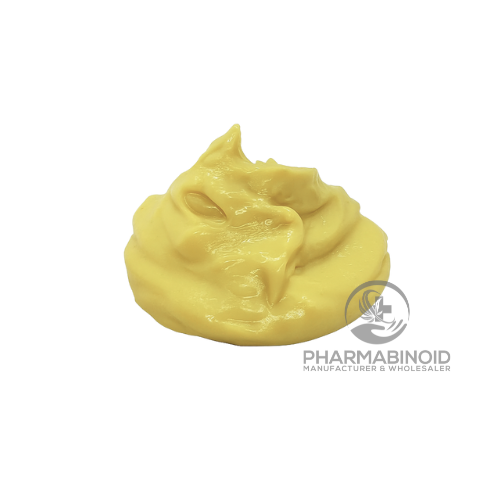
CBD Cosmetics
CBD Cosmetics Wholesale Buyer Guide CBD Cosmetics is the canonical commercial collection...
-
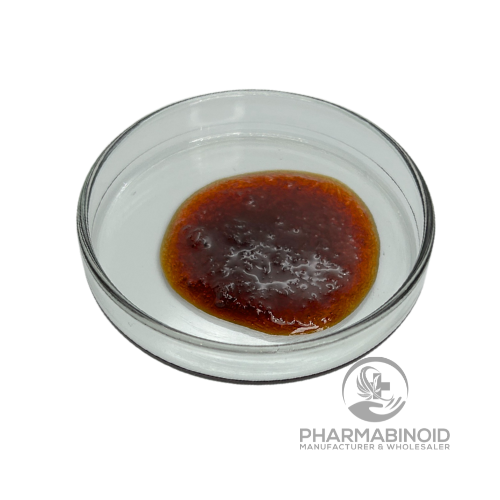
CBD Distillate Wholesale
CBD Distillate Wholesale for European BuyersCompare CBD distillates for professional formulation, private-label...



Blog posts
View all-
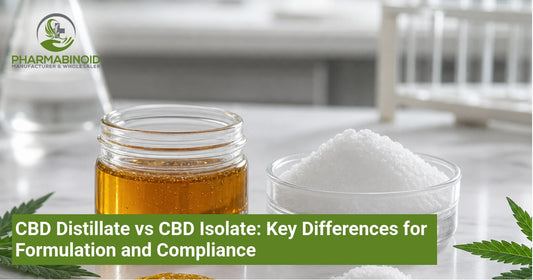
CBD Distillate vs. CBD Isolate: Key Differences...
CBD distillate vs. CBD isolate is primarily a question of composition, purity targets, formulation behavior, and compliance strategy. Both are refined, hemp-derived CBD ingredients, but they are not interchangeable. CBD...
CBD Distillate vs. CBD Isolate: Key Differences...
CBD distillate vs. CBD isolate is primarily a question of composition, purity targets, formulation behavior, and compliance strategy. Both are refined, hemp-derived CBD ingredients, but they are not interchangeable. CBD...
-
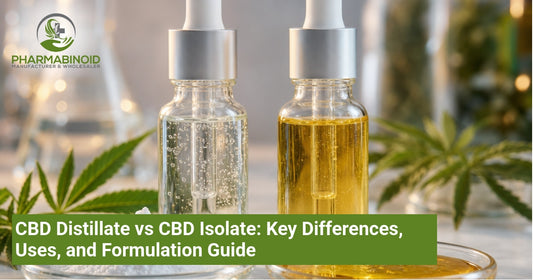
CBD Distillate vs. CBD Isolate: Differences, Ap...
CBD distillate vs. CBD isolate is an important comparison for brands, formulators, and buyers working with hemp-derived ingredients. Both materials can be rich in cannabidiol, but they differ in composition,...
CBD Distillate vs. CBD Isolate: Differences, Ap...
CBD distillate vs. CBD isolate is an important comparison for brands, formulators, and buyers working with hemp-derived ingredients. Both materials can be rich in cannabidiol, but they differ in composition,...
-
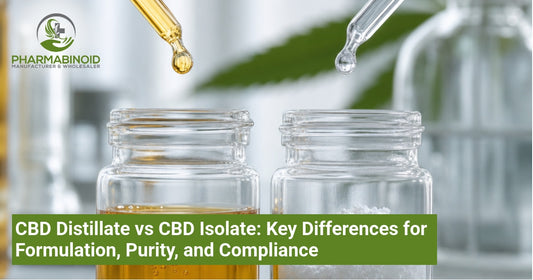
CBD Distillate vs. CBD Isolate: Key Differences...
CBD distillate vs. CBD isolate is a common comparison for brands, formulators, and buyers working with hemp-derived ingredients. Both can be high-quality CBD sources, but they differ in formulation behavior,...
CBD Distillate vs. CBD Isolate: Key Differences...
CBD distillate vs. CBD isolate is a common comparison for brands, formulators, and buyers working with hemp-derived ingredients. Both can be high-quality CBD sources, but they differ in formulation behavior,...
