CBD Manufacturing Studies examine how cannabidiol is extracted, purified, formulated, tested, packaged, and controlled at industrial scale. For cannabinoid manufacturers, laboratories, formulators, and B2B buyers, the research matters because product quality is not determined by CBD content alone. It also depends on the cannabinoid profile, impurity control, residual solvents, terpene preservation, formulation stability, analytical verification, and compliance with relevant European product categories. A scientifically informed approach helps distinguish robust CBD manufacturing research from unsupported marketing claims.
What Is CBD Manufacturing Research?
CBD manufacturing research is the study of the complete production pathway used to obtain cannabidiol from hemp or other permitted cannabinoid sources and convert it into usable ingredients or finished formulations. This may include cultivation variables, biomass preparation, extraction methods, winterisation, decarboxylation, distillation, crystallisation, isolation, formulation, packaging, and quality control.
In practice, CBD manufacturing studies often investigate how process parameters affect purity, yield, degradation products, minor cannabinoid retention, terpene profile, residual solvent levels, and batch-to-batch consistency. The field overlaps with cannabinoid production studies, analytical chemistry, process engineering, formulation science, and regulatory quality systems.
Unlike consumer-facing CBD content, this research is not primarily about user experience or health outcomes. It focuses on manufacturing reproducibility, ingredient specification, safety documentation, and reliable analytical evidence. These priorities are especially important for European supply chains, where cannabinoid products may fall into different regulatory categories depending on intended use, composition, claims, and national interpretation.
Current Scientific Understanding of CBD Manufacturing Studies
Current CBD Manufacturing Studies indicate that production method, source material quality, and post-processing controls strongly influence the final ingredient profile. For example, ethanol extraction, hydrocarbon extraction, and supercritical carbon dioxide extraction can produce materially different crude extracts depending on temperature, pressure, solvent polarity, extraction time, and refinement strategy. These differences may affect cannabinoid recovery, wax content, chlorophyll levels, terpene retention, and the need for further purification.
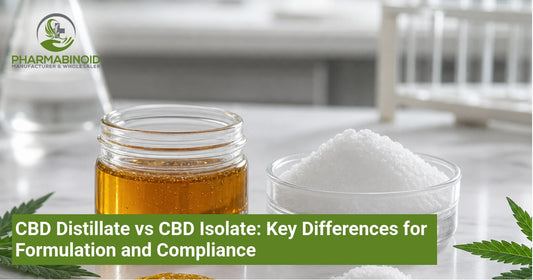
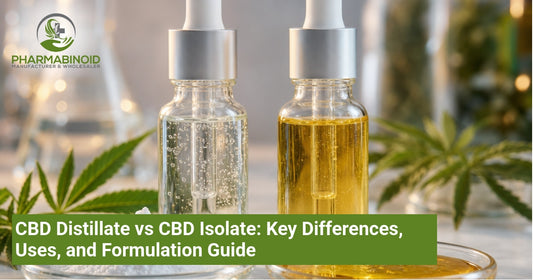
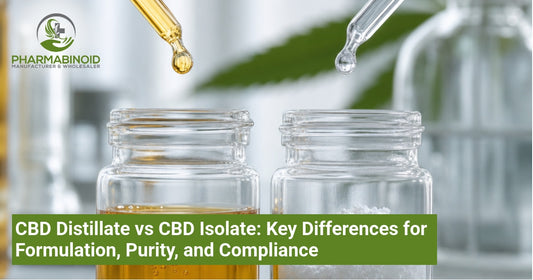
CBD distillate and CBD isolate are often discussed in manufacturing research because they represent different levels of refinement. Distillates typically retain a broader cannabinoid profile than isolates, while isolates are designed to deliver high-purity cannabidiol with minimal accompanying compounds. Research and industrial validation are therefore concerned with whether the chosen process reliably delivers the target specification rather than with assuming one format is universally superior.
Stability is another major theme. CBD can be affected by heat, light, oxygen, pH, and formulation matrix. Manufacturing studies therefore evaluate degradation pathways, packaging compatibility, oxidation risk, and storage conditions. These investigations are essential for realistic shelf-life assignment and for understanding how an ingredient behaves in oils, emulsions, pastes, capsules, cosmetic bases, and other delivery systems.
Authoritative scientific databases such as PubMed include a growing body of literature on cannabidiol analysis, stability, pharmacology, and product quality. However, research findings vary by study design, material tested, analytical method, and regulatory context. For that reason, manufacturing conclusions should be based on validated testing and documented process controls rather than isolated claims.
Pharmacology and Mechanism of Action
Although CBD manufacturing research is not primarily pharmacology research, understanding CBD’s behaviour as a molecule is relevant to formulation and quality. Cannabidiol is a phytocannabinoid found in Cannabis sativa L. It is structurally distinct from acidic precursor forms such as CBDA, which can convert to CBD through decarboxylation under heat and time-dependent conditions.
CBD is commonly described in scientific literature as having low direct affinity for CB1 and CB2 receptors compared with certain other cannabinoids. It has also been investigated for interactions with non-cannabinoid targets, including transient receptor potential channels, serotonin-related pathways, and enzymes involved in endocannabinoid signalling. These areas remain subject to ongoing research, and laboratory findings should not be interpreted as confirmed clinical outcomes.
From a manufacturing perspective, pharmacology connects to formulation behaviour. A compound’s lipophilicity, solubility, particle characteristics, chemical stability, and interaction with excipients can influence dispersion, homogeneity, bioavailability-related performance, and analytical recovery. CBD formulation research therefore often evaluates carrier oils, emulsifiers, surfactants, encapsulation systems, and nano- or micro-dispersion techniques. These approaches may change how CBD is distributed in a matrix, but they require careful testing rather than assumptions about performance.
Key Research Areas
-
Extraction and purification process control: CBD manufacturing studies compare extraction conditions, solvent systems, distillation parameters, crystallisation strategies, and impurity removal methods. The goal is to produce consistent cannabinoid content while controlling residual solvents, waxes, pigments, unwanted degradation products, and process-related impurities.
-
CBD formulation research: Formulation studies assess how CBD behaves in oils, emulsions, pastes, cosmetic systems, capsules, and other matrices. Key questions include solubility, homogeneity, oxidative stability, excipient compatibility, viscosity, sensory characteristics, and whether CBD remains within specification over time.
-
Cannabinoid quality control: Analytical studies focus on methods such as HPLC, UPLC, GC-MS, LC-MS, ICP-MS, residual solvent testing, pesticide screening, microbial testing, and stability-indicating assays. These tools help verify cannabinoid profile, purity, contaminants, and batch consistency.
-
Stability and packaging: Research examines how light exposure, oxygen ingress, temperature, humidity, container closure systems, and packaging materials affect CBD integrity. Packaging studies are particularly important for long-term quality and realistic shelf-life evaluation.
-
Scale-up and reproducibility: A process that works at laboratory scale may not behave identically at pilot or commercial scale. Manufacturing studies therefore evaluate mixing efficiency, heat transfer, solvent recovery, filtration performance, crystallisation control, and batch documentation.
Research Limitations
CBD manufacturing research is advancing, but several limitations remain. Many published studies examine specific materials, analytical methods, or formulation types that may not directly apply to every production environment. Results from one extraction system, carrier oil, packaging format, or storage condition cannot automatically be transferred to another without validation.
Another limitation is the variability of starting material. Hemp biomass can differ in cannabinoid profile, moisture content, terpene composition, pesticide exposure, microbial load, heavy metal uptake, and harvest maturity. These variables affect extraction performance and final ingredient consistency. Manufacturing studies are therefore most useful when they include detailed material characterisation and transparent analytical methods.
There is also a gap between academic studies and real-world industrial constraints. Published research may use small samples, controlled laboratory conditions, or simplified formulations. Commercial production must also consider equipment design, cleaning validation, cross-contamination prevention, solvent recovery, worker safety, documentation, storage, transport, and compliance with the intended market category.
Finally, research on CBD pharmacology and bioavailability should be interpreted carefully. Preclinical or in vitro findings can support scientific understanding, but they do not justify unsupported medical claims. Human evidence varies by study context, and manufacturing pages should avoid presenting early research as established health benefit.
Industrial and Formulation Relevance
For manufacturers and B2B buyers, CBD Manufacturing Studies are directly relevant to ingredient selection, supplier qualification, process validation, and finished product development. A high-quality CBD ingredient should be understood through its specification, manufacturing history, analytical results, stability profile, and suitability for the intended formulation.
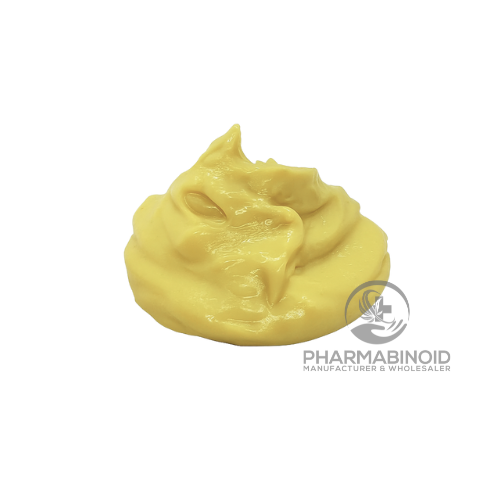
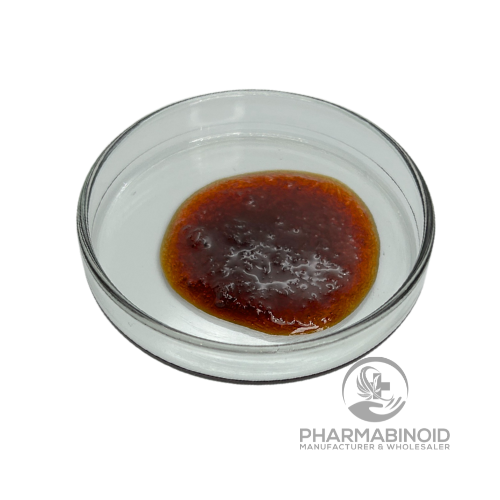
In industrial practice, CBD distillate, CBD isolate, broad-spectrum extracts, and CBD paste can each serve different formulation purposes. Distillates may be chosen when a broader cannabinoid profile is desired within specification. Isolates may be preferred where high CBD purity and low complexity are required. CBD pastes and other semi-refined materials may need additional scrutiny because their composition can vary more widely depending on extraction and refinement.
Researchers and formulators should also consider the role of terpenes. Terpene profiles may contribute to aroma, sensory quality, volatility, and formulation stability, but terpenes can also be sensitive to heat and evaporation. Their presence or absence should therefore be documented analytically rather than assumed from the extraction method alone.
For further reading on related formulation and ingredient topics, Pharmabinoid provides research pages on CBD distillate studies, testing, quality, and formulation, CBD paste quality and testing, and broader cannabinoid research.
Testing, Quality, and Compliance Considerations
Robust cannabinoid quality control depends on validated analytical testing and transparent documentation. A certificate of analysis should do more than state total CBD content. Depending on the ingredient and intended use, it may include cannabinoid profile, THC-related measurements where relevant, residual solvents, pesticides, heavy metals, microbiology, mycotoxins, foreign matter, water activity, density, appearance, and other specification criteria.
HPLC is commonly used for cannabinoid quantification because it can measure acidic and neutral cannabinoids without requiring heat-induced conversion during analysis. GC-based methods can be useful for volatile compounds such as residual solvents or terpenes, but method design is important because heat may transform certain cannabinoids if not properly controlled. ICP-MS is widely used for trace metal analysis, while LC-MS or GC-MS methods may support contaminant screening.
Quality systems also matter. Reliable manufacturing is supported by documented batch records, qualified suppliers, equipment maintenance, cleaning procedures, deviation handling, traceability, retention samples, stability programmes, and change control. These controls help reduce variability and provide evidence that the ingredient matches its stated specification.
European compliance requires particular caution because CBD products may be assessed differently depending on composition, intended use, claims, route of application, and country-specific interpretation. Manufacturers and brand owners should avoid medical claims unless products are authorised for that purpose. Regulatory resources such as the European Commission’s novel food information and relevant national authority guidance can help frame compliance discussions, although professional regulatory advice may still be required.
Packaging and post-production handling are also part of quality control. Light-protective containers, oxygen management, compatible closures, and controlled storage conditions can influence stability. Pharmabinoid’s related page on CBD packaging research, stability, safety, and compliance explores these manufacturing considerations in more detail.
Related Cannabinoids, Terpenes, or Research Topics
CBD manufacturing does not exist in isolation. It is connected to broader cannabinoid production studies involving CBDV, CBG-related compounds, minor cannabinoids, terpene retention, carrier systems, and analytical method development. Research into related cannabinoids can help manufacturers understand how molecular structure, boiling point, oxidation sensitivity, and solubility influence processing decisions.
Relevant associated topics include CBD distillate, CBD isolate, CBD paste, CBDV research, cannabinoid stability, terpene profiling, residual solvent control, GMP-style documentation, and formulation compatibility. These areas are especially important when developing ingredients for cosmetics, technical applications, research use, or other regulated product categories where specifications and claims must be carefully managed.
FAQ About CBD Manufacturing Studies
What do CBD manufacturing studies usually measure?
They commonly measure cannabinoid content, CBD purity, minor cannabinoid profile, residual solvents, pesticides, heavy metals, microbial quality, terpene profile, degradation products, moisture-related parameters, and stability over time. The exact testing panel depends on the ingredient type, process, intended use, and applicable quality standard.
Why is formulation research important for CBD products?
CBD is a lipophilic compound, meaning it behaves differently in oils, emulsions, powders, and water-compatible systems. CBD formulation research helps determine whether the compound remains evenly distributed, chemically stable, and analytically consistent in the chosen matrix. It also supports realistic shelf-life assessment and product specification development.
Are all CBD manufacturing methods equivalent?
No. Extraction method, solvent choice, temperature, purification strategy, equipment design, and quality controls can all influence the final ingredient. Different methods may be appropriate for different target specifications, but equivalence should be demonstrated through validated analytical data rather than assumed.
How do certificates of analysis support cannabinoid quality control?
Certificates of analysis provide documented test results for a specific batch or sample. A useful COA should identify the test method, laboratory, sample reference, cannabinoid profile, contaminant results where relevant, and whether the material meets defined specifications. COAs are an important part of supplier qualification, but they should be supported by broader quality documentation.
Can CBD manufacturing research prove health benefits?
No. Manufacturing research primarily evaluates production, purity, stability, and quality. Pharmacology and clinical research are separate fields, and early findings should not be presented as confirmed health outcomes. Responsible CBD research content should avoid medical claims unless supported by the appropriate level of evidence and regulatory authorisation.
Conclusion
CBD Manufacturing Studies provide the scientific foundation for reliable cannabinoid production, formulation, testing, and compliance-aware quality control. The strongest research does not treat CBD as a simple commodity; it examines how source material, extraction, purification, formulation, packaging, and analytical verification shape the final ingredient. For manufacturers, laboratories, and B2B cannabinoid businesses, the key lesson is clear: credible CBD manufacturing research depends on validated methods, transparent documentation, realistic limitations, and careful interpretation of the evidence.
As the cannabinoid sector matures, CBD manufacturing studies will continue to support better process control, more stable formulations, stronger certificates of analysis, and more consistent supply standards. The most responsible approach is to combine scientific curiosity with regulatory caution, avoiding exaggerated claims while building products and ingredients on measurable quality.