
Cannabinoid Regulations and Compliance: EU B2B Guide

Cannabinoid regulations and compliance require a product-by-product, market-specific assessment. For brands, formulators and professional buyers, the relevant questions depend on the substance, source, concentration, product category, intended use, claims, and country of sale. This guide outlines a practical review process for European B2B teams; it is educational information, not legal advice.
Start by defining the product and market
Before relying on a general statement that a cannabinoid is “legal” or “compliant,” record what is actually being assessed. Identify the cannabinoid and source, ingredient composition, product format, intended consumer or professional use, proposed claims, sales channel, and each destination country. A raw material, food supplement, cosmetic, vape-related product and technical input can raise different regulatory questions even when they contain the same cannabinoid.
Also distinguish EU-level rules from national measures and enforcement practice. A market-access conclusion for one country or category should not automatically be copied to another. Assign an owner to each decision and keep the reasoning, evidence and review date with the product file.
Check ingredient status and category-specific requirements
For foods, determine whether the ingredient and its relevant use meet applicable requirements, including any novel-food authorisation conditions. The European Commission explains that the Union list records authorised novel foods and their conditions of use; check the current list and the associated specifications rather than relying on an application, informal database entry or supplier statement alone. The Commission’s Union list of authorised novel foods and decisions on novel-food procedures are useful official starting points.
Cosmetics, food supplements, general foods and other product categories each require their own assessment of ingredients, safety, responsible operators, labelling and presentation. Do not assume that a document addressing one category establishes suitability for a different use. Where the classification is uncertain, obtain qualified regulatory advice before manufacture, import or sale.
Review claims, labels and customer-facing content
Claims should be reviewed for the specific category and market before appearing on packaging, product pages, advertising or distributor materials. Avoid disease-treatment language, unsupported health benefits, guaranteed outcomes, or wording that implies authorisation where none has been established. Scientific discussion does not itself make a product claim permissible. Keep approved claim wording and its supporting evidence in a controlled record, and review translations as carefully as the original copy.
Check that the label and online information identify the product accurately and consistently. Depending on the category, review ingredient naming, quantity, warnings, directions, operator details, batch identification, storage instructions and language requirements. A marketing review and a technical specification review should be separate checkpoints in the release process.
Build a buyer-ready evidence file
Professional buyers should request documents that match the material, batch and intended application. A useful file may include a current specification, batch-specific certificate of analysis, analytical methods and limits, identity and traceability information, storage guidance, packaging details and relevant safety documentation. Testing scope should be selected for the product and market; it may include cannabinoid profile, residual solvents, pesticides, heavy metals or microbiological parameters where applicable.
- Confirm that the document names and batch references match the supplied material.
- Review test date, laboratory identity, method, units, detection limits and reported results.
- Check that specifications describe the commercial material rather than a different formulation or sample.
- Record open questions, approved deviations and the person responsible for follow-up.
A certificate of analysis is evidence about the tested sample and parameters; it is not a universal authorisation or complete compliance assessment. Link each document to the relevant batch and product version so procurement, quality and regulatory teams can trace the basis for a decision.
Use change control and market monitoring
Compliance review should be repeated when the ingredient, extraction route, composition, supplier, intended use, packaging, claim set or destination market changes. Set a review schedule for official sources and preserve dated copies or references used in the assessment. When a regulatory decision is uncertain or consequential, escalate it to a qualified adviser or competent authority rather than interpreting a broad summary as a binding conclusion.
For a practical procurement checklist, see the Pharmabinoid buyer FAQ. If a project needs sourcing, technical or documentation discussion, use the contact page or prepare a structured request for quote with the target country, format, volume and documentation requirements.
Frequently asked questions
Are cannabinoid rules the same across Europe?
No. EU frameworks may apply alongside country-specific rules, interpretation and enforcement. Assess each destination market and product category separately.
Does a supplier COA prove that a product is compliant?
No. A COA can support quality and batch review for the parameters tested, but it does not replace ingredient-status, product-category, claims, labelling or market-access assessments.
What should a B2B buyer clarify before requesting a quote?
Share the product format, cannabinoid profile or target specification, intended use, destination countries, expected volume, launch timing and required documents. This helps the supplier identify relevant technical questions without substituting for the buyer’s own regulatory review.
Conclusion
Reliable cannabinoid compliance is a documented workflow, not a blanket label. Define the product and markets, verify the applicable category and ingredient requirements, substantiate claims, review batch evidence, and maintain change control. Recheck official sources and obtain qualified advice whenever the product or route to market raises unresolved questions.
This article is general educational information and is not legal advice. Requirements can change and should be confirmed with competent authorities and qualified advisers in each relevant market.

Free Sample
Discover the benefits of our products firsthand by visiting our website to obtain your exclusive TryPharma code. When you place an order using this special code, not only will you secure your desired products, but we will also include a complimentary sample with each purchase. This opportunity allows you to experience the quality of our offerings before you commit to the main shipment. Our goal is to ensure that you are completely satisfied with your selection, and this process provides a risk-free way to explore our extensive range of products. Contact us today to get started and take the first step towards a rewarding experience with our premium offerings.
Shipping Insurance
When you purchase bulk CBD isolates, oils, and other products from us, your shipment is fully insured by us at no additional cost to you. We utilize reputable shipping companies like FedEx and UPS for transportation, while managing the insurance coverage ourselves to secure every shipment from our warehouse to your doorstep. At TryPharma, we are committed to fostering business growth by offering a risk-free wholesale service. In the unlikely event of a shipping issue, we guarantee a refund within five business days from the date the incident is confirmed. Our comprehensive approach effectively eliminates 99.9% of all potential risks associated with bulk CBD shipping, ensuring your complete peace of mind.
30 Day Return
We invite you to test the complimentary sample included with your order before opening the main shipment. If the quality does not meet your expectations, you can benefit from our 30-day return policy. This policy permits you to return the product within 30 days for a full refund, guaranteeing your complete satisfaction. Contact us today to explore our exceptional range of products and experience our dedicated customer service.
Cannabinoid Isolates
-
CBD Isolate - Cannabidiol
Regular price From €24.99 to €369.99Regular priceUnit price per€0.00Sale price €24.99 -
CBG - Cannabigerol
Regular price From €49.99 to €799.99Regular priceUnit price per€0.00Sale price €49.99 -
CBN - Cannabinol
Regular price From €79.99 to €1,299.99Regular priceUnit price per€0.00Sale price €79.99 -
CBC - Cannabichromene
Regular price From €99.99 to €1,999.99Regular priceUnit price per€0.00Sale price €99.99 -
CBDV - Cannabidivarin
Regular price From €13.99 to €3,149.99Regular priceUnit price per€0.00Sale price €13.99 -
Cannabicitran Isolate - CBT
Regular price From €49.99 to €4,349.99Regular priceUnit price per€0.00Sale price €49.99 -
CBDA Isolate - Cannabidiolic Acid
Regular price From €49.99 to €1,499.99Regular priceUnit price per€0.00Sale price €49.99 -
Cannabigerolic Acid - CBGA
Regular price From €59.99 to €1,749.99Regular priceUnit price per€0.00Sale price €59.99


Collections
-

PPB - Pharmabinoid's Psychoactive Blends
PPB Psychoactive Blends for Professional Buyers Explore Pharmabinoid's PPB collection of psychoactive...
-

CBD Oil Wholesale Europe
CBD Oil Wholesale Europe for Brands and ManufacturersSource CBD oil wholesale in...
-
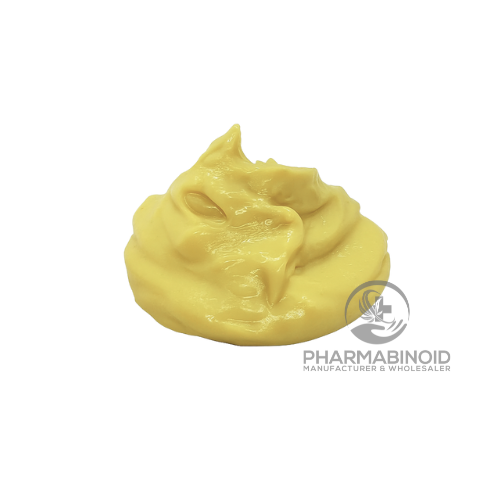
CBD Cosmetics
CBD Cosmetics Wholesale Buyer Guide CBD Cosmetics is the canonical commercial collection...
-
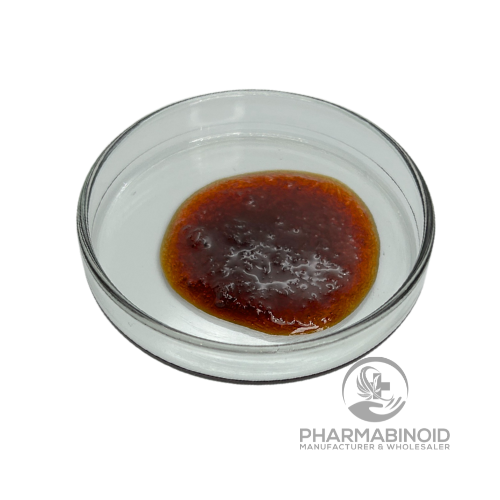
CBD Distillate Wholesale
CBD Distillate Wholesale for European BuyersCompare CBD distillates for professional formulation, private-label...


Blog posts
View all-
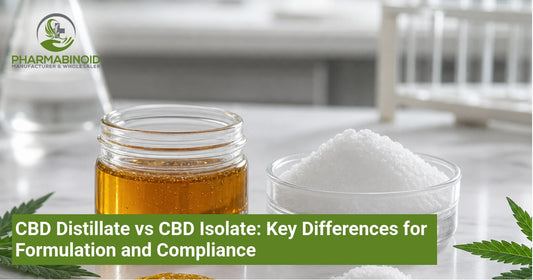
CBD Distillate vs. CBD Isolate: Key Differences...
CBD distillate vs. CBD isolate is primarily a question of composition, purity targets, formulation behavior, and compliance strategy. Both are refined, hemp-derived CBD ingredients, but they are not interchangeable. CBD...
CBD Distillate vs. CBD Isolate: Key Differences...
CBD distillate vs. CBD isolate is primarily a question of composition, purity targets, formulation behavior, and compliance strategy. Both are refined, hemp-derived CBD ingredients, but they are not interchangeable. CBD...
-
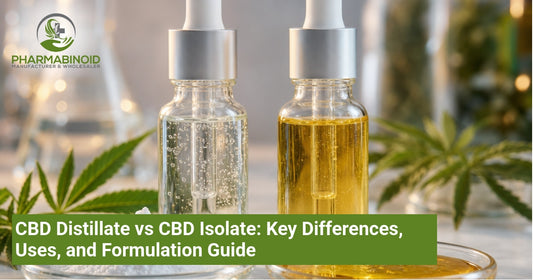
CBD Distillate vs. CBD Isolate: Differences, Ap...
CBD distillate vs. CBD isolate is an important comparison for brands, formulators, and buyers working with hemp-derived ingredients. Both materials can be rich in cannabidiol, but they differ in composition,...
CBD Distillate vs. CBD Isolate: Differences, Ap...
CBD distillate vs. CBD isolate is an important comparison for brands, formulators, and buyers working with hemp-derived ingredients. Both materials can be rich in cannabidiol, but they differ in composition,...
-
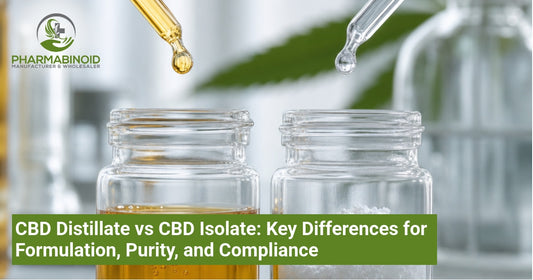
CBD Distillate vs. CBD Isolate: Key Differences...
CBD distillate vs. CBD isolate is a common comparison for brands, formulators, and buyers working with hemp-derived ingredients. Both can be high-quality CBD sources, but they differ in formulation behavior,...
CBD Distillate vs. CBD Isolate: Key Differences...
CBD distillate vs. CBD isolate is a common comparison for brands, formulators, and buyers working with hemp-derived ingredients. Both can be high-quality CBD sources, but they differ in formulation behavior,...
