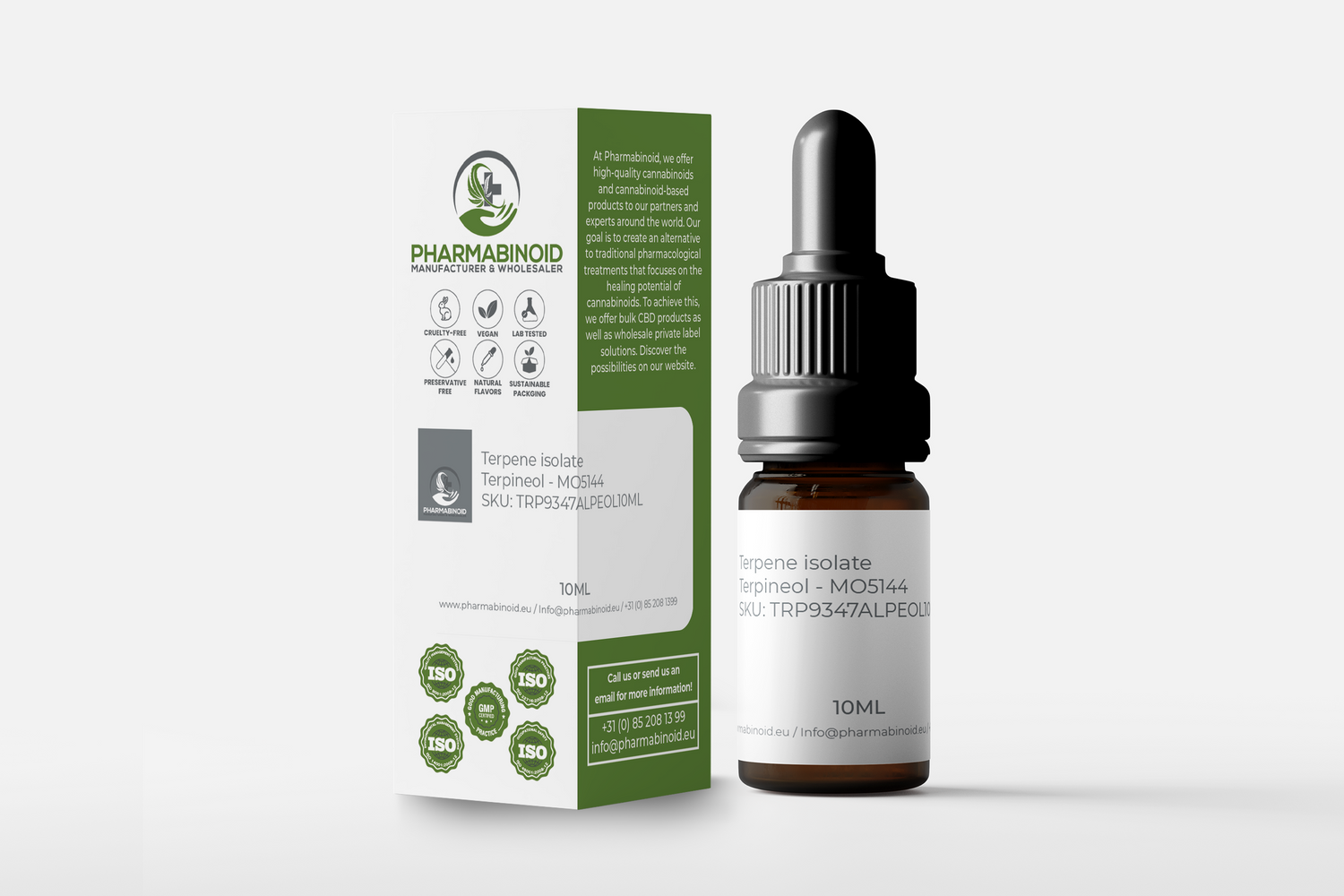
Caryophyllene vs Humulene: Differences, Aroma and Formulation
Caryophyllene vs Humulene: Key Differences
Caryophyllene vs humulene is a useful comparison when evaluating terpene identity, sensory direction and formulation goals. Both are sesquiterpenes found in botanical materials, and their names can appear together in terpene profiles. They are distinct compounds, however, and should not be treated as interchangeable ingredients or as evidence of a particular product effect.
For formulators and professional buyers, the practical choice depends on verified identity, batch composition, aroma assessment, intended application and destination-market requirements—not on a broad claim that one terpene is universally better.
At a glance: caryophyllene vs humulene
| Comparison point | Caryophyllene | Humulene |
|---|---|---|
| Compound family | A sesquiterpene; the exact isomer should be stated in specifications. | A sesquiterpene with its own distinct analytical identity. |
| Common sensory description | Often described as peppery, spicy, woody or dry; the impression varies by source and blend. | Often described as earthy, woody, herbal or hop-like; the impression varies by source and blend. |
| Formulation consideration | May contribute a sharper spicy direction when supported by sensory evaluation. | May contribute a more grounded herbal direction when supported by sensory evaluation. |
| Evidence to review | Identity, purity, isomer profile where relevant, contaminants and batch consistency. | Identity, purity, contaminants, oxidation status and batch consistency. |
| Selection basis | Finished-product brief, analytical results, compatibility and sensory testing. | Finished-product brief, analytical results, compatibility and sensory testing. |
How their profiles differ
Caryophyllene is not a single sensory promise: botanical source, extraction or production route, concentration, storage and surrounding ingredients can all affect the profile presented in a finished formulation. Where a specification uses the shorter name “caryophyllene,” buyers should confirm which compound or isomer is meant rather than infer it from the label alone. The beta-caryophyllene reference provides a focused starting point for checking that terminology.
Humulene has a separate identity and is commonly associated with earthy, woody or herbal sensory notes. Descriptions such as “hoppy” are shorthand for an aroma impression, not a guarantee that every batch will smell or perform the same way. Compare samples using a consistent, documented sensory method and avoid relying on a name or isolated aroma descriptor as a substitute for analysis.
Analytical identity matters more than a familiar name
Before comparing materials, review the product specification and batch documentation. Confirm the declared compound, the analytical method and its suitability, sample or lot identification, test date, reporting limits and the scope of the certificate of analysis. A COA reports results for the tested sample under stated conditions; it does not independently establish finished-product performance, suitability for every application or regulatory authorization.
For both terpenes, useful quality questions can include identity and purity, relevant isomer or profile information, residual solvents where applicable, contaminants, storage conditions and consistency between batches. The appropriate test panel depends on the material, process and intended application. If the documentation does not resolve a technical question, ask the supplier or a qualified laboratory for clarification instead of treating missing information as a confirmed result.
Choosing for a formulation
Start with the sensory and technical brief for the finished product. Decide whether the target profile calls for a sharper peppery-spicy accent, a more earthy herbal direction, or a carefully balanced blend. Then assess the actual materials in the intended carrier and at the proposed concentration using a documented bench evaluation. Do not assume that a result observed in one matrix will transfer unchanged to another.
- Verify the exact ingredient identity and batch before formulation.
- Review compatibility with the carrier, other ingredients, process conditions and packaging.
- Use controlled sensory comparisons and record the sample, method and conditions.
- Check storage guidance and establish change-control procedures for later batches.
- Assess the finished product and destination-market requirements with appropriate specialists.
These points apply whether a formulator evaluates caryophyllene, humulene or both. Neither compound should be selected on an unsupported health, therapeutic or guaranteed-performance claim.
Can caryophyllene and humulene be used together?
A formulation may include both, but the decision and ratio should be based on the specific product brief, ingredient specifications, compatibility checks and controlled sensory testing. The fact that two compounds occur in botanical materials does not establish an ideal ratio or prove that a blend will behave consistently across batches. Validate the final formulation and retain records of the materials and methods used.
Frequently asked questions
Are caryophyllene and humulene the same terpene?
No. They are distinct sesquiterpenes with different analytical identities. A shared botanical context or overlapping descriptive language does not make them interchangeable.
Which one has a peppery aroma?
Caryophyllene is often described as peppery or spicy, while humulene is often described as earthy, woody or herbal. These are general sensory descriptions, not fixed specifications; evaluate the actual batch.
Does a COA show which terpene is better?
No. A COA can help document identity and measured quality attributes within its stated scope. “Better” depends on the formulation goal, evidence quality and application-specific evaluation.
What should a wholesale buyer compare?
Compare exact identity, batch-specific analytical documentation, purity and contaminant information, storage guidance, consistency and suitability for the intended formulation. Review the terpene collection and contact the team through Request a Quote for sourcing discussions.
Conclusion
The practical distinction in caryophyllene vs humulene is their separate identity and sensory direction—not a universal ranking. Confirm the exact material, review batch evidence, test it in the intended formulation and assess the finished product for its market. For further background, see what humulene is and the cannabis terminology glossary.
Free Sample
Discover the benefits of our products firsthand by visiting our website to obtain your exclusive TryPharma code. When you place an order using this special code, not only will you secure your desired products, but we will also include a complimentary sample with each purchase. This opportunity allows you to experience the quality of our offerings before you commit to the main shipment. Our goal is to ensure that you are completely satisfied with your selection, and this process provides a risk-free way to explore our extensive range of products. Contact us today to get started and take the first step towards a rewarding experience with our premium offerings.

Shipping Insurance
When you purchase bulk CBD isolates, oils, and other products from us, your shipment is fully insured by us at no additional cost to you. We utilize reputable shipping companies like FedEx and UPS for transportation, while managing the insurance coverage ourselves to secure every shipment from our warehouse to your doorstep. At TryPharma, we are committed to fostering business growth by offering a risk-free wholesale service. In the unlikely event of a shipping issue, we guarantee a refund within five business days from the date the incident is confirmed. Our comprehensive approach effectively eliminates 99.9% of all potential risks associated with bulk CBD shipping, ensuring your complete peace of mind.

30 Day Return
We invite you to test the complimentary sample included with your order before opening the main shipment. If the quality does not meet your expectations, you can benefit from our 30-day return policy. This policy permits you to return the product within 30 days for a full refund, guaranteeing your complete satisfaction. Contact us today to explore our exceptional range of products and experience our dedicated customer service.
Cannabinoid Isolates
-
CBD Isolate - Cannabidiol
Regular price From €24.99 to €369.99Regular priceUnit price / per€0.00Sale price €24.99 -
CBG - Cannabigerol
Regular price From €49.99 to €799.99Regular priceUnit price / per€0.00Sale price €49.99 -
CBN - Cannabinol
Regular price From €79.99 to €1,299.99Regular priceUnit price / per€0.00Sale price €79.99 -
CBC - Cannabichromene
Regular price From €99.99 to €1,999.99Regular priceUnit price / per€0.00Sale price €99.99 -
CBDV - Cannabidivarin
Regular price From €13.99 to €3,149.99Regular priceUnit price / per€0.00Sale price €13.99 -
Cannabicitran Isolate - CBT
Regular price From €49.99 to €4,349.99Regular priceUnit price / per€0.00Sale price €49.99 -
CBDA Isolate - Cannabidiolic Acid
Regular price From €49.99 to €1,499.99Regular priceUnit price / per€0.00Sale price €49.99 -
Cannabigerolic Acid - CBGA
Regular price From €59.99 to €1,749.99Regular priceUnit price / per€0.00Sale price €59.99
Collections
-
PPB - Pharmabinoid's Psychoactive Blends
PPB Psychoactive Blends for Professional Buyers Explore Pharmabinoid's PPB collection of psychoactive...
-
CBD Oil Wholesale Europe
CBD Oil Wholesale Europe for Brands and ManufacturersSource CBD oil wholesale in...
-
CBD Vape Liquids & Products
CBD vape liquids and products for professional buyers Explore CBD vape liquids,...
-
CBD Cosmetics
CBD Cosmetics Wholesale Buyer Guide CBD Cosmetics is the canonical commercial collection...
-
CBD Distillate Wholesale
CBD Distillate Wholesale for European BuyersCompare CBD distillates for professional formulation, private-label...
Blog posts
View all-
Risks of HHCP
Review HHCP risk uncertainties, limits of available human evidence, batch-testing considerations, responsible handling and jurisdiction-specific compliance due diligence.
Risks of HHCP
Review HHCP risk uncertainties, limits of available human evidence, batch-testing considerations, responsible handling and jurisdiction-specific compliance due diligence.
-
HHCP vs HHC: Key Differences
Compare HHCP and HHC by identity, evidence, testing and regulatory context—while avoiding unsupported potency multipliers, dosage conversions and safety claims.
HHCP vs HHC: Key Differences
Compare HHCP and HHC by identity, evidence, testing and regulatory context—while avoiding unsupported potency multipliers, dosage conversions and safety claims.
-
HHCP Effects: Evidence and Uncertainties
A measured overview of HHCP effects, the limited human evidence, analytical uncertainties, and how to assess claims without overgeneralizing from other cannabinoids.
HHCP Effects: Evidence and Uncertainties
A measured overview of HHCP effects, the limited human evidence, analytical uncertainties, and how to assess claims without overgeneralizing from other cannabinoids.