
Cannabinoid-Forschung
Cannabinoid-Forschung
Cannabinoid-Forschung sollte aus der Perspektive eines Käufers geprüft werden: Identität, Chargennachweise, Eignung der Formulierung, Marktweg und verantwortungsvolle Formulierungen. Forschungsseiten sind am nützlichsten, wenn sie einem Team helfen zu entscheiden, was vor Beschaffung oder Markteinführung geprüft werden sollte.
Bei der Cannabinoid-Forschung liegt der kommerzielle Wert nicht darin, allgemeine Behauptungen zu wiederholen. Er liegt darin, die verfügbaren Nachweise mit einer echten Produktentscheidung, einer klaren Dokumentationsakte und einem praktischen nächsten Schritt zu verknüpfen.
Forschung in einen Käuferkontext übertragen
| Entscheidungsbereich | Was zu prüfen ist |
|---|---|
| Art der Nachweise | Frühe Forschung, Lieferantendokumente und Nachweise zum Endprodukt voneinander trennen. |
| Produktrelevanz | Prüfen, ob die Informationen auf das entwickelte Format anwendbar sind. |
| Qualitätsakte | Jede Beschaffungsentscheidung mit COAs, Spezifikationen und Rückverfolgbarkeit verknüpfen. |
| Kundenansprache | Öffentliche Texte informativ und zurückhaltend halten. |
Prüfungen vor der kommerziellen Nutzung der Informationen
- Welche Frage soll die Forschung beantworten?
- Gilt sie für das tatsächliche Produktformat oder nur für ein allgemeineres Konzept?
- Welche Dokumente werden vor Beschaffung oder Veröffentlichung benötigt?
- Kann das Thema eine Käuferentscheidung unterstützen, ohne zu einer medizinischen Aussage zu werden?
- Wohin sollte der Leser als Nächstes auf der Website Pharmabinoid gehen?
Wo dies dem Käufer hilft
Eine allgemeine Seite zur Cannabinoid-Forschung sollte als Nachweiszentrale dienen und den Lesern helfen, frühe Erkenntnisse, Produktdokumentation, die Realität der Formulierung und eine verantwortungsvolle Kundenansprache voneinander zu unterscheiden. In der Praxis sollte diese Seite Käufern dabei helfen zu entscheiden, was anzufordern ist, was zu testen ist und welche Formulierungen bei Aussagen vermieden werden sollten, bevor Muster oder wiederholte Lieferungen in Betracht gezogen werden.
Was die Seite nicht implizieren sollte
Cannabinoid-Forschung kann bessere Fragestellungen unterstützen, sollte aber nicht in medizinische Aussagen, Wirkungsbehauptungen oder Aussagen zur Legalität übernommen werden. Die Schlussfolgerung sollte an die konkrete Charge, das Produktformat und den Marktweg gebunden bleiben.
Die Prüfung fortsetzen
Cannabinoid-Forschung, reine Cannabinoide, ein Angebot anfordern.
Wie Käufer diese Forschungsseite nutzen sollten
Nutzen Sie die Cannabinoid-Forschung als Möglichkeit, präzisere Fragen zur Beschaffung zu stellen. Das Ziel ist nicht, Wissenschaft außerhalb des Kontexts zu Angebot, sondern zu verstehen, was die Nachweise in einer realen Produktakte unterstützen können und was nicht.
Praktische Hinweise zu Nachweisen
- Allgemeine Forschung von Nachweisen zum Endprodukt trennen.
- Die Chargendokumente neben den Formulierungsnotizen aufbewahren.
- Prüfen, ob das Thema Entscheidungen zu Verpackung, Etikett oder Marktweg verändert.
- Kundengerichtete Texte überprüfen, bevor die Seite oder das Produkt live geht.
Letzte kommerzielle Prüfung
Bevor Sie mit der Cannabinoid-Forschung fortfahren, bestätigen Sie, dass die Erläuterung der Seite mit dem tatsächlichen Produkt, den Chargendokumenten, dem Marktweg und dem Plan zur Kundenaufklärung übereinstimmt. Diese abschließende Prüfung macht aus guten Inhalten eine nützliche kommerzielle Orientierungshilfe.
Wie der Hinweis für Käufer lauten könnte
Für die Cannabinoid-Forschung könnte eine nützliche Anmerkung lauten: „Wir prüfen dieses Material für ein definiertes Produktformat und einen länderspezifischen Zulassungsweg. Bitte bestätigen Sie die Identität der Verbindung, das Chargen-COA, relevante THC- oder Verunreinigungsergebnisse, Lagerungshinweise und ob die Probe unter derselben Spezifikation wiederholt werden kann.“
Was die Seite schwächen würde
- Allgemeine wissenschaftliche Aussagen ohne Bezug zu Beschaffung oder Produktentscheidungen.
- Behauptungen, die auf Behandlung, Prävention oder garantierte Wirkungen hindeuten.
- Dokumente, die eine andere Charge beschreiben als die, auf die sich das Angebot bezieht.
- Probe-Feedback, das für Wiederholbestellungen nicht dokumentiert ist.
Letzte Beschaffungsprüfung
Bevor diese Seite live geht, stellen Sie sicher, dass der Begriff, der Seitentitel, die internen Links und der Angebot-Pfad alle dieselbe Absicht unterstützen. Der Leser sollte die Seite mit einem klareren Verständnis der Cannabinoid-Forschung und einem realistischen nächsten Schritt verlassen.
Cannabinoide
Beta-Pinen
Discover Beta-Pinene, a terpene with fresh, pine-like aromas. Learn about its potential benefits, uses, and role in enhancing your wellness journey. Read more
Cannabichromen - CBC
Cannabichromene, or CBC, is a non-intoxicating cannabinoid found in cannabis and hemp plants. Recognized for its unique interaction with the endocannabinoid system, CBC is gaining attention for its potential applications in wellness and cosmetic products. Read more
Cannabicitran - CBT
Cannabicitran, commonly referred to as CBT, is a rare and lesser-known cannabinoid found in cannabis plants. Unlike its more famous counterparts, CBT is non-intoxicating and has garnered interest for its unique potential applications in wellness and cannabis product formulations. Read more
Cannabidiol - CBD
Cannabidiol, or CBD, is a naturally occurring non-intoxicating cannabinoid found in the cannabis plant. Known for its therapeutic potential and wellness applications, CBD has become one of the most widely recognized cannabinoids in both medical and recreational markets. Read more
Cannabidiolsäure - CBDA
Cannabidiolic Acid, or CBDA, is the acidic precursor to CBD found in raw cannabis plants. Both CBDA and CBD are non-intoxicating, but CBDA is gaining recognition for its unique properties and potential wellness benefits. Read more
Cannabidioldiacetat - CBD-O
Cannabidiol Diacetate, or CBD-O, is an acetylated derivative of cannabidiol (CBD). Known for its enhanced bioavailability and chemical stability, CBD-O is a promising cannabinoid for advanced wellness and therapeutic applications. Read more
Cannabidiphorol - CBDP
Cannabidiphorol, or CBDP, is a rare and emerging cannabinoid closely related to CBD. Known for its extended alkyl side chain, CBDP may have unique therapeutic potential and is being explored for applications in wellness products. Read more
Cannabidivarin - CBDV
Cannabidivarin, or CBDV, is a non-intoxicating cannabinoid found in cannabis and hemp plants. Structurally similar to CBD, CBDV is gaining attention for its unique potential benefits and emerging applications in wellness products. Read more
Cannabigerol - CBG
CBG, or cannabigerol, is a non-intoxicating compound found in cannabis plants, often referred to as the "mother cannabinoid." It is a precursor to other well-known cannabinoids such as THC and CBD, making it a critical component in cannabis biochemistry. Read more
Cannabigerol-Diacetat - CBG-O
Cannabigerol Diacetate, or CBG-O, is an acetylated derivative of Cannabigerol (CBG). Known for its enhanced stability and bioavailability, CBG-O is an emerging cannabinoid with potential applications in therapeutic and wellness-focused products. Read more
Cannabinol - CBN
Cannabinol, or CBN, is a mildly psychoactive cannabinoid that forms as THC degrades over time. Known for its calming properties, CBN is widely associated with sleep support and stress relief, making it a key ingredient in wellness-focused products. Read more
Cannabinol-O-Acetat-Isolat - CBNO
Cannabinol-O Acetate, or CBNO, is a semi-synthetic cannabinoid derived from cannabinol (CBN). Known for its unique properties and enhanced stability, CBNO offers potential applications in wellness and therapeutic products, particularly for relaxation and sleep support. Read more
Cannabiphorol - CBNP
Cannabiphorol, or CBNP, is a rare cannabinoid closely related to cannabinol (CBN). Known for its unique molecular structure and potential wellness benefits, CBNP is emerging as a valuable addition to cannabinoid-based products. Read more
CBD-Destillat
CBD Distillate Studies examine how cannabidiol-rich distillates are produced, characterized, tested, and used in cannabinoid formulations. Unlike general CBD extract research, this topic focuses specifically on refined hemp distillates: Read more
CBD-Esswaren
CBD Edibles Studies examine how cannabidiol behaves when incorporated into oral products such as gummies, confectionery-style formats, capsules, beverages, and other ingestible formulations. Read more
CBD-Herstellung
CBD Manufacturing Studies examine how cannabidiol is extracted, purified, formulated, tested, packaged, and controlled at industrial scale. For cannabinoid manufacturers, laboratories, formulators, and B2B buyers, the research matters because product quality is not determined by CBD content alone. Read more
CBD-Paste
CBD Paste Studies examine how concentrated hemp extracts behave chemically, pharmacologically, and industrially when presented as dense, resin-rich formulations. Unlike isolated cannabidiol, CBD paste may contain a broader cannabinoid profile, waxes, lipids, flavonoids, and sometimes terpenes depending on extraction and post-processing methods. Read more
CBD-Verpackung
CBD Packaging Research examines how packaging materials, label information, container design, and quality controls influence the stability, safety, usability, and compliance profile of CBD products. For manufacturers, formulators, laboratories, and B2B suppliers, packaging is not a final cosmetic step; it is part of the product control strategy. Read more
CBD-Vape-Studien - CBD
CBD Vape Studies examine how cannabidiol behaves when it is aerosolised and inhaled, including pharmacokinetics, formulation performance, analytical quality, and safety considerations. Read More
Delta-3-Caren (Δ3-Caren)
Delta 3 Carene is a naturally occurring terpene found in various plants, including some cannabis strains, known for its earthy aroma with hints of pine and citrus. Read more
Delta-9-Tetrahydrocannabioctol - THC-C8/THC-JD
Delta-9-Tetrahydrocannabioctol, also known as THC-C8 or THC-JD, is a rare cannabinoid distinguished by its octyl side chain. Known for its potential heightened potency and unique effects, THC-C8 is gaining attention as an advanced cannabinoid for recreational and therapeutic applications. Read more
Delta-8-Tetrahydrocannabiphorol - D8-THCP
Delta-8-Tetrahydrocannabiphorol, or D8-THCP, is a highly potent analog of Delta-8 THC, known for its stronger binding affinity to cannabinoid receptors. D8-THCP’s enhanced potency and unique effects are driving its popularity in recreational and wellness-focused cannabinoid formulations. Read more
Delta-9-Tetrahydrocannabiphorol - D9-THCP
Delta-9-Tetrahydrocannabiphorol, or D9-THCP, is a highly potent cannabinoid discovered in 2019. Known for its strong binding affinity to CB1 receptors, D9-THCP delivers intense psychoactive effects and is rapidly gaining interest in cannabinoid research and product development. Read more
Delta-9-Tetrahydrocannabiphorol-O-Acetat - D9-THCPO
Delta-9-Tetrahydrocannabiphorol-O Acetate, or D9-THCPO, is an acetylated derivative of Delta-9-THCP. Known for its extraordinary potency and long-lasting effects, D9-THCPO is gaining recognition as a highly advanced cannabinoid for recreational and therapeutic applications. Read more
Delta-8-Tetrahydrocannabivarin - D8-THCV
Delta-8 Tetrahydrocannabivarin, or D8-THCV, is a rare cannabinoid found in cannabis plants, known for its mild psychoactive effects and potential wellness applications. It is chemically similar to Delta-8 THC but distinguished by its unique interaction with the body's endocannabinoid system. Read more
Delta-9-Tetrahydrocannabivarin - D9-THCV
Delta-9-Tetrahydrocannabivarin, oder D9-THCV, ist ein seltenes Cannabinoid, das in Cannabispflanzen vorkommt. Bekannt für seine einzigartige Wirkung auf Energie und Appetitregulierung, ist D9-THCV chemisch THC ähnlich, bietet jedoch unterschiedliche Vorteile ohne die gleichen intensiven psychoaktiven Eigenschaften. Mehr erfahren
Delta-9-Tetrahydrocannabutol - D9-THCB
Delta-9-Tetrahydrocannabutol, oder D9-THCB, ist ein seltenes Cannabinoid, das eng mit Delta-9-THC verwandt ist. Bekannt für seine psychoaktiven Wirkungen besitzt D9-THCB eine einzigartige Molekülstruktur, die seine Wechselwirkung mit dem Endocannabinoid-System (ECS) verstärkt und potenzielle therapeutische sowie freizeitbezogene Anwendungen bietet. Mehr erfahren
Hexahydro-Cannabidiol - H4CBD
Hexahydro-Cannabidiol, oder H4CBD, ist eine hydrierte Form von Cannabidiol (CBD), die für ihre verbesserte Bioverfügbarkeit und Stabilität bekannt ist. Mehr erfahren
Hexahydrocannabinol - HHC
Hexahydrocannabinol, oder HHC, ist ein hydriertes Derivat von THC, das natürlich in Cannabispflanzen vorkommt. Bekannt für seine Stabilität und milden psychoaktiven Wirkungen, erfreut sich HHC in Wellness- und Freizeitprodukten zunehmender Beliebtheit. Mehr erfahren
Hexahydrocannabihexol - HHCH
Hexahydrocannabihexol, oder HHCH, ist ein hydriertes Derivat von THCH, das für seine verbesserte Stabilität und moderate psychoaktive Wirkung bekannt ist. Dank seiner verlängerten Haltbarkeit und ausgewogenen Eigenschaften entwickelt sich HHCH zu einem vielseitigen Cannabinoid für Freizeit- und Wellnessprodukte. Mehr erfahren
Hexahydrocannabinol-O Acetate Isolate - HHCO
Hexahydrocannabinol-O Acetate, or HHCO, is a semi-synthetic cannabinoid derived from HHC. Known for its enhanced psychoactive effects and longer-lasting stability, HHCO is emerging as a key player in the cannabinoid industry for recreational and therapeutic applications. Read more
Hexahydrocannabiphorol - HHCP
Hexahydrocannabiphorol, oder HHCP, ist ein hochpotentes hydriertes Derivat von THC, das für seine verstärkte psychoaktive Wirkung und langanhaltende Stabilität bekannt ist. Seine einzigartigen Eigenschaften machen HHCP zu einem aufstrebenden Cannabinoid für Freizeit- und therapeutische Anwendungen. Mehr erfahren
Hexahydrocannabiphorol-O-Acetat - HHCPO
Hexahydrocannabiphorol-O Acetate, or HHCPO, is a hydrogenated and acetylated derivative of THCP, offering extraordinary potency, enhanced chemical stability, and prolonged effects. Its unique properties make HHCPO an exciting cannabinoid for advanced recreational and wellness products. Read more
Ocimene
Ocimene is a naturally occurring monoterpene that is found in a wide range of plants and fruits, notable for its sweet, herbal aroma. It plays a crucial role in plant protection and pollinator attraction. Read more
Terpinolene
Terpinolene is a terpene found in many plants, including cannabis, known for its fresh, piney aroma and potential therapeutic properties. Read more
Terpenes
Terpenes are naturally occurring compounds found in plants, responsible for their unique aroma and flavor profiles. These compounds play a crucial role in various industries, notably in essential oils and aromatherapy, offering potential therapeutic benefits without psychoactive effects. Read more
Tetrahydrocannabihexol - THCH
Tetrahydrocannabihexol, or THCH, is a rare, naturally occurring cannabinoid distinguished by its hexyl side chain. Known for its potential psychoactive effects and unique molecular structure, THCH is gaining attention as an advanced cannabinoid with both recreational and therapeutic applications. Read more
Water Soluble Cannabinoids
Water Soluble Cannabinoids Studies examine how poorly water-compatible cannabinoid molecules can be formulated into dispersible systems for beverages, oral liquids, functional ingredients, and research applications. Because cannabinoids such as CBD, CBG, CBC, THC variants, and many minor cannabinoids are naturally lipophilic, they do not dissolve readily in water. Read more
Blogbeiträge
Alle anzeigen-
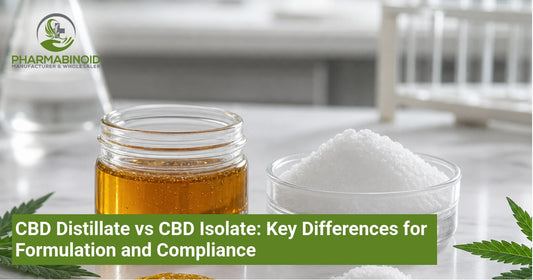
CBD Distillate vs CBD Isolate: Key Differences ...
CBD Distillate vs CBD Isolate is mainly a question of composition, purity target, formulation behaviour, and compliance strategy. Both are refined hemp-derived CBD ingredients, but they are not interchangeable. CBD...
CBD Distillate vs CBD Isolate: Key Differences ...
CBD Distillate vs CBD Isolate is mainly a question of composition, purity target, formulation behaviour, and compliance strategy. Both are refined hemp-derived CBD ingredients, but they are not interchangeable. CBD...
-
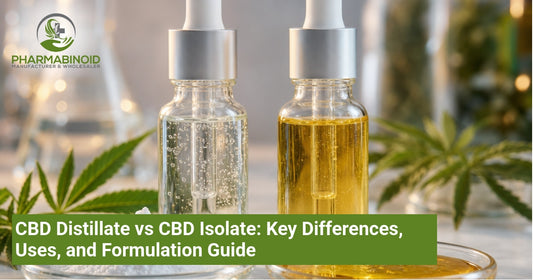
CBD Distillate vs CBD Isolate: Key Differences,...
CBD Distillate vs CBD Isolate is one of the most important comparisons for brands, formulators, and buyers working with hemp-derived ingredients. Both materials can be rich in cannabidiol, but they...
CBD Distillate vs CBD Isolate: Key Differences,...
CBD Distillate vs CBD Isolate is one of the most important comparisons for brands, formulators, and buyers working with hemp-derived ingredients. Both materials can be rich in cannabidiol, but they...
-
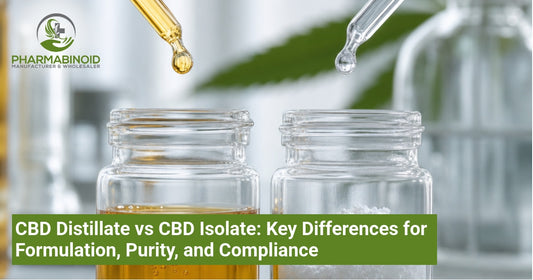
CBD Distillate vs CBD Isolate: Key Differences ...
CBD Distillate vs CBD Isolate is one of the most common comparisons for brands, formulators, and buyers working with hemp-derived ingredients. Both materials can be high-quality sources of cannabidiol, but...
CBD Distillate vs CBD Isolate: Key Differences ...
CBD Distillate vs CBD Isolate is one of the most common comparisons for brands, formulators, and buyers working with hemp-derived ingredients. Both materials can be high-quality sources of cannabidiol, but...
