
Cannabinoid-Forschung
Cannabinoid-Forschung
Cannabinoid-Forschung sollte aus der Perspektive eines Käufers geprüft werden: Identität, Chargennachweise, Eignung der Formulierung, Marktweg und verantwortungsvolle Formulierungen. Forschungsseiten sind am nützlichsten, wenn sie einem Team helfen zu entscheiden, was vor Beschaffung oder Markteinführung geprüft werden sollte.
Bei der Cannabinoid-Forschung liegt der kommerzielle Wert nicht darin, allgemeine Behauptungen zu wiederholen. Er liegt darin, die verfügbaren Nachweise mit einer echten Produktentscheidung, einer klaren Dokumentationsakte und einem praktischen nächsten Schritt zu verknüpfen.
Forschung in einen Käuferkontext übertragen
| Entscheidungsbereich | Was zu prüfen ist |
|---|---|
| Art der Nachweise | Frühe Forschung, Lieferantendokumente und Nachweise zum Endprodukt voneinander trennen. |
| Produktrelevanz | Prüfen, ob die Informationen auf das entwickelte Format anwendbar sind. |
| Qualitätsakte | Jede Beschaffungsentscheidung mit COAs, Spezifikationen und Rückverfolgbarkeit verknüpfen. |
| Kundenansprache | Öffentliche Texte informativ und zurückhaltend halten. |
Prüfungen vor der kommerziellen Nutzung der Informationen
- Welche Frage soll die Forschung beantworten?
- Gilt sie für das tatsächliche Produktformat oder nur für ein allgemeineres Konzept?
- Welche Dokumente werden vor Beschaffung oder Veröffentlichung benötigt?
- Kann das Thema eine Käuferentscheidung unterstützen, ohne zu einer medizinischen Aussage zu werden?
- Wohin sollte der Leser als Nächstes auf der Website Pharmabinoid gehen?
Wo dies dem Käufer hilft
Eine allgemeine Seite zur Cannabinoid-Forschung sollte als Nachweiszentrale dienen und den Lesern helfen, frühe Erkenntnisse, Produktdokumentation, die Realität der Formulierung und eine verantwortungsvolle Kundenansprache voneinander zu unterscheiden. In der Praxis sollte diese Seite Käufern dabei helfen zu entscheiden, was anzufordern ist, was zu testen ist und welche Formulierungen bei Aussagen vermieden werden sollten, bevor Muster oder wiederholte Lieferungen in Betracht gezogen werden.
Was die Seite nicht implizieren sollte
Cannabinoid-Forschung kann bessere Fragestellungen unterstützen, sollte aber nicht in medizinische Aussagen, Wirkungsbehauptungen oder Aussagen zur Legalität übernommen werden. Die Schlussfolgerung sollte an die konkrete Charge, das Produktformat und den Marktweg gebunden bleiben.
Die Prüfung fortsetzen
Cannabinoid-Forschung, reine Cannabinoide, ein Angebot anfordern.
Wie Käufer diese Forschungsseite nutzen sollten
Nutzen Sie die Cannabinoid-Forschung als Möglichkeit, präzisere Fragen zur Beschaffung zu stellen. Das Ziel ist nicht, Wissenschaft außerhalb des Kontexts zu Angebot, sondern zu verstehen, was die Nachweise in einer realen Produktakte unterstützen können und was nicht.
Praktische Hinweise zu Nachweisen
- Allgemeine Forschung von Nachweisen zum Endprodukt trennen.
- Die Chargendokumente neben den Formulierungsnotizen aufbewahren.
- Prüfen, ob das Thema Entscheidungen zu Verpackung, Etikett oder Marktweg verändert.
- Kundengerichtete Texte überprüfen, bevor die Seite oder das Produkt live geht.
Letzte kommerzielle Prüfung
Bevor Sie mit der Cannabinoid-Forschung fortfahren, bestätigen Sie, dass die Erläuterung der Seite mit dem tatsächlichen Produkt, den Chargendokumenten, dem Marktweg und dem Plan zur Kundenaufklärung übereinstimmt. Diese abschließende Prüfung macht aus guten Inhalten eine nützliche kommerzielle Orientierungshilfe.
Wie der Hinweis für Käufer lauten könnte
Für die Cannabinoid-Forschung könnte eine nützliche Anmerkung lauten: „Wir prüfen dieses Material für ein definiertes Produktformat und einen länderspezifischen Zulassungsweg. Bitte bestätigen Sie die Identität der Verbindung, das Chargen-COA, relevante THC- oder Verunreinigungsergebnisse, Lagerungshinweise und ob die Probe unter derselben Spezifikation wiederholt werden kann.“
Was die Seite schwächen würde
- Allgemeine wissenschaftliche Aussagen ohne Bezug zu Beschaffung oder Produktentscheidungen.
- Behauptungen, die auf Behandlung, Prävention oder garantierte Wirkungen hindeuten.
- Dokumente, die eine andere Charge beschreiben als die, auf die sich das Angebot bezieht.
- Probe-Feedback, das für Wiederholbestellungen nicht dokumentiert ist.
Letzte Beschaffungsprüfung
Bevor diese Seite live geht, stellen Sie sicher, dass der Begriff, der Seitentitel, die internen Links und der Angebot-Pfad alle dieselbe Absicht unterstützen. Der Leser sollte die Seite mit einem klareren Verständnis der Cannabinoid-Forschung und einem realistischen nächsten Schritt verlassen.
Cannabinoide
Beta-Pinen
Entdecken Sie Beta-Pinen, ein Terpen mit frischen, kiefernartigen Aromen. Erfahren Sie mehr über seine potenziellen Vorteile, Anwendungen und seine Rolle bei der Unterstützung Ihres Wohlbefindens. Mehr lesen
Cannabichromen - CBC
Cannabichromen oder CBC ist ein nicht berauschendes Cannabinoid, das in Cannabis- und Hanfpflanzen vorkommt. CBC ist für seine einzigartige Interaktion mit dem Endocannabinoid-System bekannt und gewinnt aufgrund seiner potenziellen Anwendungen in Wellness- und Kosmetikprodukten zunehmend an Aufmerksamkeit. Mehr lesen
Cannabicitran - CBT
Cannabicitran, allgemein als CBT bezeichnet, ist ein seltenes und wenig bekanntes Cannabinoid, das in Cannabispflanzen vorkommt. Im Gegensatz zu seinen bekannteren Gegenstücken wirkt CBT nicht berauschend und hat aufgrund seiner einzigartigen potenziellen Anwendungen im Wellnessbereich und in Cannabisproduktformulierungen Interesse geweckt. Mehr lesen
Cannabidiol - CBD
Cannabidiol oder CBD ist ein natürlich vorkommendes, nicht berauschendes Cannabinoid, das in der Cannabispflanze vorkommt. Bekannt für sein therapeutisches Potenzial und seine Anwendungen im Wellnessbereich, ist CBD zu einem der bekanntesten Cannabinoide sowohl auf medizinischen als auch auf Freizeitmärkten geworden. Mehr lesen
Cannabidiolsäure - CBDA
Cannabidiolsäure oder CBDA ist die saure Vorstufe von CBD, die in rohen Cannabispflanzen vorkommt. Sowohl CBDA als auch CBD sind nicht berauschend, doch CBDA gewinnt zunehmend Anerkennung für seine einzigartigen Eigenschaften und potenziellen Vorteile für das Wohlbefinden. Mehr lesen
Cannabidiol-Diacetat - CBD-O
Cannabidiol-Diacetat oder CBD-O ist ein acetyliertes Derivat von Cannabidiol (CBD). CBD-O ist für seine verbesserte Bioverfügbarkeit und chemische Stabilität bekannt und ein vielversprechendes Cannabinoid für fortschrittliche Wellness- und therapeutische Anwendungen. Mehr lesen
Cannabidiphorol - CBDP
Cannabidiphorol oder CBDP ist ein seltenes und aufkommendes Cannabinoid, das eng mit CBD verwandt ist. CBDP ist für seine verlängerte Alkylseitenkette bekannt, könnte ein einzigartiges therapeutisches Potenzial haben und wird für Anwendungen in Wellness-Produkten erforscht. Mehr lesen
Cannabidivarin - CBDV
Cannabidivarin oder CBDV ist ein nicht berauschendes Cannabinoid, das in Cannabis- und Hanfpflanzen vorkommt. Strukturell ähnlich wie CBD gewinnt CBDV aufgrund seiner einzigartigen potenziellen Vorteile und neu entstehenden Anwendungen in Wellness-Produkten an Aufmerksamkeit. Mehr lesen
Cannabigerol - CBG
CBG oder Cannabigerol ist eine nicht berauschende Verbindung, die in Cannabispflanzen vorkommt und oft als das „Mutter-Cannabinoid“ bezeichnet wird. Es ist eine Vorstufe anderer bekannter Cannabinoide wie THC und CBD und damit ein entscheidender Bestandteil der Cannabis-Biochemie. Mehr lesen
Cannabigerol-Diacetat - CBG-O
Cannabigerol-Diacetat oder CBG-O ist ein acetyliertes Derivat von Cannabigerol (CBG). CBG-O ist für seine verbesserte Stabilität und Bioverfügbarkeit bekannt und ein aufkommendes Cannabinoid mit potenziellen Anwendungen in therapeutischen und wellnessorientierten Produkten. Mehr lesen
Cannabinol - CBN
Cannabinol oder CBN ist ein mild psychoaktives Cannabinoid, das entsteht, wenn THC im Laufe der Zeit abgebaut wird. CBN ist für seine beruhigenden Eigenschaften bekannt und wird weithin mit Schlafunterstützung und Stressabbau in Verbindung gebracht, was es zu einem wichtigen Inhaltsstoff in wellnessorientierten Produkten macht. Mehr lesen
Cannabinol-O-Acetat Isolat - CBNO
Cannabinol-O-Acetat oder CBNO ist ein halbsynthetisches Cannabinoid, das von Cannabinol (CBN) abgeleitet ist. CBNO ist für seine einzigartigen Eigenschaften und seine verbesserte Stabilität bekannt und bietet potenzielle Anwendungen in Wellness- und therapeutischen Produkten, insbesondere zur Entspannung und Schlafunterstützung. Mehr lesen
Cannabiphorol - CBNP
Cannabiphorol oder CBNP ist ein seltenes Cannabinoid, das eng mit Cannabinol (CBN) verwandt ist. CBNP ist für seine einzigartige molekulare Struktur und potenziellen Wellness-Vorteile bekannt und entwickelt sich zu einer wertvollen Ergänzung cannabinoidbasierter Produkte. Mehr lesen
CBD-Destillat
Studien zu CBD-Destillat untersuchen, wie cannabidiolreiche Destillate hergestellt, charakterisiert, getestet und in Cannabinoid-Formulierungen verwendet werden. Im Gegensatz zur allgemeinen Forschung zu CBD-Extrakten konzentriert sich dieses Thema speziell auf raffinierte Hanfdestillate: Mehr lesen
CBD-Edibles
Studien zu CBD-Edibles untersuchen, wie sich Cannabidiol verhält, wenn es in orale Produkte wie Gummibonbons, süßwarenähnliche Formate, Kapseln, Getränke und andere einnehmbare Formulierungen eingearbeitet wird. Mehr lesen
CBD-Herstellung
Studien zur CBD-Herstellung untersuchen, wie Cannabidiol im industriellen Maßstab extrahiert, gereinigt, formuliert, getestet, verpackt und kontrolliert wird. Für Cannabinoid-Hersteller, Labore, Formulierer und B2B-Käufer ist diese Forschung wichtig, weil die Produktqualität nicht allein durch den CBD-Gehalt bestimmt wird. Mehr lesen
CBD-Paste
Studien zu CBD-Paste untersuchen, wie sich konzentrierte Hanfextrakte chemisch, pharmakologisch und industriell verhalten, wenn sie als dichte, harzreiche Formulierungen vorliegen. Im Gegensatz zu isoliertem Cannabidiol kann CBD-Paste je nach Extraktions- und Nachverarbeitungsmethoden ein breiteres Cannabinoidprofil, Wachse, Lipide, Flavonoide und manchmal Terpene enthalten. Mehr lesen
CBD-Verpackung
Die Forschung zu CBD-Verpackungen untersucht, wie Verpackungsmaterialien, Etiketteninformationen, Behälterdesign und Qualitätskontrollen die Stabilität, Sicherheit, Benutzerfreundlichkeit und das Compliance-Profil von CBD-Produkten beeinflussen. Für Hersteller, Formulierer, Labore und B2B-Lieferanten ist die Verpackung kein abschließender kosmetischer Schritt; sie ist Teil der Produktkontrollstrategie. Mehr lesen
CBD-Vape-Studien - CBD
CBD-Vape-Studien untersuchen, wie sich Cannabidiol verhält, wenn es aerosolisiert und inhaliert wird, einschließlich Pharmakokinetik, Formulierungsleistung, analytischer Qualität und Sicherheitsaspekten. Mehr lesen
Delta-3-Caren (Δ3 Carene)
Delta-3-Caren ist ein natürlich vorkommendes Terpen, das in verschiedenen Pflanzen, darunter einige Cannabissorten, vorkommt und für sein erdiges Aroma mit Anklängen von Kiefer und Zitrus bekannt ist. Mehr lesen
Delta-9-Tetrahydrocannabioctol - THC-C8/THC-JD
Delta-9-Tetrahydrocannabioctol, auch bekannt als THC-C8 oder THC-JD, ist ein seltenes Cannabinoid, das sich durch seine Octyl-Seitenkette auszeichnet. THC-C8 ist für seine potenziell erhöhte Wirksamkeit und einzigartigen Effekte bekannt und gewinnt als fortschrittliches Cannabinoid für freizeitbezogene und therapeutische Anwendungen an Aufmerksamkeit. Mehr lesen
Delta-8-Tetrahydrocannabiphorol - D8-THCP
Delta-8-Tetrahydrocannabiphorol oder D8-THCP ist ein hochpotentes Analogon von Delta-8-THC, das für seine stärkere Bindungsaffinität an Cannabinoidrezeptoren bekannt ist. Die erhöhte Potenz und die einzigartigen Effekte von D8-THCP fördern seine Beliebtheit in freizeitbezogenen und wellnessorientierten Cannabinoid-Formulierungen. Mehr lesen
Delta-9-Tetrahydrocannabiphorol - D9-THCP
Delta-9-Tetrahydrocannabiphorol oder D9-THCP ist ein hochpotentes Cannabinoid, das 2019 entdeckt wurde. D9-THCP ist für seine starke Bindungsaffinität an CB1-Rezeptoren bekannt, erzeugt intensive psychoaktive Effekte und gewinnt rasch an Interesse in der Cannabinoidforschung und Produktentwicklung. Mehr lesen
Delta-9-Tetrahydrocannabiphorol-O-Acetat - D9-THCPO
Delta-9-Tetrahydrocannabiphorol-O-Acetat oder D9-THCPO ist ein acetyliertes Derivat von Delta-9-THCP. D9-THCPO ist für seine außergewöhnliche Potenz und lang anhaltenden Effekte bekannt und wird zunehmend als hochentwickeltes Cannabinoid für freizeitbezogene und therapeutische Anwendungen anerkannt. Mehr lesen
Delta-8-Tetrahydrocannabivarin - D8-THCV
Delta-8-Tetrahydrocannabivarin oder D8-THCV ist ein seltenes Cannabinoid, das in Cannabispflanzen vorkommt und für seine mild psychoaktiven Effekte sowie potenziellen Wellness-Anwendungen bekannt ist. Es ist chemisch Delta-8-THC ähnlich, zeichnet sich jedoch durch seine einzigartige Wechselwirkung mit dem körpereigenen Endocannabinoid-System aus. Mehr lesen
Delta-9-Tetrohydracannabivarin - D9-THCV
Delta-9-Tetrahydrocannabivarin oder D9-THCV ist ein seltenes Cannabinoid, das in Cannabispflanzen vorkommt. D9-THCV ist für seine einzigartigen Effekte auf Energie und Appetitmodulation bekannt, chemisch THC ähnlich, bietet jedoch deutliche Vorteile ohne dieselben intensiven psychoaktiven Eigenschaften. Mehr lesen
Delta-9-Tetrahydrocannabutol - D9-THCB
Delta-9-Tetrahydrocannabutol oder D9-THCB ist ein seltenes Cannabinoid, das eng mit Delta-9-THC verwandt ist. D9-THCB ist für seine psychoaktiven Effekte bekannt und besitzt eine einzigartige molekulare Struktur, die seine Wechselwirkung mit dem Endocannabinoid-System (ECS) verstärkt und potenzielle therapeutische sowie freizeitbezogene Anwendungen bietet. Mehr lesen
Hexahydro-Cannabidiol - H4CBD
Hexahydro-Cannabidiol oder H4CBD ist eine hydrierte Form von Cannabidiol (CBD), die für ihre verbesserte Bioverfügbarkeit und Stabilität bekannt ist. Mehr lesen
Hexahydrocannabinol - HHC
Hexahydrocannabinol oder HHC ist ein hydriertes Derivat von THC, das natürlicherweise in Cannabispflanzen vorkommt. HHC ist für seine Stabilität und mild psychoaktiven Effekte bekannt und gewinnt in Wellness- und Freizeitprodukten an Beliebtheit. Mehr lesen
Hexahydrocannabihexol - HHCH
Hexahydrocannabihexol oder HHCH ist ein hydriertes Derivat von THCH, das für seine verbesserte Stabilität und moderaten psychoaktiven Effekte bekannt ist. HHCH ist für seine verlängerte Haltbarkeit und ausgewogenen Eigenschaften bekannt und entwickelt sich zu einem vielseitigen Cannabinoid für Freizeit- und Wellness-Produkte. Mehr lesen
Hexahydrocannabinol-O-Acetat Isolat - HHCO
Hexahydrocannabinol-O-Acetat oder HHCO ist ein halbsynthetisches Cannabinoid, das von HHC abgeleitet wird. HHCO ist für seine verstärkten psychoaktiven Effekte und seine länger anhaltende Stabilität bekannt und entwickelt sich zu einem wichtigen Akteur in der Cannabinoid-Industrie für Freizeit- und therapeutische Anwendungen. Mehr lesen
Hexahydrocannabiphorol - HHCP
Hexahydrocannabiphorol oder HHCP ist ein hochpotentes hydriertes Derivat von THC, das für seine verstärkten psychoaktiven Effekte und seine lang anhaltende Stabilität bekannt ist. Seine einzigartigen Eigenschaften machen HHCP zu einem aufstrebenden Cannabinoid für Freizeit- und therapeutische Anwendungen. Mehr lesen
Hexahydrocannabiphorol-O-Acetat - HHCPO
Hexahydrocannabiphorol-O-Acetat oder HHCPO ist ein hydriertes und acetyliertes Derivat von THCP, das außergewöhnliche Potenz, verbesserte chemische Stabilität und verlängerte Wirkungen bietet. Seine einzigartigen Eigenschaften machen HHCPO zu einem spannenden Cannabinoid für fortschrittliche Freizeit- und Wellness-Produkte. Mehr lesen
Ocimen
Ocimen ist ein natürlich vorkommendes Monoterpen, das in einer Vielzahl von Pflanzen und Früchten vorkommt und für sein süßes, kräuterartiges Aroma bekannt ist. Es spielt eine entscheidende Rolle beim Pflanzenschutz und bei der Anlockung von Bestäubern. Mehr lesen
Terpinolen
Terpinolen ist ein Terpen, das in vielen Pflanzen vorkommt, einschließlich Cannabis, und für sein frisches, kiefernartiges Aroma sowie seine potenziellen therapeutischen Eigenschaften bekannt ist. Mehr lesen
Terpene
Terpene sind natürlich vorkommende Verbindungen in Pflanzen, die für deren einzigartige Aroma- und Geschmacksprofile verantwortlich sind. Diese Verbindungen spielen in verschiedenen Branchen eine entscheidende Rolle, insbesondere bei ätherischen Ölen und in der Aromatherapie, und bieten potenzielle therapeutische Vorteile ohne psychoaktive Effekte. Mehr lesen
Tetrahydrocannabihexol - THCH
Tetrahydrocannabihexol oder THCH ist ein seltenes, natürlich vorkommendes Cannabinoid, das sich durch seine Hexyl-Seitenkette auszeichnet. THCH ist für seine potenziellen psychoaktiven Effekte und seine einzigartige molekulare Struktur bekannt und gewinnt als fortschrittliches Cannabinoid mit sowohl Freizeit- als auch therapeutischen Anwendungen an Aufmerksamkeit. Mehr lesen
Wasserlösliche Cannabinoide
Studien zu wasserlöslichen Cannabinoiden untersuchen, wie schlecht wasserverträgliche Cannabinoidmoleküle in dispergierbare Systeme für Getränke, orale Flüssigkeiten, funktionelle Inhaltsstoffe und Forschungsanwendungen formuliert werden können. Da Cannabinoide wie CBD, CBG, CBC, THC-Varianten und viele seltene Cannabinoide von Natur aus lipophil sind, lösen sie sich nicht ohne Weiteres in Wasser. Mehr lesen
Blogbeiträge
Alle anzeigen-
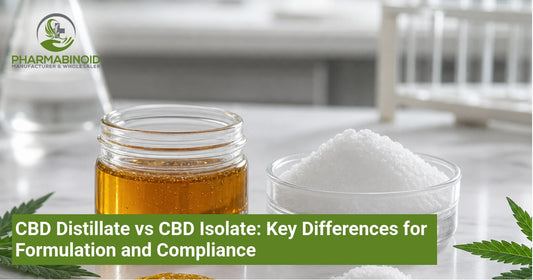
CBD-Destillat vs. CBD-Isolat: Die wichtigsten U...
CBD-Destillat vs. CBD-Isolat ist vor allem eine Frage der Zusammensetzung, des angestrebten Reinheitsgrads, des Formulierungsverhaltens und der Compliance-Strategie. Beide sind veredelte, aus Hanf gewonnene CBD-Zutaten, aber sie sind nicht austauschbar....
CBD-Destillat vs. CBD-Isolat: Die wichtigsten U...
CBD-Destillat vs. CBD-Isolat ist vor allem eine Frage der Zusammensetzung, des angestrebten Reinheitsgrads, des Formulierungsverhaltens und der Compliance-Strategie. Beide sind veredelte, aus Hanf gewonnene CBD-Zutaten, aber sie sind nicht austauschbar....
-
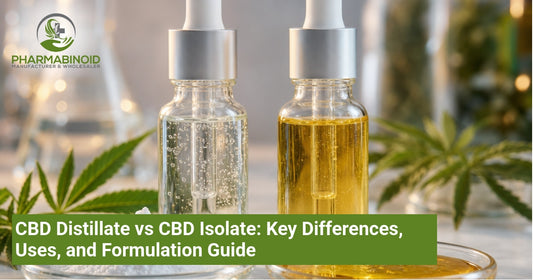
CBD-Destillat vs. CBD-Isolat: Unterschiede, Anw...
CBD-Destillat vs. CBD-Isolat ist ein wichtiger Vergleich für Marken, Formulierer und Käufer, die mit aus Hanf gewonnenen Zutaten arbeiten. Beide Materialien können reich an Cannabidiol sein, unterscheiden sich jedoch in...
CBD-Destillat vs. CBD-Isolat: Unterschiede, Anw...
CBD-Destillat vs. CBD-Isolat ist ein wichtiger Vergleich für Marken, Formulierer und Käufer, die mit aus Hanf gewonnenen Zutaten arbeiten. Beide Materialien können reich an Cannabidiol sein, unterscheiden sich jedoch in...
-
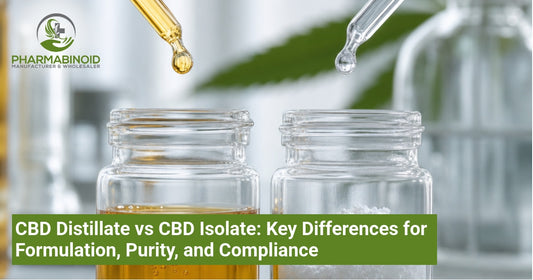
CBD-Destillat vs. CBD-Isolat: Die wichtigsten U...
CBD-Destillat vs. CBD-Isolat ist ein häufiger Vergleich für Marken, Formulierer und Käufer, die mit aus Hanf gewonnenen Zutaten arbeiten. Beide können hochwertige CBD-Quellen sein, unterscheiden sich jedoch bei Formulierungsverhalten, Prüfung,...
CBD-Destillat vs. CBD-Isolat: Die wichtigsten U...
CBD-Destillat vs. CBD-Isolat ist ein häufiger Vergleich für Marken, Formulierer und Käufer, die mit aus Hanf gewonnenen Zutaten arbeiten. Beide können hochwertige CBD-Quellen sein, unterscheiden sich jedoch bei Formulierungsverhalten, Prüfung,...
