CBDA Isolate Research and Studies
CBDA isolate research and studies help separate scientific evidence from commercial sourcing decisions. CBDA is an acidic cannabinoid associated with hemp and cannabis, while a commercial buyer must also verify identity, purity, stability, documentation and destination-market requirements.
What is CBDA?
Cannabidiolic acid (CBDA) is chemically related to CBD but is a distinct molecular form. Heat and other processing conditions can promote decarboxylation, changing CBDA into CBD. For this reason, temperature, storage and manufacturing route matter when the acidic profile is intended to remain within specification.
What the current evidence can and cannot show
CBDA has been investigated in laboratory and preclinical research involving cannabinoid biology and related signalling pathways. Such studies can identify mechanisms and research questions, but they do not establish a universal human outcome, clinical recommendation or suitable dosage. Interpret findings according to the model used, preparation tested, exposure conditions and whether results have been independently replicated.
A useful starting point is the PubMed record for cannabidiolic acid research. Regulatory context should be checked separately through the EFSA Novel Food overview.
Research versus commercial sourcing
Research literature describes a compound under defined experimental conditions. Sourcing requires a different review: is the material genuinely CBDA isolate, does the batch match its certificate of analysis, is the purity suitable for the intended formula, and can the finished product be marketed in the target country? A scientific citation cannot replace batch documentation, specification review or regulatory assessment.
Evidence and quality checks
- Identity: confirm compound identity, assay, batch number and analytical method.
- Purity: review cannabinoid profile, residual solvents, pesticides, heavy metals, microbiology and THC-related results where relevant.
- Stability: assess heat, light, moisture, oxygen and storage conditions.
- Formulation fit: test the material in the intended carrier, base or finished-product process.
- Claims: keep customer-facing wording aligned with the evidence, product category and applicable market rules.
Research limitations
CBDA evidence varies across cell studies, animal models, isolated compounds and finished products. Results from one preparation cannot automatically validate another, and early findings may not translate directly to people. Limited evidence is a reason to avoid certainty, dosage promises and therapeutic language.
Commercial review pathway
Start with the intended format, destination market and target specification. Request a batch-specific COA, technical data, safety documentation and storage guidance. Compare the document set with the sample and record formulation observations. For commercial context, review the CBDA products collection, the relevant CBDA isolate information and the request-for-quote page.
FAQ about CBDA studies
Do CBDA studies prove a consumer benefit?
No. They may identify biological activity or hypotheses, but should not be presented as proven consumer outcomes.
Can a COA replace research review?
No. A COA verifies defined batch characteristics; it does not establish clinical efficacy.
What should buyers ask first?
Ask for the specification, batch evidence, intended use, storage conditions, testing scope and destination-market requirements.
Conclusion
CBDA isolate research and studies are most useful when evidence, batch quality, formulation behaviour and compliance are kept distinct. Connecting those four areas through documented review supports more responsible product development and sourcing.
Pharmabinoid
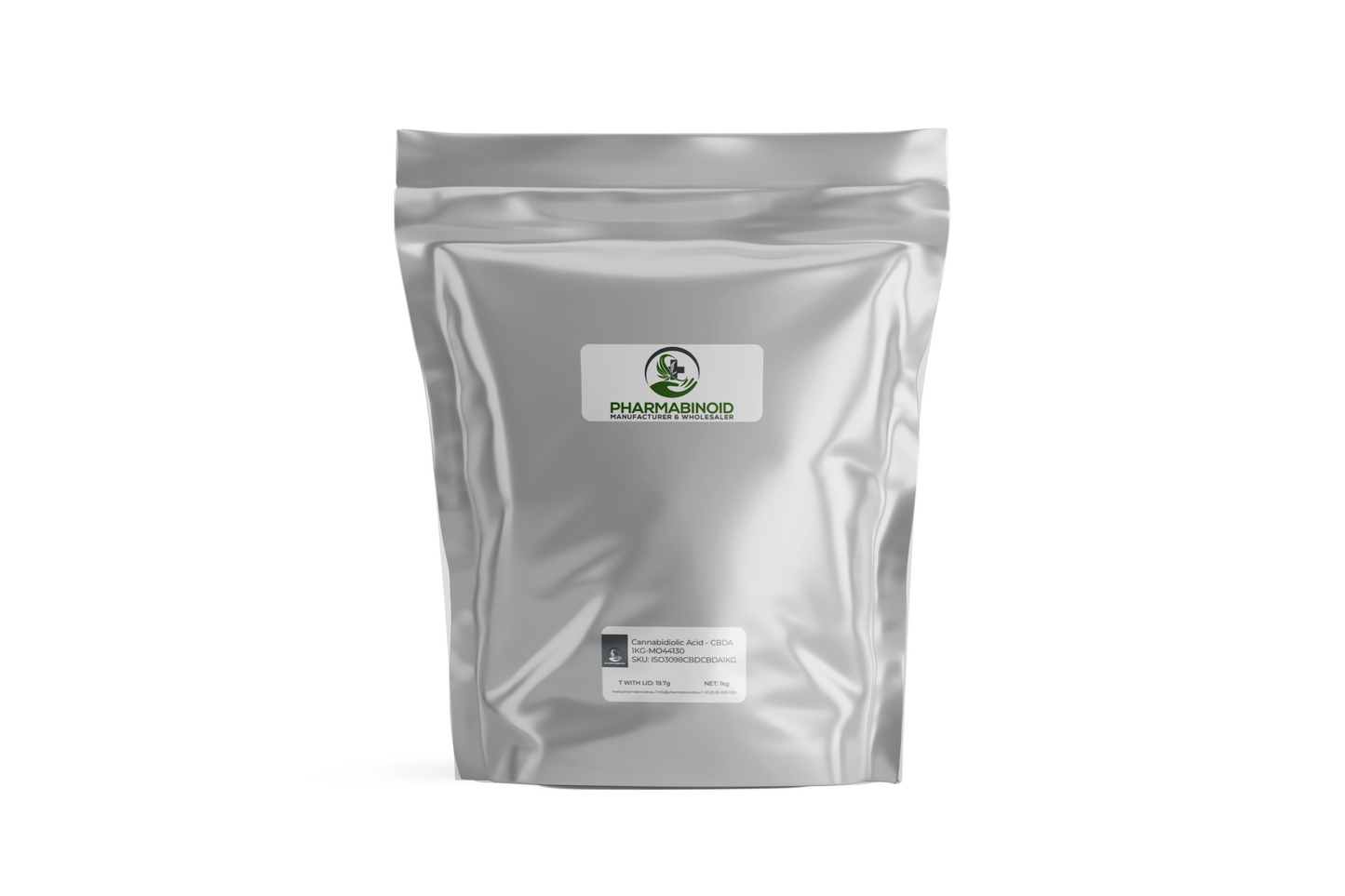
CBDA Isolate - Cannabidiolic Acid
Share
SKU:ISO3098CBDCBDA10G

Free Sample
Discover the benefits of our products firsthand by visiting our website to obtain your exclusive TryPharma code. When you place an order using this special code, not only will you secure your desired products, but we will also include a complimentary sample with each purchase. This opportunity allows you to experience the quality of our offerings before you commit to the main shipment. Our goal is to ensure that you are completely satisfied with your selection, and this process provides a risk-free way to explore our extensive range of products. Contact us today to get started and take the first step towards a rewarding experience with our premium offerings.

Shipping Insurance
When you purchase bulk CBD isolates, oils, and other products from us, your shipment is fully insured by us at no additional cost to you. We utilize reputable shipping companies like FedEx and UPS for transportation, while managing the insurance coverage ourselves to secure every shipment from our warehouse to your doorstep. At TryPharma, we are committed to fostering business growth by offering a risk-free wholesale service. In the unlikely event of a shipping issue, we guarantee a refund within five business days from the date the incident is confirmed. Our comprehensive approach effectively eliminates 99.9% of all potential risks associated with bulk CBD shipping, ensuring your complete peace of mind.

30 Day Return
We invite you to test the complimentary sample included with your order before opening the main shipment. If the quality does not meet your expectations, you can benefit from our 30-day return policy. This policy permits you to return the product within 30 days for a full refund, guaranteeing your complete satisfaction. Contact us today to explore our exceptional range of products and experience our dedicated customer service.
Blog posts
View all-
CBD Distillate vs. CBD Isolate: Key Differences...
CBD distillate vs. CBD isolate is primarily a question of composition, purity targets, formulation behavior, and compliance strategy. Both are refined, hemp-derived CBD ingredients, but they are not interchangeable. CBD...
CBD Distillate vs. CBD Isolate: Key Differences...
CBD distillate vs. CBD isolate is primarily a question of composition, purity targets, formulation behavior, and compliance strategy. Both are refined, hemp-derived CBD ingredients, but they are not interchangeable. CBD...
-
CBD Distillate vs. CBD Isolate: Differences, Ap...
CBD distillate vs. CBD isolate is an important comparison for brands, formulators, and buyers working with hemp-derived ingredients. Both materials can be rich in cannabidiol, but they differ in composition,...
CBD Distillate vs. CBD Isolate: Differences, Ap...
CBD distillate vs. CBD isolate is an important comparison for brands, formulators, and buyers working with hemp-derived ingredients. Both materials can be rich in cannabidiol, but they differ in composition,...
-
CBD Distillate vs. CBD Isolate: Key Differences...
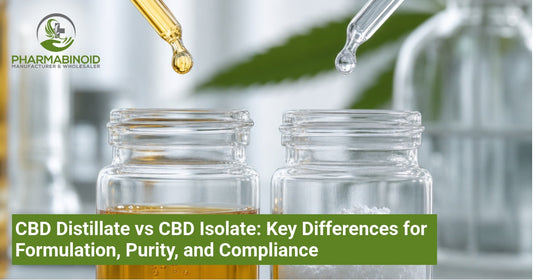
CBD distillate vs. CBD isolate is a common comparison for brands, formulators, and buyers working with hemp-derived ingredients. Both can be high-quality CBD sources, but they differ in formulation behavior,...
CBD Distillate vs. CBD Isolate: Key Differences...
CBD distillate vs. CBD isolate is a common comparison for brands, formulators, and buyers working with hemp-derived ingredients. Both can be high-quality CBD sources, but they differ in formulation behavior,...