
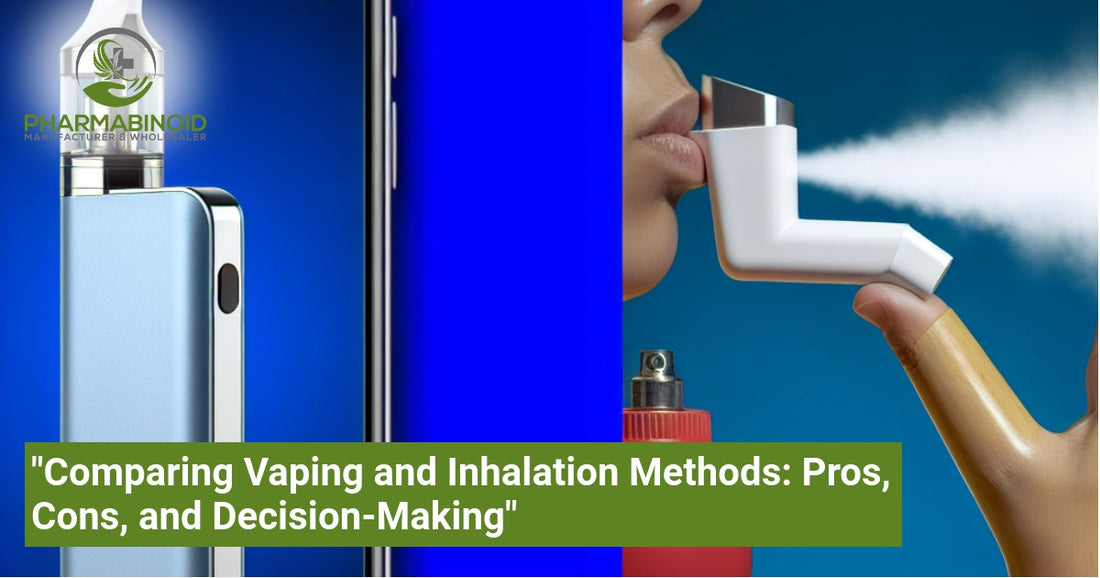
Comparing Vaping and Inhalation Methods: Pros, Cons, and Decision-Making
Share
Comparing vaping and inhalation methods requires more than choosing between familiar product labels. For cannabinoid brands, formulators and buyers, the relevant questions include how material is heated, what the device is designed to handle, how the finished product is tested and which claims are appropriate in the target market. This guide provides a practical framework without treating inhalation formats as interchangeable or making unsupported safety claims.
What is being compared?
Inhalation is a delivery route, while vaping is one specific method within that route. A vape device heats a liquid, oil or compatible formulation to create an aerosol. Other formats may involve dried botanical material, specialised devices or different temperature and airflow profiles. Each route changes the requirements for ingredients, packaging, device instructions and quality control.
Vaping and other inhalation formats: a practical matrix
- Vape liquids and distillates: require control of viscosity, homogeneity, thermal behaviour, hardware compatibility and contaminant testing.
- Dry botanical formats: depend on moisture control, botanical identity, particle characteristics, packaging and storage stability.
- Concentrated inhalable materials: require validated handling, accurate potency data and a formulation suited to the intended device.
- Combustible formats: involve combustion rather than controlled heating and should not be presented as equivalent to vaping.
The appropriate route depends on the market, product brief, cannabinoid profile, device, intended use and evidence required for the final product.
Device compatibility and formulation design
A formulation that looks acceptable in a sample vial may perform poorly in a finished device. Buyers should review viscosity, flow, crystallisation risk, flavour stability, coil compatibility and expected use per unit. Carrier selection and dilution must be validated rather than assumed. Hardware and formulation should be evaluated as one system because airflow, power, temperature control and reservoir design affect aerosol generation and sensory performance.
Testing, documentation and European market review
Quality assurance should cover identity, potency, cannabinoid profile, residual solvents where relevant, pesticides, heavy metals, microbiological parameters and other contaminants appropriate to the material. A current batch certificate of analysis is useful only when the test method, sample identity and reporting units are clear. Finished-formulation compatibility and stability data may also be needed.
Regulatory treatment varies by ingredient, product format and country. Review applicable national requirements, product classification, packaging obligations and advertising restrictions before launch. The European Food Safety Authority novel food information is a useful starting point, but does not replace product-specific legal advice.
How to evaluate a supplier
Before requesting a quotation, prepare a brief covering target country, cannabinoid preference, format, expected volume, device type, packaging and documentation requirements. Ask whether the supplier can provide batch-level testing, technical specifications, storage guidance and finished-product development support.
Continue to Pharmabinoid’s CBD products collection, review CBD vape options or explore cannabinoid product development services. These pages serve different stages of the commercial decision and do not replace technical validation.
Responsible positioning and limitations
Do not present vaping as risk-free or medically beneficial. Evidence differs between nicotine products, cannabinoid products, devices and formulations, and long-term outcomes remain under study. The World Health Organization’s e-cigarette information notes that aerosols can contain potentially harmful substances and that long-term effects are not fully understood.
Frequently asked questions
Is vaping the same as inhalation?
No. Vaping is one inhalation method. The device, material and heating process determine the characteristics of the finished aerosol.
What should buyers request?
Request specifications, a batch-specific certificate of analysis, contaminant testing, storage information and intended-use guidance.
Can one formulation be used in every device?
No. Viscosity, airflow, heating conditions and reservoir design can materially affect performance.
Conclusion
Comparing vaping and inhalation methods is ultimately a product-development and quality decision. The strongest route combines a defined cannabinoid profile, compatible hardware, appropriate testing, responsible communication and market-specific compliance review. For project-specific questions, use Pharmabinoid’s request-for-quote page.
