What is Delta-8-Tetrahydrocannabiphorol? D8-THCP Guide
What is Delta-8-Tetrahydrocannabiphorol? Delta-8-Tetrahydrocannabiphorol, commonly shortened to D8-THCP or Δ8-THCP, is a rare hemp-derived cannabinoid analogue related to THCP. It matters in the cannabinoid industry because it sits at the intersection of advanced cannabinoid chemistry, analytical testing, formulation control, and evolving European compliance expectations.
Definition of Delta-8-Tetrahydrocannabiphorol
Delta-8-Tetrahydrocannabiphorol is a structural isomer of tetrahydrocannabiphorol with a seven-carbon alkyl side chain and a double bond in the delta-8 position. In simple terms, the tetrahydrocannabiphorol definition refers to a THCP-type cannabinoid whose molecular structure differs from more familiar THC cannabinoids mainly by side-chain length and double-bond placement.
What Is Delta-8-Tetrahydrocannabiphorol?
Delta-8-Tetrahydrocannabiphorol is part of the broader family of tetrahydrocannabinoids, which includes compounds such as delta-8-THC, delta-9-THC, and delta-9-THCP. The “delta-8” part describes the position of a carbon-carbon double bond in the molecule, while “tetrahydrocannabiphorol” refers to the THCP-type structure with an extended seven-carbon side chain.
When people search for what is D8-THCP or D8-THCP explained, they are usually looking for a clear distinction between D8-THCP and better-known cannabinoids. D8-THCP is not simply another name for delta-8-THC. It has a different carbon side chain and belongs to a more specialised class of cannabinoids that require careful identification by modern analytical methods.
Because D8-THCP is not one of the most abundant naturally occurring cannabinoids in hemp, commercial material is typically associated with controlled cannabinoid conversion, purification, and analytical verification. For manufacturers, researchers, and formulators, this makes certificates of analysis, impurity screening, cannabinoid profiling, and production documentation especially important.
Scientific Background of Delta-8-Tetrahydrocannabiphorol
The scientific interest in THCP-type cannabinoids increased after researchers identified delta-9-THCP in cannabis and investigated its interaction with cannabinoid receptors. A commonly cited paper indexed on PubMed discusses the discovery of tetrahydrocannabiphorol and cannabidiphorol in Cannabis sativa, highlighting why side-chain length is relevant in cannabinoid pharmacology: PubMed: A novel phytocannabinoid isolated from Cannabis sativa L.
D8-THCP is best understood through three structural features. First, it belongs to the tetrahydrocannabinoid group. Second, it contains a seven-carbon alkyl side chain, which differentiates THCP-type molecules from standard THC molecules with a five-carbon side chain. Third, its double bond is located at the delta-8 position rather than the delta-9 position.
From a pharmacology perspective, cannabinoids are often discussed in relation to the endocannabinoid system, including CB1 and CB2 receptors. However, research specifically on delta-8-Tetrahydrocannabiphorol remains limited. It would be scientifically inappropriate to assume that all findings on delta-9-THCP, delta-8-THC, or delta-9-THC directly apply to D8-THCP without compound-specific data.
In manufacturing, D8-THCP requires a high level of process control. Conversion reactions can produce related cannabinoids, by-products, residual reagents, or isomeric impurities if not properly managed. This is why reputable cannabinoid production depends on validated purification, batch-specific testing, and documentation through certificates of analysis.
Key Characteristics of Delta-8-Tetrahydrocannabiphorol
- THCP-type side chain: D8-THCP has a seven-carbon side chain, which places it in the tetrahydrocannabiphorol family rather than the standard THC family.
- Delta-8 double-bond position: The delta-8 designation refers to the location of the molecule’s double bond, making it structurally different from delta-9-THCP.
- Rare and technically demanding: D8-THCP is not typically present in hemp at meaningful commercial concentrations, so production generally depends on advanced cannabinoid chemistry and purification.
- Testing-sensitive compound: Accurate identification may require HPLC, GC-MS, LC-MS, NMR, or other validated analytical techniques, especially to distinguish it from closely related isomers.
- Research limitations: Compared with major cannabinoids such as CBD, CBG, or THC, publicly available research on D8-THCP remains limited and should be interpreted cautiously.
Uses and Industry Applications
D8-THCP is mainly relevant in specialist cannabinoid research, ingredient development, analytical method validation, and advanced formulation work. It is not a mainstream hemp ingredient in the same way as CBD isolate or broad-spectrum hemp extracts. Instead, it represents a highly technical cannabinoid category where purity, identity, and compliance assessment are central.
For formulation teams, D8-THCP raises practical questions around solubility, carrier selection, stability, homogeneity, and bioavailability. Like many lipophilic cannabinoids, it is typically considered in oil-based or specialist delivery systems rather than water-based formats unless specific emulsification technology is used. Any formulation containing rare cannabinoids should be developed with careful attention to concentration accuracy and batch-to-batch consistency.
For analytical laboratories, D8-THCP is relevant because rare cannabinoid isomers can be difficult to separate and quantify without appropriate reference standards and validated methods. A cannabinoid profile should not only list the target cannabinoid but also evaluate related isomers, residual solvents, heavy metals, pesticides, microbial contaminants, and other quality parameters where applicable.
For procurement and compliance teams in Europe, D8-THCP should be evaluated carefully against applicable national and EU-level requirements. Cannabinoid regulations vary by country and product category, and rare intoxicating or potentially psychoactive cannabinoids may receive particular regulatory scrutiny. Pharmabinoid provides cannabinoid materials for professional B2B use, where documentation, specification review, and responsible application are essential.
Related Cannabinoids, Terpenes, or Terms
Delta-8-Tetrahydrocannabiphorol is closely related to other THCP-type and THC-type cannabinoids. For product-specific reference, see D8-THCP Tetrahydrocannabiphorol. For broader scientific context, Pharmabinoid also maintains resources on cannabinoid research and D8-THCP research and studies.
Related terms include delta-9-THCP, delta-8-THC, delta-9-THC, CBD, CBG, cannabinoid isomer, cannabinoid receptor, certificate of analysis, cannabinoid profile, and analytical reference standard. Terpenes do not define D8-THCP chemically, but terpene profiles can influence the sensory and formulation characteristics of finished cannabinoid products.
FAQ About Delta-8-Tetrahydrocannabiphorol
What is D8-THCP?
D8-THCP is the common abbreviation for delta-8-Tetrahydrocannabiphorol. It is a THCP-type cannabinoid with a seven-carbon side chain and a double bond in the delta-8 position.
Is D8-THCP the same as delta-8-THC?
No. D8-THCP and delta-8-THC are structurally related but not the same compound. D8-THCP has a longer seven-carbon side chain, while delta-8-THC has the more familiar five-carbon side chain.
Is Delta-8-Tetrahydrocannabiphorol naturally found in hemp?
THCP-type cannabinoids have been discussed in cannabis research, but D8-THCP is not generally considered abundant in hemp. Commercial D8-THCP materials are typically associated with controlled production and purification rather than simple botanical extraction.
Why is analytical testing important for D8-THCP?
Analytical testing is essential because D8-THCP can be accompanied by closely related isomers or process-related impurities. A reliable certificate of analysis helps confirm identity, purity, cannabinoid profile, and safety-related quality parameters.
Can D8-THCP be used in consumer products?
That depends on the country, product type, formulation, concentration, and applicable regulations. Businesses should assess D8-THCP with qualified regulatory guidance before placing any product on the market.
Conclusion
Delta-8-Tetrahydrocannabiphorol is a specialised THCP-type cannabinoid that requires careful scientific, analytical, and compliance consideration. For anyone asking “What is Delta-8-Tetrahydrocannabiphorol?”, the most important points are its delta-8 structure, seven-carbon side chain, limited compound-specific research, and the need for high-quality testing and documentation in professional cannabinoid applications.
TryPharma
Rufen Sie uns an oder senden Sie uns eine E-Mail für weitere Informationen
Kostenlos Probe
Entdecken Sie die Vorteile unserer Produkte aus erster Hand, indem Sie unsere Website besuchen, um Ihren exklusiven TryPharma-Code zu erhalten. Wenn Sie mit diesem speziellen Code eine Bestellung aufgeben, sichern Sie sich nicht nur Ihre gewünschten Produkte, sondern wir legen jeder Bestellung auch ein kostenloses Probe bei. Diese Möglichkeit erlaubt es Ihnen, die Qualität unseres Angebots zu erleben, bevor Sie sich für die Hauptlieferung entscheiden. Unser Ziel ist es, sicherzustellen, dass Sie mit Ihrer Auswahl vollkommen zufrieden sind, und dieser Prozess bietet Ihnen eine risikofreie Möglichkeit, unser umfangreiches Produktsortiment zu entdecken. Kontaktieren Sie uns noch heute, um loszulegen und den ersten Schritt zu einer lohnenden Erfahrung mit unseren Premium-Angeboten zu machen.
Versandversicherung
Wenn Sie CBD-Isolate, Öle und andere Produkte in großen Mengen bei uns kaufen, ist Ihre Sendung ohne zusätzliche Kosten für Sie vollständig durch uns versichert. Wir nutzen renommierte Versandunternehmen wie FedEx und UPS für den Transport und verwalten den Versicherungsschutz selbst, um jede Sendung von unserem Lager bis zu Ihrer Haustür abzusichern. Bei TryPharma setzen wir uns dafür ein, Geschäftswachstum zu fördern, indem wir einen risikofreien Großhandelsservice anbieten. Im unwahrscheinlichen Fall eines Versandproblems garantieren wir eine Rückerstattung innerhalb von fünf Werktagen ab dem Datum, an dem der Vorfall bestätigt wird. Unser umfassender Ansatz eliminiert effektiv 99,9 % aller potenziellen Risiken im Zusammenhang mit dem Versand von CBD in großen Mengen und gewährleistet Ihnen absolute Sicherheit.
30 Tage Rückgaberecht
Wir laden Sie ein, das kostenlose Probe, das Ihrer Bestellung beiliegt, zu testen, bevor Sie die Hauptsendung öffnen. Wenn die Qualität nicht Ihren Erwartungen entspricht, können Sie von unserem 30-tägigen Rückgaberecht profitieren. Diese Richtlinie erlaubt es Ihnen, das Produkt innerhalb von 30 Tagen gegen eine vollständige Rückerstattung zurückzugeben und garantiert so Ihre vollkommene Zufriedenheit. Kontaktieren Sie uns noch heute, um unser außergewöhnliches Produktsortiment zu entdecken und unseren engagierten Kundenservice zu erleben.
Cannabinoid-Isolate
-
CBD Isolat – Cannabidiol
Regulärer Preis From €24.99 to €369.99Regulärer PreisGrundpreis / pro€0.00Angebotspreis €24.99 -
CBG – Cannabigerol
Regulärer Preis From €49.99 to €799.99Regulärer PreisGrundpreis / pro€0.00Angebotspreis €49.99 -
CBN - Cannabinol
Regulärer Preis From €79.99 to €1,299.99Regulärer PreisGrundpreis / pro€0.00Angebotspreis €79.99 -
CBC - Cannabichromen
Regulärer Preis From €99.99 to €1,999.99Regulärer PreisGrundpreis / pro€0.00Angebotspreis €99.99 -
CBDV – Cannabidivarin
Regulärer Preis From €13.99 to €3,149.99Regulärer PreisGrundpreis / pro€0.00Angebotspreis €13.99 -
Cannabicitran Isolat - CBT
Regulärer Preis From €49.99 to €4,349.99Regulärer PreisGrundpreis / pro€0.00Angebotspreis €49.99 -
Cannabidiolsäure - CBDA
Regulärer Preis From €49.99 to €1,499.99Regulärer PreisGrundpreis / pro€0.00Angebotspreis €49.99 -
Cannabigerolsäure - CBGA
Regulärer Preis From €59.99 to €1,749.99Regulärer PreisGrundpreis / pro€0.00Angebotspreis €59.99
Kollektionen
-
Psychoaktive Extrakte
Psychoaktive Extrakte – Großhandels-Einkaufsleitfaden Psychoaktive Extrakte vereinen spezialisierte Cannabinoid-Formate für Käufer in...
-
CBD-Kosmetik
CBD-Kosmetik – Leitfaden für Großhandelskäufer CBD-Kosmetik vereint CBD-Kosmetikformate für Marken, die topische...
-
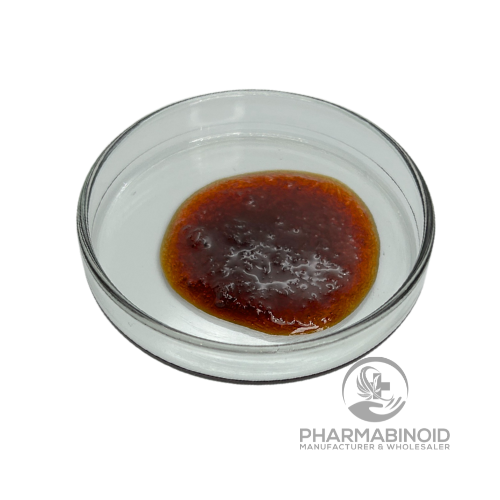
CBD-Destillate
CBD-Destillate – Leitfaden für Großhandelskäufer CBD-Destillate bündelt Produktoptionen für professionelle Käufer, die...
Blogbeiträge
Alle anzeigen-
CBD Capsules vs CBD Oil: Key Differences, Quali...
When comparing CBD Capsules vs CBD Oil, the real difference is not simply “which one is stronger.” Capsules, softgels, and oils deliver cannabidiol in different formats, with different formulation choices,...
CBD Capsules vs CBD Oil: Key Differences, Quali...
When comparing CBD Capsules vs CBD Oil, the real difference is not simply “which one is stronger.” Capsules, softgels, and oils deliver cannabidiol in different formats, with different formulation choices,...
-
Risks of CBD Capsules: Safety, Side Effects, In...
The risks of CBD capsules are usually linked less to the capsule format itself and more to dose, product quality, individual sensitivity, drug interactions, and regulatory compliance. CBD capsules can...
Risks of CBD Capsules: Safety, Side Effects, In...
The risks of CBD capsules are usually linked less to the capsule format itself and more to dose, product quality, individual sensitivity, drug interactions, and regulatory compliance. CBD capsules can...
-
CBD Capsules Dosage: A Responsible Guide to Ser...
Understanding CBD Capsules Dosage starts with one simple point: capsules are pre-measured products, but the right serving size still depends on the formulation, cannabinoid content, user profile, and product quality....
CBD Capsules Dosage: A Responsible Guide to Ser...
Understanding CBD Capsules Dosage starts with one simple point: capsules are pre-measured products, but the right serving size still depends on the formulation, cannabinoid content, user profile, and product quality....