Risks of Linalool
Risks of Linalool: Oxidation, Sensitization and Responsible Evaluation
Risks of linalool are best understood in context: the compound itself, its oxidation state, the formulation, the route and level of exposure, and the person exposed all matter. Linalool is a widely encountered aromatic terpene, but its presence in a formula should not be treated as proof of either harm or safety. One important research topic is the formation of linalool hydroperoxides when linalool is exposed to air. These oxidation products have been associated with allergic contact sensitization in dermatology testing. This is a focused safety overview, not a diagnosis or an individual medical assessment.
What is linalool?
Linalool is an oxygen-containing monoterpene alcohol found in many plants and used as an aroma ingredient in a range of product categories. Its familiar floral character is not a safety specification. Commercial material can differ by source, isomer composition, purity, accompanying constituents and storage history. For background on identity and sourcing, see What is linalool?
Why oxidation matters
When linalool is exposed to oxygen over time, it can undergo autoxidation and form oxidation products, including hydroperoxides. This transformation means that an aged or poorly protected material may not have the same chemical profile as freshly produced material. Oxidation is influenced by conditions such as oxygen availability, light, heat, container closure, headspace and time; the extent cannot be inferred from the ingredient name alone.
Clinical patch-testing studies have reported positive reactions to oxidized linalool hydroperoxides among people referred for evaluation of dermatitis. Such findings are relevant to allergen assessment, but they should be interpreted carefully: patch-test populations are selected clinical groups, and a positive test does not automatically establish that a particular product caused symptoms in everyday use. One study of consecutive dermatitis patients reported contact allergy findings for oxidized linalool; consult the peer-reviewed patch-testing report for its design and limits.
Possible sensitization and exposure context
Allergic contact sensitization is different from ordinary irritation and from a generalized claim that linalool is dangerous. A sensitized person may react to relevant exposure, while other people may not. Risk assessment should therefore consider the finished product category, concentration, application site, frequency, exposure duration, population, co-ingredients and applicable ingredient-labeling or safety requirements. A screening result is evidence to consider, not a stand-alone prediction for every consumer or every formulation.
This page does not provide medical advice. Anyone with a suspected fragrance allergy or skin reaction should seek advice from a qualified healthcare professional. Businesses should avoid interpreting this overview as a substitute for a product-specific toxicological assessment or applicable regulatory review.
Storage and formulation controls
For manufacturers and ingredient buyers, sensible controls focus on preventing avoidable degradation and documenting the material. Follow the supplier’s specification and safety data, use suitable tightly closed containers, limit unnecessary exposure to air, heat and light, and observe stated storage conditions and shelf life. Do not assume that refrigeration or an antioxidant is appropriate without checking material compatibility and supplier guidance.
- Record supplier, batch, receipt date and storage conditions.
- Review available identity, purity and stability information, and request clarification where the specification is incomplete.
- Use fit-for-purpose packaging that limits unwanted exposure during storage and handling.
- Assess the intended finished formula, including relevant allergen, exposure and product-category requirements.
- Set a documented review process for aged, opened, or out-of-specification material rather than relying on aroma alone.
These are quality-management considerations, not a guarantee that oxidation is absent. Where the risk assessment requires it, use appropriate analytical methods and qualified expertise to evaluate the actual batch and finished product.
What the evidence does not establish
Research on oxidized linalool supports attention to sensitization potential, but it does not mean every linalool-containing product causes allergy. Test outcomes depend on study populations, test preparations, diagnostic methods and clinical relevance. Nor can observations about oxidized hydroperoxides be directly generalized to every source, concentration, route or use pattern. Product-specific exposure assessment remains necessary.
Likewise, broad claims that linalool is universally safe, universally harmful, or produces a health benefit are not justified by the evidence summarized here. Separate chemical identity, hazard identification, exposure assessment and final risk characterization instead of collapsing them into one claim.
Questions about linalool risks
Does fresh linalool already contain hydroperoxides?
The amount, if any, depends on the material and its history. Exposure to oxygen can promote oxidation, so use batch documentation and appropriate testing rather than assuming a fixed profile.
Does a positive patch test mean every linalool product will cause a reaction?
No. A patch-test result needs clinical context, and actual relevance depends on exposure and the product. A healthcare professional can interpret individual results.
How can a business reduce avoidable quality concerns?
Specify the material, protect it according to supplier instructions, track opened and stored batches, and complete a product-specific safety and compliance review before launch.
Related resources
For broader context, read Linalool studies, explore the terpenes collection, or review what cannabis terpenes are. The scientific discussion above is educational and does not replace professional advice or regulatory assessment.
Conclusion
The most relevant risk discussion for linalool concerns oxidation products and the possibility of contact sensitization in susceptible individuals. Those findings call for responsible storage, batch awareness and product-specific assessment—not blanket conclusions. For any commercial formulation, evaluate the actual material, exposure conditions and destination-market requirements, and communicate only claims supported by the evidence.
TryPharma
Rufen Sie uns an oder senden Sie uns eine E-Mail für weitere Informationen
Kostenloses Probe
Entdecken Sie die Vorteile unserer Produkte aus erster Hand, indem Sie unsere Website besuchen, um Ihren exklusiven TryPharma-Code zu erhalten. Wenn Sie mit diesem speziellen Code eine Bestellung aufgeben, sichern Sie sich nicht nur Ihre gewünschten Produkte, sondern wir legen jeder Bestellung auch ein kostenloses Probe bei. Diese Möglichkeit erlaubt es Ihnen, die Qualität unserer Angebote zu erleben, bevor Sie sich für die Hauptlieferung entscheiden. Unser Ziel ist es, sicherzustellen, dass Sie mit Ihrer Auswahl vollkommen zufrieden sind, und dieser Prozess bietet Ihnen eine risikofreie Möglichkeit, unser umfangreiches Produktsortiment kennenzulernen. Kontaktieren Sie uns noch heute, um loszulegen und den ersten Schritt zu einer lohnenden Erfahrung mit unseren Premium-Angeboten zu machen.

Transportversicherung
Wenn Sie bei uns CBD-Isolate, Öle und andere Produkte in großen Mengen kaufen, ist Ihre Sendung für Sie ohne zusätzliche Kosten vollständig durch uns versichert. Wir nutzen renommierte Versandunternehmen wie FedEx und UPS für den Transport, während wir die Versicherungsdeckung selbst verwalten, um jede Sendung von unserem Lager bis zu Ihrer Haustür abzusichern. Bei TryPharma setzen wir uns dafür ein, das Geschäftswachstum zu fördern, indem wir einen risikofreien Großhandelsservice anbieten. Im unwahrscheinlichen Fall eines Versandproblems garantieren wir eine Rückerstattung innerhalb von fünf Werktagen ab dem Datum, an dem der Vorfall bestätigt wird. Unser umfassender Ansatz eliminiert effektiv 99,9 % aller potenziellen Risiken im Zusammenhang mit dem Versand von CBD in großen Mengen und sorgt so für Ihre vollkommene Sicherheit.

30 Tage Rückgaberecht
Wir laden Sie ein, das kostenlose Probe, das Ihrer Bestellung beiliegt, zu testen, bevor Sie die Hauptsendung öffnen. Wenn die Qualität nicht Ihren Erwartungen entspricht, können Sie von unserem 30-tägigen Rückgaberecht profitieren. Diese Regelung erlaubt es Ihnen, das Produkt innerhalb von 30 Tagen gegen eine vollständige Rückerstattung zurückzugeben und garantiert so Ihre volle Zufriedenheit. Kontaktieren Sie uns noch heute, um unser außergewöhnliches Produktsortiment zu entdecken und unseren engagierten Kundenservice zu erleben.
Cannabinoid-Isolate
-
CBD Isolat – Cannabidiol
Regulärer Preis From €24.99 to €369.99Regulärer PreisGrundpreis / pro€0.00Angebotspreis €24.99 -
CBG – Cannabigerol
Regulärer Preis From €49.99 to €799.99Regulärer PreisGrundpreis / pro€0.00Angebotspreis €49.99 -
CBN - Cannabinol
Regulärer Preis From €79.99 to €1,299.99Regulärer PreisGrundpreis / pro€0.00Angebotspreis €79.99 -
CBC – Cannabichromen
Regulärer Preis From €99.99 to €1,999.99Regulärer PreisGrundpreis / pro€0.00Angebotspreis €99.99 -
CBDV – Cannabidivarin
Regulärer Preis From €13.99 to €3,149.99Regulärer PreisGrundpreis / pro€0.00Angebotspreis €13.99 -
Cannabicitran Isolat - CBT
Regulärer Preis From €49.99 to €4,349.99Regulärer PreisGrundpreis / pro€0.00Angebotspreis €49.99 -
CBDA-Isolat – Cannabidiolsäure
Regulärer Preis From €49.99 to €1,499.99Regulärer PreisGrundpreis / pro€0.00Angebotspreis €49.99 -
Cannabigerolsäure - CBGA
Regulärer Preis From €59.99 to €1,749.99Regulärer PreisGrundpreis / pro€0.00Angebotspreis €59.99
Kollektionen
-
PPB - Psychoaktive Mischungen von Pharmabinoid
PPB-Psychoaktive Mischungen für professionelle KäuferEntdecken Sie die PPB-Kollektion von Pharmabinoid: psychoaktive Mischungen...
-
CBD-Kosmetik
CBD-Kosmetik: Leitfaden für GroßhandelskäuferCBD-Kosmetik ist die zentrale kommerzielle Kollektion für Marken, Hersteller...
-
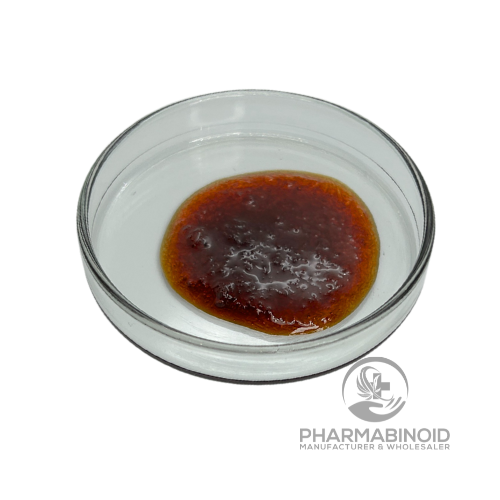
CBD-Destillate im Großhandel
CBD-Destillate im Großhandel für europäische KäuferVergleichen Sie CBD-Destillate für professionelle Formulierungen, Private-Label-...
Blogbeiträge
Alle anzeigen-
Risiken von Myrcen: Was die Sicherheitsdaten ze...
Ein ausgewogener Überblick über die Sicherheitsdaten zu Myrcen: Tier-Toxikologie, Expositionswege, Grenzen der Humandaten und praktische Hinweise zum Umgang mit konzentrierten Stoffen.
Risiken von Myrcen: Was die Sicherheitsdaten ze...
Ein ausgewogener Überblick über die Sicherheitsdaten zu Myrcen: Tier-Toxikologie, Expositionswege, Grenzen der Humandaten und praktische Hinweise zum Umgang mit konzentrierten Stoffen.
-
CBD-Destillat vs. CBD-Isolat: Die wichtigsten U...
CBD-Destillat vs. CBD-Isolat ist vor allem eine Frage der Zusammensetzung, des angestrebten Reinheitsgrads, des Formulierungsverhaltens und der Compliance-Strategie. Beide sind veredelte, aus Hanf gewonnene CBD-Zutaten, aber sie sind nicht austauschbar....
-
CBD-Destillat vs. CBD-Isolat: Unterschiede, Anw...
CBD-Destillat vs. CBD-Isolat ist ein wichtiger Vergleich für Marken, Formulierer und Käufer, die mit aus Hanf gewonnenen Zutaten arbeiten. Beide Materialien können reich an Cannabidiol sein, unterscheiden sich jedoch in...
CBD-Destillat vs. CBD-Isolat: Unterschiede, Anw...
CBD-Destillat vs. CBD-Isolat ist ein wichtiger Vergleich für Marken, Formulierer und Käufer, die mit aus Hanf gewonnenen Zutaten arbeiten. Beide Materialien können reich an Cannabidiol sein, unterscheiden sich jedoch in...