CBD Edibles Studies: Bioavailability, Testing & Formulation
CBD Edibles Studies investigate how cannabidiol behaves in oral formats such as gummies, capsules, beverages and other ingestible formulations. For research and product-development teams, the key questions include how the edible matrix affects dispersion, stability, oral absorption and analytical consistency. Findings depend on the specific formulation and study design; they should not be treated as dosage guidance or proof of a health outcome.
What do CBD Edibles Studies examine?
CBD edible research covers the composition, processing, stability, absorption and quality of cannabidiol-containing oral products. CBD is a lipophilic phytocannabinoid, so its behaviour in an edible can be affected by carrier oils, emulsification, particle size, food matrix, heating, acidity and storage conditions. A gummy, capsule, beverage and oil-based preparation are all oral formats, but they are not scientifically interchangeable.
Studies may measure cannabinoid concentration, uniformity between units, degradation over time, plasma concentrations or metabolite formation. These endpoints answer different questions: a stable and uniform product is not automatically a highly bioavailable one, and pharmacokinetic observations do not by themselves establish a clinical benefit.
Current scientific understanding of oral CBD absorption
Oral CBD absorption can vary considerably. The compound’s limited water solubility, gastrointestinal processes, first-pass metabolism and differences between formulations contribute to variability. Food conditions may also affect exposure, but results from a particular controlled study should not be generalized to every edible or used as consumer dosing advice.
Researchers should compare like with like: the CBD material, carrier system, fed or fasted conditions, sampling schedule, analytical method and participant characteristics all matter. Published pharmacokinetic findings are useful for forming research questions, but they do not automatically predict the performance of a commercial gummy or beverage.
Formulation and pharmacology considerations
CBD’s interaction with biological targets is complex and remains an active area of study. In oral products, formulation determines how the ingredient disperses and is presented to the gastrointestinal environment; it does not eliminate the need to evaluate the compound, exposure and evidence separately. Emulsions, lipid carriers and encapsulation approaches may change dispersion or measured exposure, but any performance statement needs product-specific support.
For gummies, process heat, pH, water activity, gelling agents, flavour systems and cannabinoid distribution can affect product quality. For beverages, physical stability and phase separation may require particular attention. Capsules and oil-based formats raise different questions about fill uniformity, carrier compatibility and packaging. Teams should test the actual formula and process rather than assume that results transfer across formats.
Key research areas
- Oral CBD absorption and pharmacokinetics: Studies assess concentration over time, metabolites and how study conditions relate to exposure.
- CBD edible bioavailability: Research examines whether carriers or delivery systems change dispersion and measured systemic exposure; performance must be demonstrated rather than inferred from technology names.
- CBD gummies studies: Work may focus on unit-to-unit cannabinoid uniformity, processing effects, matrix compatibility and stability.
- Stability and degradation: Light, oxygen, heat, acidity and storage duration can influence the cannabinoid profile, so stability-indicating methods and suitable packaging matter.
- Analytical method performance: Sampling, extraction from the edible matrix, method validation and measurement uncertainty affect whether results are reliable.
Research limitations
Research products and controlled formulations may differ substantially from retail edibles. Studies can also vary in sample size, population, CBD material, analytical procedures, food conditions and outcome measures. A result about plasma exposure does not establish a predictable experience, safety for every user or suitability for a particular market.
Direct comparison is difficult when one study tests an oil-filled capsule and another tests a pectin gummy or beverage. Differences in matrix, manufacturing process and storage may be as important as the nominal CBD amount. Researchers should report the full formulation and methods, and readers should distinguish preclinical, pharmacokinetic and clinical evidence.
Industrial and formulation relevance
For manufacturers and B2B formulators, edible research informs ingredient selection, process design and quality controls. Evaluate the input material’s identity, cannabinoid profile, purity, carrier compatibility and batch documentation. During development, assess mixing order, temperature exposure, homogeneity, sensory effects, packaging interaction and shelf-life under relevant conditions.
CBD isolate, broad-spectrum distillate and full-spectrum materials may bring different formulation and compliance considerations. Confirm the intended product category and target market before selecting a format. Pharmabinoid’s cannabinoid research hub and cannabinoid product development collection provide related context for professional teams.
Testing, quality and compliance considerations
Finished-product testing should verify actual cannabinoid content and, where relevant, distribution between units and batch consistency. The analytical method must be suitable for the edible matrix and validated for its intended purpose. Input-material testing alone cannot confirm the final product’s composition after processing and storage.
Depending on the product and market, a quality file may include identity and potency results, contaminant testing, microbiological controls, stability data, manufacturing records and traceability. In Europe, regulatory classification and market requirements depend on the product, ingredients, intended use and jurisdiction. Consult current official sources and qualified advisers; scientific research does not itself establish market authorization. For broader supplier and formulation questions, review the CBD edibles collection and the request-for-quote page.
Related research topics
Related topics include cannabinoid pharmacokinetics, oral delivery systems, emulsions, CBD stability, analytical method validation and formulation compatibility. The CBD Edibles Studies: Bioavailability, Testing & Formulation resource is the established research page for this topic; this guide focuses on the same theme from a distinct overview angle. Avoid treating a general research summary as a substitute for product-specific evidence.
FAQ about CBD Edibles Studies
What do CBD edible studies usually measure?
Depending on the research question, studies may assess cannabinoid content, uniformity, stability, oral absorption, plasma concentration or metabolites. No single measure establishes every aspect of product performance.
Are CBD gummies studies interchangeable with CBD oil studies?
No. Gummies have a distinct matrix and manufacturing process. Oil studies do not automatically establish gummy stability, unit uniformity or absorption.
Does higher bioavailability prove a health benefit?
No. Bioavailability is a pharmacokinetic concept. It does not by itself establish a clinical outcome, safety for a particular person or authorization to make a product claim.
Conclusion
CBD Edibles Studies help researchers and product teams investigate oral CBD absorption, edible bioavailability, matrix effects, stability and testing. The evidence must be interpreted in light of the formulation, methods and study population, and cannot be generalized automatically to every gummy or ingestible product. Reliable development combines suitable analytical methods, batch-specific quality documentation, market-aware compliance review and cautious communication.
TryPharma
Rufen Sie uns an oder senden Sie uns eine E-Mail für weitere Informationen
Kostenloses Probe
Entdecken Sie die Vorteile unserer Produkte aus erster Hand, indem Sie unsere Website besuchen, um Ihren exklusiven TryPharma-Code zu erhalten. Wenn Sie mit diesem speziellen Code eine Bestellung aufgeben, sichern Sie sich nicht nur Ihre gewünschten Produkte, sondern wir legen jeder Bestellung auch ein kostenloses Probe bei. Diese Möglichkeit erlaubt es Ihnen, die Qualität unserer Angebote zu erleben, bevor Sie sich für die Hauptlieferung entscheiden. Unser Ziel ist es, sicherzustellen, dass Sie mit Ihrer Auswahl vollkommen zufrieden sind, und dieser Prozess bietet Ihnen eine risikofreie Möglichkeit, unser umfangreiches Produktsortiment kennenzulernen. Kontaktieren Sie uns noch heute, um loszulegen und den ersten Schritt zu einer lohnenden Erfahrung mit unseren Premium-Angeboten zu machen.

Transportversicherung
Wenn Sie bei uns CBD-Isolate, Öle und andere Produkte in großen Mengen kaufen, ist Ihre Sendung für Sie ohne zusätzliche Kosten vollständig durch uns versichert. Wir nutzen renommierte Versandunternehmen wie FedEx und UPS für den Transport, während wir die Versicherungsdeckung selbst verwalten, um jede Sendung von unserem Lager bis zu Ihrer Haustür abzusichern. Bei TryPharma setzen wir uns dafür ein, das Geschäftswachstum zu fördern, indem wir einen risikofreien Großhandelsservice anbieten. Im unwahrscheinlichen Fall eines Versandproblems garantieren wir eine Rückerstattung innerhalb von fünf Werktagen ab dem Datum, an dem der Vorfall bestätigt wird. Unser umfassender Ansatz eliminiert effektiv 99,9 % aller potenziellen Risiken im Zusammenhang mit dem Versand von CBD in großen Mengen und sorgt so für Ihre vollkommene Sicherheit.

30 Tage Rückgaberecht
Wir laden Sie ein, das kostenlose Probe, das Ihrer Bestellung beiliegt, zu testen, bevor Sie die Hauptsendung öffnen. Wenn die Qualität nicht Ihren Erwartungen entspricht, können Sie von unserem 30-tägigen Rückgaberecht profitieren. Diese Regelung erlaubt es Ihnen, das Produkt innerhalb von 30 Tagen gegen eine vollständige Rückerstattung zurückzugeben und garantiert so Ihre volle Zufriedenheit. Kontaktieren Sie uns noch heute, um unser außergewöhnliches Produktsortiment zu entdecken und unseren engagierten Kundenservice zu erleben.
Cannabinoid-Isolate
-
CBD Isolat – Cannabidiol
Regulärer Preis From €24.99 to €369.99Regulärer PreisGrundpreis / pro€0.00Angebotspreis €24.99 -
CBG – Cannabigerol
Regulärer Preis From €49.99 to €799.99Regulärer PreisGrundpreis / pro€0.00Angebotspreis €49.99 -
CBN - Cannabinol
Regulärer Preis From €79.99 to €1,299.99Regulärer PreisGrundpreis / pro€0.00Angebotspreis €79.99 -
CBC – Cannabichromen
Regulärer Preis From €99.99 to €1,999.99Regulärer PreisGrundpreis / pro€0.00Angebotspreis €99.99 -
CBDV – Cannabidivarin
Regulärer Preis From €13.99 to €3,149.99Regulärer PreisGrundpreis / pro€0.00Angebotspreis €13.99 -
Cannabicitran Isolat - CBT
Regulärer Preis From €49.99 to €4,349.99Regulärer PreisGrundpreis / pro€0.00Angebotspreis €49.99 -
CBDA-Isolat – Cannabidiolsäure
Regulärer Preis From €49.99 to €1,499.99Regulärer PreisGrundpreis / pro€0.00Angebotspreis €49.99 -
Cannabigerolsäure - CBGA
Regulärer Preis From €59.99 to €1,749.99Regulärer PreisGrundpreis / pro€0.00Angebotspreis €59.99
Kollektionen
-
PPB - Psychoaktive Mischungen von Pharmabinoid
PPB-Psychoaktive Mischungen für professionelle KäuferEntdecken Sie die PPB-Kollektion von Pharmabinoid: psychoaktive Mischungen...
-
CBD-Kosmetik
CBD-Kosmetik: Leitfaden für GroßhandelskäuferCBD-Kosmetik ist die zentrale kommerzielle Kollektion für Marken, Hersteller...
-
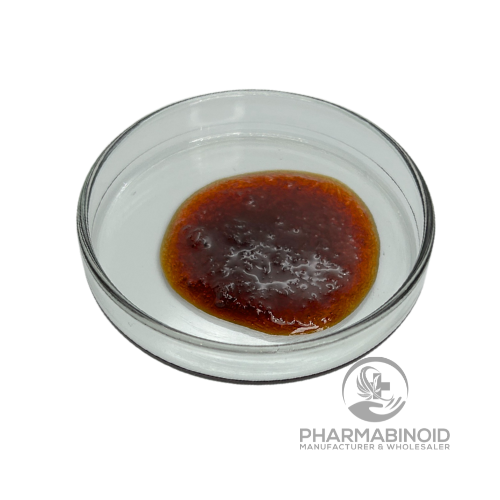
CBD-Destillate im Großhandel
CBD-Destillate im Großhandel für europäische KäuferVergleichen Sie CBD-Destillate für professionelle Formulierungen, Private-Label-...
Blogbeiträge
Alle anzeigen-
CBD-Destillat vs. CBD-Isolat: Die wichtigsten U...
CBD-Destillat vs. CBD-Isolat ist vor allem eine Frage der Zusammensetzung, des angestrebten Reinheitsgrads, des Formulierungsverhaltens und der Compliance-Strategie. Beide sind veredelte, aus Hanf gewonnene CBD-Zutaten, aber sie sind nicht austauschbar....
CBD-Destillat vs. CBD-Isolat: Die wichtigsten U...
CBD-Destillat vs. CBD-Isolat ist vor allem eine Frage der Zusammensetzung, des angestrebten Reinheitsgrads, des Formulierungsverhaltens und der Compliance-Strategie. Beide sind veredelte, aus Hanf gewonnene CBD-Zutaten, aber sie sind nicht austauschbar....
-
CBD-Destillat vs. CBD-Isolat: Unterschiede, Anw...
CBD-Destillat vs. CBD-Isolat ist ein wichtiger Vergleich für Marken, Formulierer und Käufer, die mit aus Hanf gewonnenen Zutaten arbeiten. Beide Materialien können reich an Cannabidiol sein, unterscheiden sich jedoch in...
CBD-Destillat vs. CBD-Isolat: Unterschiede, Anw...
CBD-Destillat vs. CBD-Isolat ist ein wichtiger Vergleich für Marken, Formulierer und Käufer, die mit aus Hanf gewonnenen Zutaten arbeiten. Beide Materialien können reich an Cannabidiol sein, unterscheiden sich jedoch in...
-
CBD-Destillat vs. CBD-Isolat: Die wichtigsten U...
CBD-Destillat vs. CBD-Isolat ist ein häufiger Vergleich für Marken, Formulierer und Käufer, die mit aus Hanf gewonnenen Zutaten arbeiten. Beide können hochwertige CBD-Quellen sein, unterscheiden sich jedoch bei Formulierungsverhalten, Prüfung,...
CBD-Destillat vs. CBD-Isolat: Die wichtigsten U...
CBD-Destillat vs. CBD-Isolat ist ein häufiger Vergleich für Marken, Formulierer und Käufer, die mit aus Hanf gewonnenen Zutaten arbeiten. Beide können hochwertige CBD-Quellen sein, unterscheiden sich jedoch bei Formulierungsverhalten, Prüfung,...