Studien zu CBD-Destillat untersuchen, wie cannabidiolreiche Destillate hergestellt, charakterisiert, getestet und in Cannabinoid-Formulierungen verwendet werden. Im Gegensatz zur allgemeinen Forschung zu CBD-Extrakten konzentriert sich dieses Thema speziell auf raffinierte Hanfdestillate: konzentrierte Materialien, die CBD neben messbaren Mengen an Minor-Cannabinoiden, restlichen Terpenen, prozessbedingten Verunreinigungen und trägerfreien pflanzlich gewonnenen Verbindungen enthalten können. Für Hersteller, Laboratorien und Formulierer liegt der wissenschaftliche Wert der Forschung zu CBD-Destillaten weniger in allgemeinen Gesundheitsbehauptungen als vielmehr im Verständnis von Zusammensetzung, Reinheit, Stabilität, Bioverfügbarkeitsfaktoren und analytischer Verifizierung.
Was ist CBD-Destillat?
CBD-Destillat ist ein raffinierter Hanfextrakt, der durch Konzentration und Reinigung cannabinoidreichen Materials nach der Extraktion hergestellt wird. Der Prozess beginnt in der Regel mit der Extraktion der Biomasse unter Verwendung von Ethanol, Kohlenwasserstoffen oder überkritischem CO2, gefolgt von Veredelungsschritten wie Winterisierung, Filtration, Lösungsmittelentfernung, Decarboxylierung und Destillation. Kurzweg- oder Wischfilmdestillation wird häufig eingesetzt, um Cannabinoide von leichter siedenden flüchtigen Stoffen, Wachsen, Chlorophyll und schwereren Rückständen zu trennen.
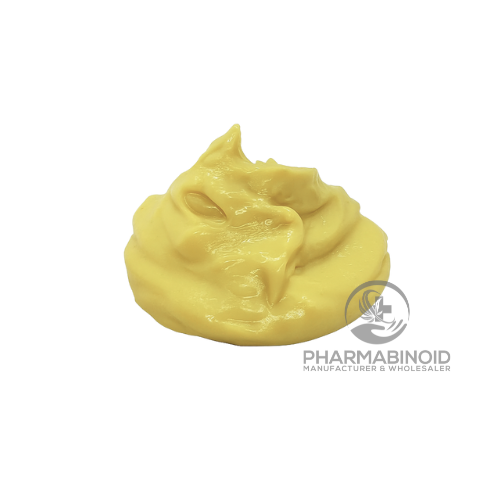
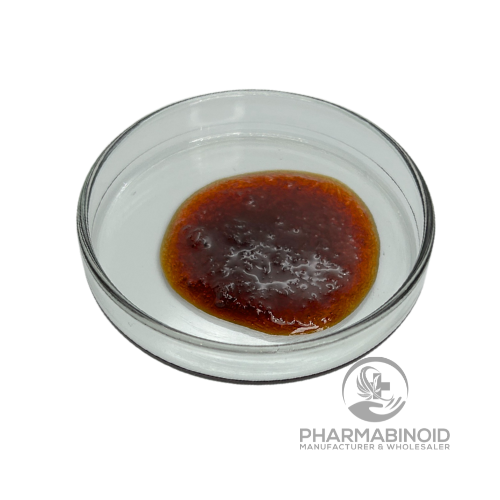
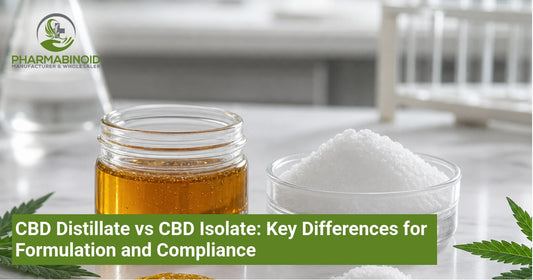
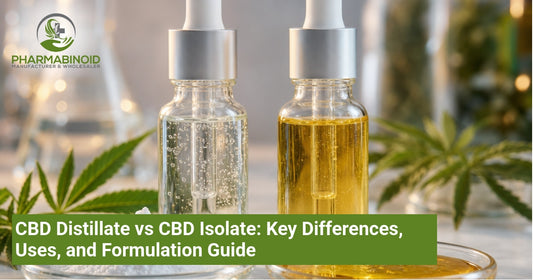
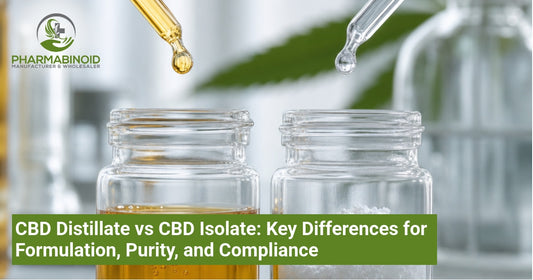
Das Ergebnis ist ein viskoses, bernstein- bis goldfarbenes Öl mit hoher CBD-Konzentration. Je nach Ausgangsmaterial und Raffinationsstrategie kann CBD-Destillat auch Minor-Cannabinoide wie CBG, CBC, CBN oder Spuren saurer Cannabinoide sowie einen variablen Terpengehalt enthalten. Im Gegensatz dazu wird CBD Isolat weiter zu einem kristallinen Material gereinigt, das einen sehr hohen CBD-Anteil bei minimalen Begleitstoffen enthält. Zum Vergleich mit der auf Isolat fokussierten Wissenschaft bietet Pharmabinoid auch Forschungskontext zu CBD-Isolat-Forschung und Studien.
CBD-Destillat ist daher keine einzelne fest definierte chemische Substanz. Es ist eine Kategorie von aus Hanf gewonnenem Zwischenmaterial, dessen Qualität von der botanischen Ausgangsbasis, der Extraktionsmethode, den Raffinationsparametern und den analytischen Kontrollen abhängt.
Aktuelles wissenschaftliches Verständnis von Studien zu CBD-Destillat
Die aktuelle Forschung zu CBD-Destillaten lässt sich am besten als Kombination aus Cannabinoid-Chemie, Extraktionswissenschaft, analytischer Prüfung und Formulierungsentwicklung verstehen. Die meisten veröffentlichten Studien bewerten nicht „CBD-Destillat“ als ein standardisiertes Material. Stattdessen untersuchen sie Cannabidiol, Hanfextrakte, den Abbau von Cannabinoiden, die Zusammensetzung von Extrakten, Kontaminanten oder Verabreichungssysteme. Diese Unterscheidung ist wichtig, weil Erkenntnisse aus Studien zu gereinigtem CBD nicht immer direkt auf komplexe Destillate übertragen werden können.
Das wissenschaftliche Interesse an Studien zu Hanfdestillaten umfasst häufig die Konsistenz des Cannabinoidprofils, den Erhalt von Minor-Cannabinoiden, den Verlust von Terpenen während des Erhitzens, die Kontrolle von Restlösungsmitteln, den Übergang von Pestiziden, das Screening auf Schwermetalle und oxidationsbedingte Veränderungen. Die Destillation kann die Reinheit verbessern, indem sie viele nicht zielgerichtete Pflanzenstoffe reduziert, ersetzt jedoch keine chargenspezifische analytische Prüfung. Die Qualität von Destillaten muss bestätigt und darf nicht einfach vorausgesetzt werden.
Die breitere Cannabidiol-Forschung hat die Wechselwirkung von CBD mit mehreren biologischen Zielstrukturen untersucht, doch die Evidenz variiert je nach Studiendesign, Modell und verwendetem Material. In der PubMed-Literatur zur Pharmakologie von Cannabidiol indexierte Übersichtsarbeiten
zeigen, dass CBD pharmakologisch komplex ist und nicht allein über einen einzelnen Rezeptorweg beschrieben werden kann. Speziell bei CBD-Destillat sollte der wissenschaftliche Schwerpunkt auf Zusammensetzung, Reproduzierbarkeit, Sicherheitsprüfungen und Formulierungsverhalten liegen, anstatt auf nicht verifizierten Wirksamkeitsbehauptungen.
Pharmakologie und Wirkmechanismus
CBD weist ein anderes pharmakologisches Profil auf als berauschende Cannabinoide, die stark an CB1-Rezeptoren wirken. Forschungen deuten darauf hin, dass CBD eine geringe direkte Affinität zu CB1- und CB2-Rezeptoren hat, während es unter experimentellen Bedingungen mit mehreren Nicht-Cannabinoid-Zielen und Signalsystemen interagiert. Dazu gehören Ionenkanäle, Enzyme, Transporter und Rezeptorsysteme, die in der Literatur zur Cannabinoid-Pharmakologie diskutiert werden. Die Relevanz dieser Mechanismen hängt jedoch stark von Konzentration, Formulierung, Verabreichungsweg, Studienmodell und dem Vorhandensein anderer Verbindungen ab.
Bei CBD-Destillat ist die pharmakologische Interpretation komplexer als bei isoliertem CBD. Geringfügige Cannabinoide und Terpene können physikalische Eigenschaften, Geschmack, Stabilität und potenziell biologische Wechselwirkungen beeinflussen, doch die wissenschaftliche Evidenz für vorhersehbare synergistische Effekte bleibt begrenzt und sollte vorsichtig beschrieben werden. Terpene werden während der Hochtemperatur-Raffination häufig reduziert, sofern sie nicht wieder eingebracht oder durch Prozessgestaltung erhalten werden. Die Analyse von Cannabinoid-Destillaten ist daher wesentlich, wenn das erwartete Verhalten des Materials diskutiert wird.
Aus Formulierungssicht ist die lipophile Natur von CBD von hoher Relevanz. CBD und CBD-reiche Destillate haben eine geringe Wasserlöslichkeit, was die Dispersion, das Emulsionsdesign, das Absorptionsverhalten und die Produktgleichförmigkeit beeinflussen kann. Formulierer können Lipidträger, Emulgatoren, selbstemulgierende Systeme, Verkapselung oder andere Verabreichungstechnologien einsetzen, um Handhabung und Konsistenz zu verbessern. Verwandte Formulierungsaspekte werden auf der Seite von Pharmabinoid zu Studien zu CBD-Edibles, Bioverfügbarkeitstests und Formulierung erläutert.
Zentrale Forschungsbereiche
-
Cannabinoid-Profil und Chargenkonsistenz: Eine der wichtigsten Forschungsprioritäten besteht darin, zu bestimmen, wie konsistent CBD-Destillat aus variabler Hanfbiomasse hergestellt werden kann. Studien und Laborberichte untersuchen typischerweise den CBD-Anteil, den Gehalt an geringfügigen Cannabinoiden, die Umwandlung saurer Cannabinoide und THC-bezogene Compliance-Parameter. Selbst wenn dieselbe Extraktionsmethode verwendet wird, können botanische Variationen und Verarbeitungsbedingungen das Endprofil beeinflussen.
-
Prozessbezogene Reinheit und Kontrolle von Verunreinigungen: Die Forschung zu CBD-Destillat bewertet häufig die Wirksamkeit der Raffination bei der Reduzierung von Wachsen, Pigmenten, Chlorophyll und flüchtigen Rückständen. Verunreinigungen wie Pestizide, Schwermetalle, Restlösungsmittel, Mykotoxine und prozessbedingte Nebenprodukte erfordern jedoch gezielte Tests. Die Destillation kann erwünschte Cannabinoide konzentrieren, sie kann aber auch bestimmte unerwünschte Verbindungen anreichern, wenn die vorgelagerten Kontrollen schwach sind.
-
Thermische Stabilität und Abbau: Destillation, Decarboxylierung und Formulierungsverarbeitung können Cannabinoide Hitze, Sauerstoff und Licht aussetzen. Forschung zur Stabilität von Cannabinoiden hilft Herstellern, Abbauwege zu verstehen, einschließlich Oxidation und Umwandlungsmuster. Die Bildung von CBN, die Verdampfung von Terpenen sowie Veränderungen von Farbe oder Viskosität können je nach Lager- und Verarbeitungsbedingungen relevante Qualitätsindikatoren sein.
-
Leistung der Formulierung: Studien zu CBD-Destillat sind wichtig für Produktentwickler, die mit Ölen, Emulsionen, Kapseln, topischen Produkten und anderen Verabreichungsformen arbeiten. Viskosität, Löslichkeit, Kompatibilität mit Hilfsstoffen, Homogenität und Stabilität unter Lagerbedingungen müssen vor der kommerziellen Nutzung bewertet werden. Destillat ist nicht automatisch mit Isolat austauschbar, da die begleitenden Verbindungen das Formulierungsverhalten verändern können.
-
Validierung analytischer Methoden: Zuverlässige Tests hängen von validierten Methoden ab, wie HPLC für Cannabinoide, GC-MS für Restlösungsmittel und Terpene, ICP-MS für Schwermetalle sowie mikrobiologischen Assays, wo relevant. Die Analyse von Cannabinoid-Destillaten muss Matrixeffekte, Referenzstandards, Kalibrierbereiche und Verfahren zur Vorbereitung von Probe berücksichtigen.
Forschungseinschränkungen
Die Forschung zu CBD-Destillat bleibt begrenzt, weil „Destillat“ keine einzelne standardisierte Forschungssubstanz ist. Zwei CBD-Destillate können sich erheblich im Cannabinoidprofil, Terpengehalt, Status von Restlösungsmitteln, Abbau-Markern und Nebenbestandteilen unterscheiden. Dies erschwert den direkten Vergleich zwischen Studien, sofern das Material nicht vollständig charakterisiert ist.
Eine weitere Einschränkung besteht darin, dass sich viele wissenschaftliche Arbeiten auf gereinigtes CBD oder breite Hanfextrakte statt auf CBD-Destillat in Handelsqualität konzentrieren. Erkenntnisse aus gereinigtem CBD können nicht automatisch auf Destillate übertragen werden, die zusätzliche Cannabinoide und pflanzlich gewonnene Verbindungen enthalten. Ebenso gelten Daten aus einer Verabreichungsroute oder einem Formulierungstyp möglicherweise nicht für eine andere.
Es gibt auch einen Unterschied zwischen analytischer Forschung und Forschung zu Ergebnissen beim Menschen. Eine Charge kann chemisch gut charakterisiert sein, aber das belegt keinen spezifischen gesundheitlichen Effekt. Humanstudien zur Verwendung von CBD erfolgen unter kontrollierten Bedingungen und mit definierten Materialien, während viele kommerzielle Destillate je nach Lieferant und Produktionsmethode variieren. Aus diesem Grund sollten Studien zu CBD-Destillat mit wissenschaftlicher Vorsicht interpretiert und durch transparente Dokumentation gestützt werden.
Industrielle und formulierungsbezogene Relevanz
Für B2B-Cannabinoid-Unternehmen ist die Forschung zu CBD-Destillat direkt relevant für Beschaffung, Produktentwicklung, Fertigungskontrollen und regulatorische Sorgfaltsprüfung. Destillat wird häufig als Zwischenzutat verwendet, weil es einen konzentrierten Cannabinoid-Einsatzstoff bietet und dabei mehr Komplexität beibehält als Isolat. Dies kann für Formulierer nützlich sein, die ein definiertes Hanfextraktprofil statt einer einzelnen gereinigten Verbindung benötigen.
Die industrielle Relevanz beginnt mit der Gestaltung von Spezifikationen. Eine hochwertige Spezifikation für CBD-Destillat kann die CBD-Konzentration, Grenzwerte für Neben-Cannabinoide, THC-Konformitätsparameter, Grenzwerte für Restlösungsmittel, gegebenenfalls das Terpenprofil, mikrobielle Kriterien, Schwermetallgrenzwerte, Pestizidscreening sowie Erwartungen an Aussehen oder Viskosität umfassen. Ohne diese Parameter könnten Beschaffungsentscheidungen sich zu stark allein auf den hervorgehobenen CBD-Prozentsatz stützen.
Formulierer müssen auch das Verarbeitungsverhalten berücksichtigen. Die Viskosität von CBD-Destillat kann die Dosiergenauigkeit, Mischzeit, Abfüllleistung und Homogenität in Endprodukten beeinflussen. Erwärmung kann die Fließfähigkeit verbessern, aber bei mangelhafter Kontrolle auch das Oxidationsrisiko oder Terpenverluste beeinflussen. Trägeröle, Emulgatoren, Antioxidantien, Verpackungsmaterialien und Lagerbedingungen sollten auf Grundlage von Kompatibilitätstests und nicht auf bloßen Annahmen ausgewählt werden.
Für einen breiteren wissenschaftlichen Kontext zu Cannabidiol selbst bietet die Seite Pharmabinoid zu Cannabidiol-CBD-Studien zusätzliche Forschungshintergründe, die für die Forschung zu CBD-Extrakten relevant sind.
Überlegungen zu Tests, Qualität und Compliance
Tests sind von zentraler Bedeutung für den verantwortungsvollen Einsatz von CBD-Destillat. Ein Analysenzertifikat sollte chargenspezifisch sein und von einem qualifizierten Labor unter Verwendung geeigneter analytischer Methoden ausgestellt werden. Mindestens sollten Unternehmen die Cannabinoid-Potenz, THC-bezogene Parameter, Restlösungsmittel, Pestizide, Schwermetalle, Mikrobiologie, sofern relevant, sowie alle zusätzlichen Tests prüfen, die für die vorgesehene Produktkategorie erforderlich sind.
HPLC wird häufig zur Quantifizierung von Cannabinoiden verwendet, da damit saure und neutrale Cannabinoide gemessen werden können, ohne dass während der Analyse eine Umwandlung bei hohen Temperaturen erforderlich ist. GC-basierte Methoden können für flüchtige Verbindungen wie Restlösungsmittel und Terpene eingesetzt werden, während ICP-MS weithin für die Schwermetallanalyse verwendet wird. Die Zuverlässigkeit der Ergebnisse hängt von validierten Methoden, repräsentativer Probenahme, Kalibrierstandards und klaren Berichtsgrenzen ab.
Die europäische Compliance erfordert besondere Sorgfalt. Die Cannabinoid-Regulierung kann je nach Land, beabsichtigter Verwendung, THC-Grenzwert, Novel-Food-Status, Kosmetikvorschriften und Auslegung als kontrollierte Substanz variieren. Die Ressourcen der Europäischen Kommission zu Novel-Food-Zulassungen sind für Unternehmen relevant, die lebensmittelbezogene Cannabinoid-Anwendungen bewerten, ersetzen jedoch keine fachkundige regulatorische Beratung. Jedes CBD-Destillat, das für die kommerzielle Nutzung bestimmt ist, sollte entsprechend der geltenden Rechtsordnung und Produktkategorie bewertet werden.
Die Qualitätsdokumentation sollte nicht nur ein COA umfassen, sondern auch Rückverfolgbarkeit, Informationen zur Herstellungsmethode, Sicherheitsdaten, sofern anwendbar, Lagerungshinweise und Bewusstsein für Änderungskontrollen. In professionellen Cannabinoid-Lieferketten ist die analytische Verifizierung kein Marketing-Extra, sondern die Grundlage für eine verantwortungsvolle Produktion.
Verwandte Cannabinoide, Terpene oder Forschungsthemen
CBD-Destillat steht zwischen rohem Hanfextrakt und hochgereinigtem CBD-Isolat. Verwandte Forschungsthemen umfassen die Pharmakologie von Cannabidiol, die Charakterisierung von CBD-Isolat, die Entwicklung von Breitspektrum-Extrakten, die Erhaltung von Terpenen, den Abbau von Cannabinoiden, Tests auf Restlösungsmittel und das auf Bioverfügbarkeit ausgerichtete Formulierungsdesign. Das Verständnis dieser angrenzenden Themen hilft dabei, zwischen der Forschung zu CBD-Extrakten, Studien zu Hanfdestillaten und Leistungstests von Endprodukten zu unterscheiden.
Formulierer, die verschiedene Inhaltsstoffoptionen vergleichen, sollten berücksichtigen, wie sich CBD-Destillat von CBD-Isolat, Breitspektrum-Öl und Cannabinoid-Mischungen unterscheidet. Destillat kann eine breitere Cannabinoid-Matrix als Isolat bieten, während Isolat für bestimmte Formulierungsziele möglicherweise eine einfachere Reinheit und Standardisierung ermöglicht. Keine der beiden Formen ist in jeder Anwendung grundsätzlich überlegen; die geeignete Wahl hängt von der technischen Spezifikation, den Compliance-Anforderungen und dem beabsichtigten Produktdesign ab.
FAQ zu Studien über CBD-Destillat
Sind Studien über CBD-Destillat dasselbe wie CBD-Studien?
Nein. CBD-Studien untersuchen häufig gereinigtes Cannabidiol oder definiertes Material in pharmazeutischer Qualität, während sich Studien zu CBD-Destillat auf eine raffinierte Hanfextrakt-Matrix konzentrieren, die CBD sowie geringfügige Cannabinoide, Terpene und prozessbedingte Variablen enthalten kann. Forschungsergebnisse zu reinem CBD können nützlichen Kontext liefern, sollten jedoch nicht ohne analytische Bestätigung automatisch auf jedes CBD-Destillat übertragen werden.
Was sollte ein Analysezertifikat für CBD-Destillat enthalten?
Ein belastbares Analysezertifikat sollte Angaben zur Cannabinoid-Potenz, THC-bezogene Konformitätsdaten, Tests auf Restlösungsmittel, Pestizid-Screening, Schwermetallanalysen sowie weitere für die beabsichtigte Anwendung relevante Qualitätsprüfungen enthalten. Je nach Produktkategorie können auch ein Terpenprofil, mikrobiologische Untersuchungen, Mykotoxinanalysen oder Stabilitätsdaten angemessen sein.
Warum variiert CBD-Destillat zwischen verschiedenen Lieferanten?
Abweichungen können durch Hanfgenetik, Anbaubedingungen, Erntezeitpunkt, Extraktionslösungsmittel, Raffinationsparameter, Decarboxylierungsbedingungen, Destillationsausrüstung, Lagerung und Testmethoden entstehen. Da CBD-Destillat kein einzelner standardisierter Stoff ist, ist eine chargenspezifische Analyse des Cannabinoid-Destillats unerlässlich, um Materialien präzise vergleichen zu können.
Fazit
Studien zu CBD-Destillat sind am wertvollsten, wenn sie über den einfachen CBD-Prozentsatz hinausgehen und das vollständige wissenschaftliche und technische Profil des Materials untersuchen. Die aktuelle Forschung spricht dafür, der Cannabinoidzusammensetzung, der Kontrolle von Verunreinigungen, der thermischen Stabilität, dem Formulierungsverhalten und validierten analytischen Prüfungen besondere Aufmerksamkeit zu schenken. Während die Forschung zu Cannabidiol weiter zunimmt, sollte CBD-Destillat als komplexer raffinierter Hanfextrakt und nicht als universell identischer Inhaltsstoff bewertet werden. Für Hersteller, Lieferanten und Formulierer ist der stärkste Ansatz eine evidenzbasierte Spezifikation, transparente Dokumentation und eine vorsichtige Interpretation der Forschungsergebnisse.