
Cannabis-Terminologie
Die Terminologie für Phytocannabinoide muss mit zertifizierten Laborannahmestandards, Produktspezifikationen und kommerzieller Dokumentation übereinstimmen. Professionelle Einkäufer benötigen klare Definitionen, die wissenschaftliche Fachbegriffe mit realen Beschaffungsentscheidungen verknüpfen, einschließlich Materialidentität, Cannabinoidprofil, Prüfungsumfang, Formulierungsweg, Dokumentationspaket und dem vorgesehenen Markt für das Endprodukt.
Ein gemeinsames Glossar reduziert Missverständnisse zwischen Einkaufsteams, Formulierern, Qualitätsmanagern, Distributoren und externen Laboren. Es hilft allen Beteiligten, dieselbe Sprache zu verwenden, wenn es um Isolate, Destillate, Breitspektrum-Ausgangsstoffe, minoritäre Cannabinoide, Trägersysteme, Chargenzertifikate und compliance-sensitive Produktbeschreibungen geht.
Zentrale Cannabinoid-Begriffe
CBD
CBD oder Cannabidiol ist eines der wichtigsten nicht berauschenden Cannabinoide, das in kommerziellen Produkten aus Hanf verwendet wird. Einkäufer bewerten CBD nach Reinheit, Ausgangsmaterial, THC-Kontrolle, Kompatibilität mit Trägerstoffen, Prüfdokumentation und der Eignung des finalen Produktformats.
CBG
CBG oder Cannabigerol wird oft als Vorläufer-Cannabinoid beschrieben, da es mit der natürlichen Entwicklung anderer Cannabinoide in der Pflanze verbunden ist. Im B2B-Sourcing wird CBG hinsichtlich Reinheit, Konzentration, Lieferstabilität und Kompatibilität mit Ölen, Kapseln, Kosmetika und anderen Formaten geprüft.
CBN
CBN oder Cannabinol ist ein minoritäres Cannabinoid, das eine sorgfältige Prüfung der Spezifikationen erfordert. Einkäufer sollten das Cannabinoidprofil, den Status bezüglich Restlösungsmitteln, die Schadstoffscreenings, die Anforderungen des Ziellandes und die Eignung der beabsichtigten Produktpositionierung für den Markt bestätigen.
CBC
CBC oder Cannabichromen ist ein weniger verbreitetes Cannabinoid, das in der spezialisierten Produktentwicklung verwendet wird. Es kann für differenzierte Formulierungen in Betracht gezogen werden, sollte jedoch anhand chargenspezifischer Dokumentation, Konzentrationsplanung und der Kompatibilität mit dem gewählten Trägersystem bewertet werden.
THCV und THCP
THCV und THCP sind stark nachgefragte minoritäre Cannabinoide, die eine strengere kommerzielle Prüfung erfordern als gängige CBD-Ausgangsstoffe. Einkäufer sollten den rechtlichen Status, die Qualität der Dokumentation, Konzentrationsgrenzen, interne Genehmigungsanforderungen und die Eignung des Verwendungswegs für kontrollierte Vertriebskanäle bestätigen.
Materialformate und Spezifikationen
- Isolat: Ein gereinigter Einzel-Cannabinoid-Ausgangsstoff, oft kristallin oder pulverförmig, ausgewählt für eine präzise Kontrolle der Formulierung.
- Destillat: Ein konzentriertes Cannabinoidmaterial mit breiterem Profil, in der Regel viskoser und komplexer als Isolat.
- Breitspektrum-Material: Ein aus Hanf gewonnenes Profil mit ausgewählten Cannabinoiden, wobei die THC-Kontrolle eine zentrale Anforderung bleibt.
- Wasserlöslicher Ausgangsstoff: Ein Cannabinoidformat, das für die Dispersion in wässrigen Systemen wie Getränken, Shots oder Sprays entwickelt wurde.
- Endprodukt: Ein fertiges oder nahezu fertiges Format wie Öl, Kapsel, Kosmetikum, topisches Produkt, Vape-Ausgangsstoff oder Private-Label-Produkt.
Begriffe zu Prüfung und Dokumentation
Ein COA oder Analysezertifikat ist das zentrale Dokument zur Verifizierung des Cannabinoidprofils und der Chargenidentität. Je nach Produktkategorie können Einkäufer zusätzlich Prüfungen auf Restlösungsmittel, Schwermetall-Screenings, Pestizid-Screenings, mikrobiologische Tests, Terpenprofil, Stabilitätsinformationen und Verpackungsspezifikationen anfordern.
Spezifikationsblätter definieren die erwartete Identität, Konzentration, das Erscheinungsbild, die Lagerbedingungen und die Qualitätsparameter des Materials. Bei wiederholter Lieferung ist die Abstimmung der Spezifikation entscheidend, da sie Einkaufs- und Qualitätsteams dabei hilft, zukünftige Chargen mit einem vereinbarten Standard zu vergleichen.
Formulierung und kommerzielle Sprache
Begriffe zur Formulierung sollten beschreiben, wie sich das Material in einem Endprodukt verhält. Löslichkeit, Viskosität, Geschmackseinfluss, Aroma, Stabilität, Trägerkompatibilität und Wechselwirkungen mit der Verpackung sind für Käufer oft nützlicher als allgemeine Marketingaussagen.
Die kommerzielle Sprache sollte verantwortungsvoll und dokumentationsgestützt bleiben. Produktbeschreibungen sollten sich auf Materialqualität, vorgesehenes Format, sensorisches Profil, funktionale Wellness-Positionierung und Lieferanforderungen konzentrieren, anstatt auf unbelegte gesundheitsbezogene Aussagen.
Wie Käufer Glossarbegriffe verwenden sollten
Definitionen sind am nützlichsten, wenn sie eine Einkaufs- oder Produktentwicklungsentscheidung unterstützen. Bevor ein Material freigegeben wird, sollte der Begriff mit dem tatsächlichen Produktformat, der Dokumentationsanforderung, dem Zielland, dem Konzentrationsbereich und dem Qualitätsstandard verknüpft werden, die Ihr Team prüfen muss.
Wenn ein Lieferant, Händler oder ein Labor einen Begriff anders verwendet, klären Sie die Bedeutung, bevor die Bestellung aufgegeben wird. Kleine Unterschiede in der Wortwahl können sich auf die Spezifikationsprüfung, die Etikettenerstellung, die Zolldokumentation und die Art und Weise auswirken, wie ein Endprodukt positioniert wird.
Verwandte Ressourcen
Zur Produktauswahl lesen Sie Cannabinoid-Produkte, CBD-Produkte, CBG-Produkte und CBN-Produkte. Für Entwicklungswege vergleichen Sie Cannabinoid-Formulierungen und Labortests durch Dritte.
Glossar
Alpha-Bisabolol
Alpha-Bisabolol ist ein natürlich vorkommender Terpenalkohol, der in Pflanzen einschließlich Kamille und Cannabis vorkommt. Mehr lesen
Alpha-Pinen
Alpha-Pinen ist ein Terpen, das für sein frisches, kiefernartiges Aroma bekannt ist und in vielen Pflanzen, einschließlich Cannabis, vorkommt. Mehr lesen
Bioverfügbarkeit
Bioverfügbarkeit ist ein entscheidendes Konzept, um zu verstehen, wie effektiv eine Substanz, wie etwa ein Cannabinoid, in den Blutkreislauf aufgenommen wird. Einfach ausgedrückt bezieht sich die Bioverfügbarkeit auf den Prozentsatz einer Verbindung, der den Blutkreislauf erreicht, und bestimmt damit die Stärke und Geschwindigkeit ihrer Wirkung. Mehr lesen
Breitspektrum CBD
Breitspektrum-CBD bietet eine einzigartige, ausgewogene Möglichkeit, die Vorteile von Cannabinoiden ohne jede Spur von THC zu erleben. Für diejenigen, die von mehreren Cannabinoiden und Terpenen ohne die psychoaktiven Effekte von THC profitieren möchten, ist Breitspektrum-CBD eine ideale Wahl. Mehr lesen
Cannabinoide
Cannabinoide sind natürlich vorkommende Verbindungen in der Cannabispflanze, die mit dem Endocannabinoid-System des menschlichen Körpers interagieren und verschiedene physiologische Prozesse beeinflussen. Da bereits über 100 verschiedene Cannabinoide identifiziert wurden, bietet jedes einzigartige Wirkungen und potenzielle Anwendungen – von Entspannung und Schmerzmanagement bis hin zur Stimmungsregulierung. Mehr lesen
Cannabinoid-Rezeptoren
Cannabinoid-Rezeptoren spielen eine entscheidende Rolle dabei, wie der Körper Cannabinoide wie CBD und THC verarbeitet, und beeinflussen Funktionen wie Stimmung, Schmerz und Immunität. Mehr lesen
Cannabis-Terpene
Cannabis-Terpene sind die aromatischen Verbindungen, die Cannabissorten ihre charakteristischen Düfte und Aromen verleihen – von erdigem Kiefernduft bis zu süßen Zitrusnoten. Terpene kommen in vielen Pflanzen vor, sind jedoch in Cannabis besonders reichlich vorhanden, wo sie eine Schlüsselrolle bei der Ausprägung des einzigartigen Profils jeder Sorte spielen. Mehr lesen
CBD (Cannabidiol)
Ein nicht-psychoaktives Cannabinoid, das für seine potenziellen therapeutischen Wirkungen bekannt ist, darunter die Linderung von Angst, Schmerzen und Entzündungen, ohne einen Rauschzustand zu verursachen. Mehr lesen
CBD-Kapseln
CBD-Kapseln bieten eine einfache und gleichmäßige Möglichkeit, die Vorteile von Cannabidiol (CBD) zu genießen, ohne Öle abmessen oder schmecken zu müssen. In einer leicht zu schluckenden Kapsel eingeschlossen ist CBD bereits vordosiert, was diese Kapseln ideal für alle macht, die eine kontrollierte, tragbare und diskrete Einnahmemethode suchen. Mehr lesen
CBD-Kosmetik
CBD-Kosmetik sind Hautpflege-, Körperpflege- und Schönheitsprodukte, die mit Cannabidiol, allgemein bekannt als CBD, als kosmetischem Inhaltsstoff formuliert sind. Innerhalb der Cannabinoid-Branche sind sie wichtig, weil sie an der Schnittstelle von aus Hanf gewonnenen Rohstoffen, der Wissenschaft kosmetischer Formulierungen, analytischen Tests und der europäischen Kosmetik-Compliance stehen. Mehr lesen
CBD-Creme
CBD-Creme ist eine beliebte Wahl für alle, die gezielte Linderung suchen, da sie die potenziellen Vorteile von Cannabidiol mit der Bequemlichkeit einer topischen Anwendung verbindet. Diese mit CBD angereicherte Creme wird direkt auf die Haut aufgetragen, sodass Anwender bestimmte Beschwerden gezielt behandeln können, ohne den gesamten Körper zu beeinflussen. Mehr lesen
CBD-Fruchtgummis
CBD-Fruchtgummis sind eine leckere und wirksame Möglichkeit, Cannabidiol (CBD) in Ihre tägliche Wellness-Routine zu integrieren. Diese Gummis kombinieren CBD mit fruchtigen Aromen und sind dadurch einfach und angenehm einzunehmen. Mehr lesen
CBD Vollspektrum
Vollspektrum-CBD ist eine Art von Cannabidiol-Produkt, das alle natürlich vorkommenden Verbindungen der Hanfpflanze bewahrt, einschließlich Cannabinoiden, Terpenen, Flavonoiden und Spuren von THC (normalerweise weniger als 0,3 %). Mehr lesen
CBD Isolat
Die reinste Form von CBD, bei der das Cannabinoid von anderen Verbindungen in der Cannabispflanze isoliert wird. Es enthält kein THC oder andere Cannabinoide. Mehr lesen
CBD Liquid
Cannabidiol-Liquid ist eine flexible und praktische Möglichkeit, CBD in Ihre tägliche Wellness-Routine zu integrieren. Aus der Hanfpflanze gewonnen, ist Cannabidiol-Liquid oft eine dünnflüssigere und anpassungsfähigere Form von CBD als Öle oder Tinkturen, wodurch es sich leicht Getränken hinzufügen, sublingual anwenden oder sogar mit Vape-Liquids mischen lässt (falls angegeben). Mehr lesen
CBD-Öl
CBD-Öl ist zu einer der beliebtesten Möglichkeiten geworden, die Vorteile von Cannabidiol (CBD) in eine Wellness-Routine zu integrieren. Aus der Hanfpflanze gewonnen, besitzt CBD-Öl nicht-psychoaktive Eigenschaften, die es für Nutzer attraktiv machen, die Entspannung, Ausgeglichenheit und allgemeines Wohlbefinden ohne das mit THC verbundene High suchen. Mehr lesen
CBD-Paste
Was ist CBD-Paste? CBD-Paste ist ein konzentrierter Hanfextrakt mit einer dicken, harzartigen Konsistenz, der typischerweise reich an Cannabidiol (CBD) und je nach Herstellungsverfahren an weiteren natürlich vorkommenden Hanfverbindungen ist. In der Cannabinoid-Branche ist CBD-Paste wichtig, weil sie häufig als hochkonzentriertes Rohmaterial für weitere Formulierungen, analytische Tests und die Produktentwicklung verwendet wird. Mehr lesen
CBD-Vapes
CBD-Vapes bieten eine schnelle und praktische Möglichkeit, Cannabidiol (CBD) zu genießen, da sie durch Inhalation eine rasche Wirkung ermöglichen. Anders als Öle oder Esswaren, die erst die Verdauung durchlaufen müssen, bieten CBD-Vapes nahezu sofortige Unterstützung, da CBD über die Lunge direkt in den Blutkreislauf aufgenommen wird. Mehr lesen
CBC (Cannabichromen)
CBC einfach erklärt: Cannabichromen ist eines der vielen Cannabinoide, die auf natürliche Weise entstehen, während sich die Hanf- oder Cannabispflanze entwickelt. Wie CBD, CBG, CBN, THC und andere Cannabinoide ist CBC Teil des chemischen Fingerabdrucks der Pflanze. Mehr lesen
CBG (Cannabigerol)
Was ist Cannabigerol? Cannabigerol, meist zu CBG abgekürzt, ist ein natürlich vorkommendes Cannabinoid in Hanf und Cannabis. Es ist in der Cannabinoid-Branche wichtig, weil es eng mit dem biosynthetischen Weg der Pflanze, der Produktformulierung, analytischen Tests und der Entwicklung gereinigter Cannabinoid-Inhaltsstoffe für Forschung und Herstellung verbunden ist. Mehr lesen
CBN (Cannabinol)
Was ist Cannabinol? Cannabinol, meist als CBN abgekürzt, ist ein geringfügig vorkommendes Cannabinoid in Cannabis und Hanf, das am häufigsten mit der natürlichen Alterung und Oxidation von THC-reichem Pflanzenmaterial oder Extrakten in Verbindung gebracht wird. Es ist in der Cannabinoid-Branche wichtig, weil CBN die Interpretation von Cannabinoid-Profilen, analytische Tests, Formulierungsentscheidungen und die Qualitätskontrolle gealterter oder verarbeiteter Cannabisextrakte beeinflusst. Mehr lesen
Klinischer Endocannabinoid-Mangel (CECD)
Der klinische Endocannabinoid-Mangel (CED) ist eine Theorie, die besagt, dass ein Mangel oder eine Fehlfunktion von Endocannabinoiden im Körper zu bestimmten Gesundheitszuständen beitragen kann. Mehr lesen
Konzentrate
Konzentrate sind hochpotente Cannabis- oder Hanfprodukte, die konzentrierte Mengen an Cannabinoiden wie THC, CBD oder HHC sowie Terpene und andere Pflanzenstoffe enthalten. Mehr lesen
Decarboxylierung
Die Decarboxylierung ist ein chemischer Prozess, der die Cannabinoide in rohem Cannabis aktiviert und Verbindungen wie THCA und CBDA in ihre aktiven Formen, THC und CBD, umwandelt. Mehr lesen
Destillat
Destillat ist einer der am stärksten veredelten und vielseitigsten Cannabinoid-Extrakte, die heute verfügbar sind. Bekannt für seine hohe Potenz und Reinheit, wird Destillat durch einen mehrstufigen Destillationsprozess hergestellt, der Verunreinigungen entfernt und bestimmte Cannabinoide wie THC, CBD oder HHC isoliert. Mehr lesen
Esswaren
Esswaren sind eine der beliebtesten Möglichkeiten, Cannabinoide zu konsumieren, und bieten eine leckere, praktische und diskrete Alternative zu traditionellen Methoden wie Rauchen oder Vapen. Mehr lesen
Endocannabinoid-System (ECS)
Das Endocannabinoid-System (ECS) ist ein komplexes Netzwerk im menschlichen Körper, das für die Aufrechterhaltung des Gleichgewichts oder der Homöostase über verschiedene physiologische Prozesse hinweg verantwortlich ist, darunter Stimmung, Schlaf, Appetit, Schmerz und Immunreaktion. Mehr lesen
Entourage-Effekt
Der Entourage-Effekt ist ein Konzept, das besagt, dass die Verbindungen in der Cannabispflanze, wie Cannabinoide, Terpene und Flavonoide, synergetisch zusammenwirken, um ihre jeweiligen therapeutischen Wirkungen zu verstärken. In Kombination können diese Verbindungen möglicherweise stärkere und umfassendere Vorteile bieten als bei einer einzelnen Anwendung. Mehr lesen
Vollspektrum CBD-Öl
Vollspektrum CBD-Öl ist eine besondere Art von CBD-Produkt, das alle natürlich vorkommenden Verbindungen der Hanfpflanze enthält, einschließlich geringfügiger Cannabinoide, Terpene, Flavonoide und Spuren von THC (Tetrahydrocannabinol). Mehr lesen
HHC-Destillat
HHC-Destillat, eine hochgereinigte Form von Hexahydrocannabinol (HHC), gewinnt als einzigartige Cannabinoid-Option an Beliebtheit, deren Wirkung oft als ausgewogener und weniger intensiv als die von traditionellem THC beschrieben wird. Mehr lesen
HHC-Edibles
HHC-Edibles bieten eine praktische und angenehme Möglichkeit, die Wirkung von Hexahydrocannabinol (HHC) zu erleben, einem Cannabinoid, das für seine milde und ausgewogene Wirkung bekannt ist. Diese Produkte bieten eine diskrete und geschmackvolle Option für alle, die langanhaltende Effekte suchen, ohne rauchen oder vapen zu müssen. Mehr lesen
HHC-Gummibärchen
HHC-Gummibärchen bieten eine geschmackvolle und praktische Möglichkeit, die Wirkung von Hexahydrocannabinol (HHC) zu erleben, einem Cannabinoid, das eine milde, ausgewogene Euphorie erzeugt. Diese Edibles, hergestellt aus hochwertigem HHC-Destillat, liefern eine konstante Dosis HHC in einer köstlichen und diskreten Form. Mehr lesen
HHC Liquid
HHC liquid ist ein aufkommendes Cannabinoid-Produkt, das für seine mild euphorische Wirkung und vielseitige Verwendbarkeit bekannt ist. Hexahydrocannabinol (HHC) ist eine hydrierte Form von THC, was bedeutet, dass es einen einzigartigen Prozess durchlaufen hat, um seine Stabilität zu erhöhen. Im Gegensatz zu Delta-9-THC bietet HHC ein subtileres Erlebnis, was es zu einer beliebten Wahl für diejenigen macht, die eine sanfte, aber spürbare Wirkung suchen. Mehr lesen
HHC-Vapes
HHC-Vapes bieten ein besonderes Cannabinoid-Erlebnis, das milde Euphorie mit Entspannung kombiniert, und sind damit eine ausgewogene Alternative zu herkömmlichen THC-Produkten. Der Hauptbestandteil in HHC-Vapes ist HHC-Destillat – eine gereinigte Form von Hexahydrocannabinol, die für gleichbleibende Wirkungen sorgt. Mehr lesen
Medizinisches Cannabis
Medizinisches Cannabis bezieht sich auf die Verwendung der Cannabispflanze und ihrer Verbindungen, insbesondere Cannabinoide wie THC (Tetrahydrocannabinol) und CBD (Cannabidiol), zu therapeutischen Zwecken, um Symptome zu lindern und die Lebensqualität zu verbessern. Mehr lesen
Pharmakokinetik von Cannabinoiden
Die Pharmakokinetik von Cannabinoiden beschreibt, wie Cannabinoide wie THC und CBD vom Körper aufgenommen, verteilt, verstoffwechselt und ausgeschieden werden. Das Verständnis der Pharmakokinetik von Cannabinoiden hilft dabei, die Wirkung und Dauer dieser Verbindungen zu erklären und unterstützt Nutzer bei der Wahl der besten Verabreichungsmethoden für ihre Bedürfnisse. Mehr lesen
THC (Tetrahydrocannabinol)
THC, kurz für Tetrahydrocannabinol, ist die wichtigste psychoaktive Verbindung in der Cannabispflanze. Es ist die Substanz, die für das "High" verantwortlich ist, das Freizeitkonsumenten von Cannabis erleben, und ist weithin für seine Auswirkungen auf Stimmung, Wahrnehmung und den allgemeinen mentalen Zustand bekannt. Mehr lesen
THCP (Tetrahydrocannabiphorol)
THCP (Tetrahydrocannabiphorol) ist ein neu entdecktes Cannabinoid, das natürlicherweise in Spuren in der Cannabispflanze vorkommt. Aufgrund seiner einzigartigen Eigenschaften und potenziellen Wirksamkeit hat es in der Cannabis-Community große Aufmerksamkeit erregt. Mehr lesen
Terpene
Terpene sind aromatische Verbindungen, die in vielen Pflanzen, einschließlich Cannabis, vorkommen und zu charakteristischen Düften, Geschmacksrichtungen und Wirkungen beitragen. Sie spielen eine entscheidende Rolle bei der Gestaltung des Erlebnisses verschiedener Cannabinoid-Produkte – nicht nur CBD, sondern auch THC, HHC, CBG und andere Cannabinoide. Mehr lesen
Wasserlösliche Cannabinoide
Was sind wasserlösliche Cannabinoide? In der Cannabinoid-Industrie bezieht sich der Begriff auf Cannabinoid-Inhaltsstoffe, die so formuliert wurden, dass sie sich gleichmäßig in wasserbasierten Produkten wie Getränken, Shots, Pulvern, Sprays und Emulsionen verteilen. Das ist wichtig, weil Cannabinoide wie CBD, CBG, CBN, CBC und viele aus Hanf gewonnene Extrakte von Natur aus ölliebende Verbindungen sind und daher spezielle Formulierungstechniken benötigen, bevor sie in wasserbasierten Anwendungen zuverlässig funktionieren können. Mehr lesen
Einklappbarer Inhalt
White Label CBD
White label CBD bezieht sich auf CBD-Produkte, die von einem Hersteller produziert und von einem anderen Unternehmen unter dessen eigener Marke verkauft werden. Mehr lesen
Bedeutung von "420"
Der Begriff "420" ist eines der am weitesten verbreiteten Symbole in der Cannabiskultur und wird häufig verwendet, um auf Cannabis selbst oder auf Aktivitäten im Zusammenhang mit seinem Konsum zu verweisen. Mehr lesen
Blogbeiträge
Alle anzeigen-
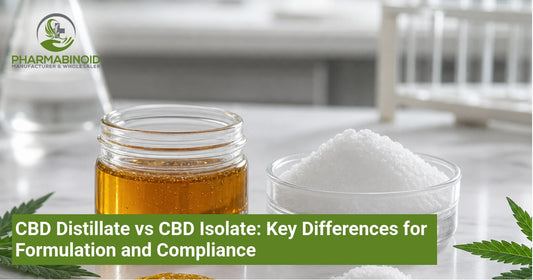
CBD-Destillat vs. CBD-Isolat: Die wichtigsten U...
CBD-Destillat vs. CBD-Isolat ist vor allem eine Frage der Zusammensetzung, des angestrebten Reinheitsgrads, des Formulierungsverhaltens und der Compliance-Strategie. Beide sind veredelte, aus Hanf gewonnene CBD-Zutaten, aber sie sind nicht austauschbar....
CBD-Destillat vs. CBD-Isolat: Die wichtigsten U...
CBD-Destillat vs. CBD-Isolat ist vor allem eine Frage der Zusammensetzung, des angestrebten Reinheitsgrads, des Formulierungsverhaltens und der Compliance-Strategie. Beide sind veredelte, aus Hanf gewonnene CBD-Zutaten, aber sie sind nicht austauschbar....
-
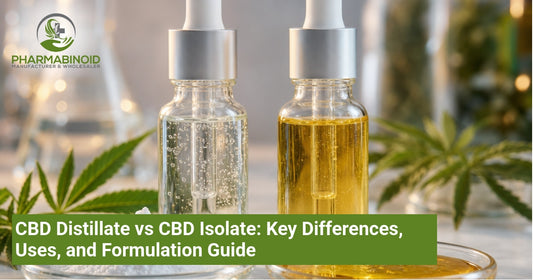
CBD-Destillat vs. CBD-Isolat: Unterschiede, Anw...
CBD-Destillat vs. CBD-Isolat ist ein wichtiger Vergleich für Marken, Formulierer und Käufer, die mit aus Hanf gewonnenen Zutaten arbeiten. Beide Materialien können reich an Cannabidiol sein, unterscheiden sich jedoch in...
CBD-Destillat vs. CBD-Isolat: Unterschiede, Anw...
CBD-Destillat vs. CBD-Isolat ist ein wichtiger Vergleich für Marken, Formulierer und Käufer, die mit aus Hanf gewonnenen Zutaten arbeiten. Beide Materialien können reich an Cannabidiol sein, unterscheiden sich jedoch in...
-
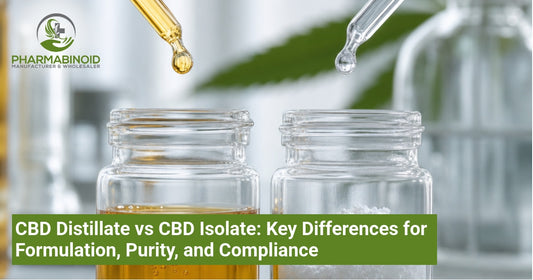
CBD-Destillat vs. CBD-Isolat: Die wichtigsten U...
CBD-Destillat vs. CBD-Isolat ist ein häufiger Vergleich für Marken, Formulierer und Käufer, die mit aus Hanf gewonnenen Zutaten arbeiten. Beide können hochwertige CBD-Quellen sein, unterscheiden sich jedoch bei Formulierungsverhalten, Prüfung,...
CBD-Destillat vs. CBD-Isolat: Die wichtigsten U...
CBD-Destillat vs. CBD-Isolat ist ein häufiger Vergleich für Marken, Formulierer und Käufer, die mit aus Hanf gewonnenen Zutaten arbeiten. Beide können hochwertige CBD-Quellen sein, unterscheiden sich jedoch bei Formulierungsverhalten, Prüfung,...
