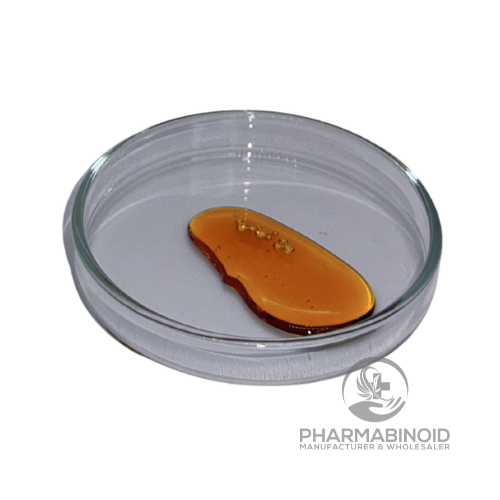
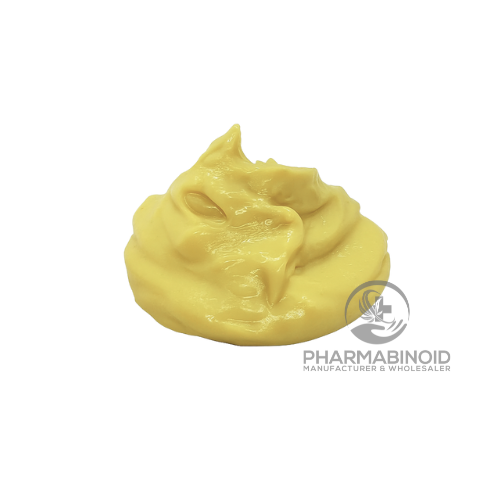
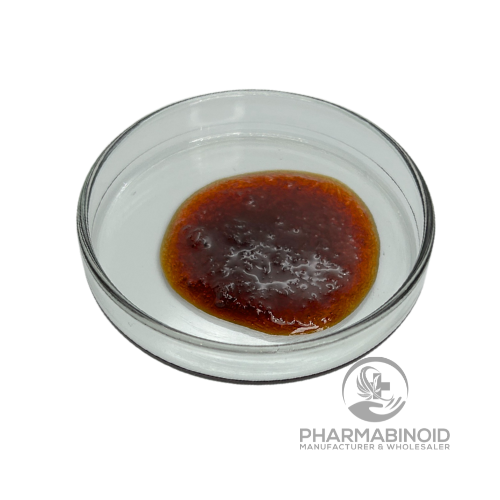
CBDA Studies examine cannabidiolic acid, the acidic precursor to CBD that occurs naturally in fresh hemp and cannabis biomass before heat, light, or time convert part of it into cannabidiol. Interest in CBDA research has grown because acidic cannabinoids may differ from their neutral forms in stability, solubility, receptor interaction, and formulation behaviour. For manufacturers, laboratories, and cannabinoid formulators, the most useful CBDA scientific studies are not those that overstate outcomes, but those that clarify chemistry, pharmacology, analytical control, and the limits of current peer-reviewed evidence.
What Is CBDA?
CBDA, or cannabidiolic acid, is a naturally occurring acidic cannabinoid produced in the plant through the biosynthetic pathway that also leads to other acidic cannabinoids such as THCA, CBGA, and CBCA. In the plant, CBDA is formed from cannabigerolic acid through enzymatic conversion. It contains a carboxylic acid group, which makes it chemically distinct from CBD.
When CBDA is exposed to heat, prolonged storage, light, or certain processing conditions, it can decarboxylate into CBD. This transformation is central to extraction and formulation science because a product intended to retain CBDA requires different controls than one designed to contain mostly CBD. Temperature management, extraction solvent selection, pH exposure, oxygen control, and storage conditions all influence the final cannabinoid profile.
CBDA should not be treated as simply “CBD before heating.” Although they are chemically related, CBDA and CBD can behave differently in analytical testing, formulation matrices, and pharmacological screening models. This is why CBDA peer-reviewed evidence is often evaluated separately from CBD research.
Current Scientific Understanding of CBDA Studies
Current CBDA Studies suggest that cannabidiolic acid is an important research compound in cannabinoid chemistry, pharmacology, and formulation development. Preclinical studies have investigated CBDA in relation to serotonin receptor signalling, enzyme interactions, transporter behaviour, and cannabinoid stability. However, the evidence base remains early compared with the larger body of CBD research.
A major theme in CBDA scientific studies is that acidic cannabinoids may have different pharmacokinetic characteristics from their neutral counterparts. Some research has investigated whether CBDA may show different absorption behaviour than CBD under certain conditions, but these findings depend heavily on formulation type, analytical method, and study design. It would be premature to describe CBDA as clinically established for any health outcome.
Another important point is that many CBDA research publications are based on cell models, animal models, receptor assays, or analytical chemistry studies rather than large controlled human trials. These study types are valuable for understanding mechanisms and formulation possibilities, but they do not directly confirm human effects. Readers looking for CBDA clinical studies should be aware that human data remain limited, and conclusions must be interpreted cautiously.
For a deeper compound-specific overview, Pharmabinoid provides related information on CBDA isolate research and studies.
Pharmacology and Mechanism of Action
CBDA pharmacology is still developing, but several mechanisms have been discussed in cannabinoid research. Unlike THC, CBDA is not generally described as a strong intoxicating CB1 receptor agonist. Instead, scientific interest has focused on non-intoxicating pathways and receptor systems that may be relevant to cannabinoid signalling.
One area of investigation involves the serotonin 5-HT1A receptor system. Preclinical studies have explored whether CBDA may influence signalling pathways associated with this receptor. These findings are mechanistically interesting, but they should not be translated into consumer health claims without appropriate clinical confirmation.
CBDA has also been studied in relation to cyclooxygenase enzymes, particularly COX-2, in laboratory settings. This does not mean CBDA should be described as a treatment for inflammatory conditions; rather, it means researchers have examined how CBDA may interact with enzyme pathways that are relevant in biological signalling. The distinction between biochemical interaction and confirmed clinical relevance is important.
Other research has considered the behaviour of CBDA in relation to transient receptor potential channels, endocannabinoid system tone, and the broader “minor cannabinoid” matrix present in full-spectrum extracts. Terpene profile may also be relevant in whole-extract research, as terpenes can influence aroma, volatility, formulation behaviour, and possibly receptor-related activity in experimental systems. However, terpene-cannabinoid interaction remains complex and should not be overstated.
Key Research Areas
-
Acidic cannabinoid stability: CBDA is sensitive to decarboxylation, so studies often examine how heat, light, oxygen, pH, and storage conditions affect its conversion into CBD. This is highly relevant for extractors and manufacturers seeking to preserve an acidic cannabinoid profile.
-
Pharmacological screening: CBDA research has investigated receptor and enzyme interactions in laboratory and preclinical models. These studies help define possible mechanisms but do not establish confirmed outcomes in humans.
-
Bioavailability and formulation behaviour: Researchers and formulators are interested in how CBDA behaves in oils, emulsions, encapsulated systems, and other delivery matrices. Its carboxylic acid group may influence solubility, absorption, and compatibility with excipients.
-
Analytical differentiation from CBD: Accurate testing must distinguish CBDA from CBD and account for potential decarboxylation during sample preparation. Poorly controlled methods can misrepresent the true cannabinoid profile.
-
Comparison with other acidic cannabinoids: CBDA is often discussed alongside CBGA, THCA, and CBCA because acidic cannabinoids share certain chemical features but may differ in stability and pharmacological screening results.
Research Limitations
The main limitation of CBDA Studies is the relatively small number of robust human investigations. Much of the available CBDA peer-reviewed evidence comes from in vitro assays, animal studies, analytical chemistry research, and early pharmacological screening. These study designs are useful, but they cannot confirm safety, efficacy, or real-world outcomes for people.
Another limitation is formulation variability. CBDA may behave differently depending on whether it is used as an isolate, present in a crude extract, combined with terpenes, or incorporated into an oil, emulsion, powder, or other matrix. Results from one preparation cannot automatically be applied to another. This is especially important in B2B supply chains, where buyers need to understand whether a study used purified CBDA, a hemp extract, or a synthetic derivative.
There are also analytical challenges. CBDA can decarboxylate during processing, storage, or testing if conditions are not controlled. As a result, reported concentrations may vary between laboratories unless validated methods are used. Research conclusions are stronger when studies disclose extraction conditions, reference standards, chromatographic methods, stability controls, and full cannabinoid profiles.
Finally, regulatory context matters. In Europe, cannabinoids and cannabinoid-containing preparations may be subject to changing frameworks depending on their intended use, composition, THC content, and product category. Scientific interest in CBDA does not automatically imply regulatory acceptance for foods, cosmetics, supplements, or other finished goods.
Industrial and Formulation Relevance
CBDA research is particularly relevant for manufacturers, extractors, ingredient suppliers, and formulation teams because acidic cannabinoids require deliberate process control. A standard high-temperature decarboxylation workflow designed to produce CBD-rich extract may substantially reduce CBDA levels. In contrast, a CBDA-focused process typically requires gentler extraction and post-processing conditions.
For industrial production, the key questions are practical as well as scientific. What is the starting biomass profile? How much CBDA is present before extraction? Which solvent system best preserves the acidic cannabinoid fraction? Is the extract winterised, distilled, crystallised, or converted into an isolate? What happens during storage, transport, and incorporation into the final formulation?
Formulators also need to consider taste, stability, compatibility, and analytical release criteria. CBDA may be used in research materials, specialist formulations, or ingredient development projects, but it should be handled with a clear understanding of its chemical sensitivity. Encapsulation, oxygen reduction, amber packaging, low-temperature processing, and suitable carrier systems may all be relevant depending on the intended application.
Bioavailability is another important research area. Cannabinoids are often challenging to formulate because of low water solubility, matrix-dependent absorption, and variability between delivery systems. CBDA’s acidic structure may offer different formulation possibilities from CBD, but product-specific testing is still necessary. No general bioavailability statement should be assumed without supporting data for the exact formulation.
Testing, Quality, and Compliance Considerations
High-quality CBDA work depends on analytical verification. Laboratories typically use HPLC-based methods to quantify acidic cannabinoids because gas chromatography can involve heat that may decarboxylate CBDA during analysis unless carefully controlled. A fit-for-purpose method should distinguish CBDA from CBD and report other cannabinoids that may be relevant to compliance and specification control.
A reliable certificate of analysis should include cannabinoid profile, batch identification, method reference, date of testing, laboratory details, and relevant impurity or contaminant screening where applicable. For industrial supply, additional documentation may include residual solvent testing, heavy metal analysis, pesticide screening, microbiological data, and stability information. Purity claims should always be supported by validated testing rather than assumed from process type.
European compliance awareness is essential. Businesses working with CBDA should assess THC limits, intended product category, local market rules, novel food considerations where relevant, and permitted claims language. Scientific research interest does not remove the need for careful regulatory review before commercial use.
Related Cannabinoids, Terpenes, or Research Topics
CBDA is best understood within the broader acidic cannabinoid family and the plant’s natural cannabinoid profile. Related research areas include CBD, CBGA, CBCA, THCA, cannabinoid decarboxylation, terpene preservation, extract stability, HPLC testing, and bioavailability-focused formulation design.
Readers reviewing CBDA Studies may also want to compare CBDA with CBD because the two compounds are chemically related but not identical in stability or pharmacological screening. Terpene profile is also relevant when CBDA is studied in full-spectrum or broad-spectrum extracts, as volatile compounds can be affected by extraction temperature, distillation, and storage conditions.
For external scientific literature, PubMed provides a useful starting point for reviewing indexed publications on cannabidiolic acid research. Regulatory and safety evaluations should also consider official European sources such as the European Food Safety Authority where relevant to product category and market context.
FAQ About CBDA Studies
Are CBDA Studies the same as CBD studies?
No. CBDA and CBD are related, but they are different chemical forms. CBDA is the acidic precursor to CBD and can convert into CBD through decarboxylation. Because the compounds differ structurally, CBDA research should be evaluated separately from CBD research, especially when reviewing pharmacology, bioavailability, and stability data.
Are there CBDA clinical studies in humans?
Human research on CBDA remains limited compared with CBD. Many CBDA scientific studies are preclinical, analytical, or mechanistic. These studies are useful for understanding possible pathways and formulation considerations, but they do not establish confirmed outcomes in humans. Any clinical interpretation should be cautious and based on the quality of available peer-reviewed evidence.
Why is analytical testing important in CBDA research?
Testing is essential because CBDA can convert into CBD under heat, light, or unsuitable storage conditions. Without appropriate HPLC methods, stability controls, and validated reference standards, a sample’s cannabinoid profile may be misreported. Accurate certificates of analysis help manufacturers, laboratories, and researchers verify purity, identity, and batch consistency.
Conclusion
CBDA Studies show that cannabidiolic acid is a scientifically important acidic cannabinoid with distinct chemistry, formulation challenges, and emerging pharmacological research interest. Current CBDA research supports careful investigation into stability, receptor and enzyme interactions, analytical testing, and bioavailability, but CBDA clinical studies remain limited. For responsible cannabinoid development, the strongest approach is to combine peer-reviewed evidence, validated laboratory testing, transparent certificates of analysis, and cautious European compliance review without overstating what the science has confirmed.