What is Cannabinol Acetate? CBNO Uses, Testing and Compliance
Cannabinol acetate is an acetylated derivative of cannabinol, usually abbreviated as CBNO or CBN-O acetate. In the cannabinoid industry, it matters because it sits at the intersection of cannabinoid chemistry, semi-synthetic manufacturing, formulation development, and analytical quality control.
Definition of Cannabinol Acetate
Cannabinol acetate, also known as cannabinol-O-acetate or CBNO, is a semi-synthetic cannabinoid produced by acetylating cannabinol (CBN). In simple terms, the cannabinol acetate definition refers to a modified form of CBN in which an acetate group has been added to the molecule.
What Is Cannabinol Acetate?
What is Cannabinol Acetate? It is not typically considered a naturally abundant cannabinoid in the cannabis or hemp plant. Instead, it is generally produced in a controlled laboratory setting from cannabinol, a minor cannabinoid associated with the oxidation and aging of THC-containing plant material.
When people ask “what is CBNO” or look for “CBNO explained,” they are usually asking how this compound differs from conventional CBN. The key difference is chemical modification. By adding an acetate group to CBN, manufacturers create a cannabinoid with different physicochemical properties, which may influence stability, formulation behaviour, and how the compound is processed in analytical testing.
Because CBNO is a modified cannabinoid, it should be evaluated carefully from a compliance, safety, and quality-control perspective. Research on cannabinol acetate remains limited compared with better-studied cannabinoids such as CBD, THC, and CBN. For that reason, responsible suppliers typically focus on verified identity, purity, residual solvent control, impurity screening, and batch-specific certificates of analysis rather than making unsupported claims about effects.
Scientific Background of Cannabinol Acetate
Cannabinol acetate belongs to a group of cannabinoid acetates. These compounds are produced by esterification or acetylation, where an acetate functional group is introduced into the cannabinoid structure. Similar chemistry is discussed in relation to other cannabinoid acetates, but each compound has its own legal, analytical, and formulation considerations.
CBN itself is a mildly psychoactive minor cannabinoid that has been investigated in cannabinoid research for its receptor interactions and potential pharmacological relevance. Cannabinol acetate is structurally related to CBN, but the acetate modification means it cannot simply be treated as identical to CBN. Small structural changes can affect solubility, stability, receptor interaction, metabolism, and bioavailability. However, public scientific data specific to CBNO remains limited, so any interpretation should be cautious.
From a manufacturing perspective, cannabinol acetate requires controlled input materials, qualified reaction conditions, purification, and validated analytical methods. Important quality parameters include cannabinoid profile, assay value, residual solvents, heavy metals, pesticides, microbial contaminants where relevant, and unknown impurity profiling. For B2B cannabinoid buyers, the certificate of analysis is particularly important because it confirms whether the supplied material matches the declared identity and specification.
Terpenes are not part of the cannabinol acetate molecule itself, but they may be relevant in finished formulations. If CBNO is used in a complex cannabinoid blend, the terpene profile can influence aroma, sensory profile, viscosity, and product positioning. Terpenes should also be tested for purity and contaminants when used in professional formulations.
Key Characteristics of Cannabinol Acetate
- Semi-synthetic origin: Cannabinol acetate is commonly produced from CBN through acetylation rather than extracted directly from hemp in meaningful natural concentrations.
- Modified cannabinoid structure: The acetate group changes the chemical profile of CBN, which may affect formulation behaviour, stability, and analytical detection.
- Limited public research: Compared with CBD or THC, CBNO has far less peer-reviewed data. Claims about potency, effects, or applications should therefore be treated with caution.
- Requires advanced testing: Identity confirmation is especially important for cannabinoid acetates. Reliable testing may involve HPLC, GC methods used appropriately, reference standards, and impurity screening.
- Compliance-sensitive category: Cannabinoid acetates may be treated differently across jurisdictions. European buyers should verify local regulatory requirements before sourcing, formulating, or distributing CBNO-containing materials.
Uses and Industry Applications
Cannabinol acetate is mainly relevant in specialist cannabinoid manufacturing, R&D, analytical method development, and formulation research. It may be supplied as an isolate or high-purity ingredient for professional use, depending on market rules and buyer requirements.
In formulation work, CBNO may be assessed for compatibility with carrier oils, distillates, terpene blends, emulsions, or other cannabinoid inputs. Formulators need to consider solubility, viscosity, heat exposure, oxidation, packaging compatibility, and shelf-life. Because cannabinoid acetates can have distinct stability and degradation profiles, accelerated stability testing and real-time stability studies are valuable before commercialisation.
For laboratories, cannabinol acetate presents analytical challenges. A robust method must distinguish CBNO from CBN, THC-related compounds, other minor cannabinoids, and possible reaction by-products. Certificates of analysis should clearly state the testing method, assay result, impurity profile where available, and batch number. For professional buyers, documentation is not a formality; it is central to responsible cannabinoid sourcing.
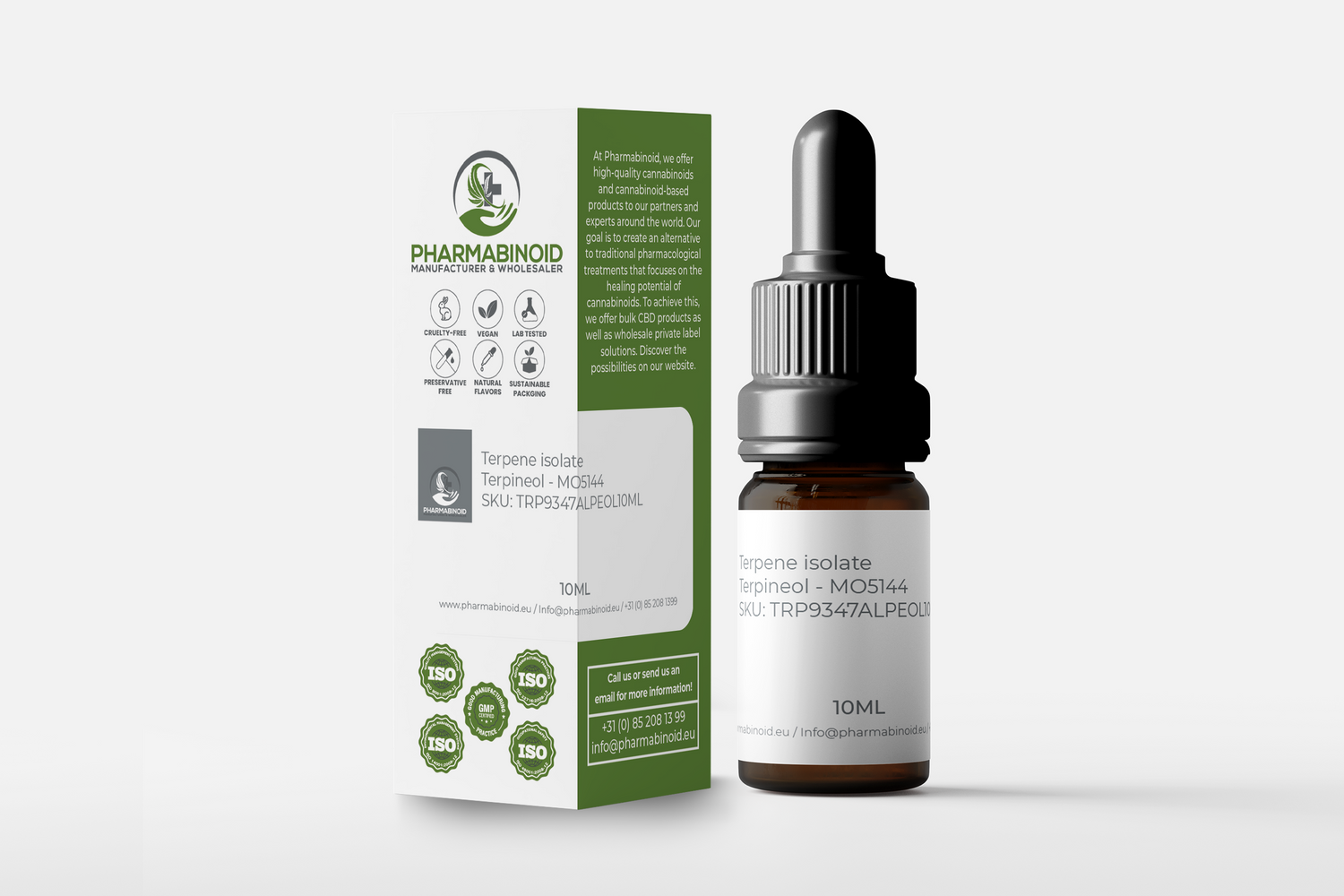
Pharmabinoid supplies specialist cannabinoid ingredients for professional markets, including Cannabinol-O Acetate Isolate (CBNO). Buyers should always review the product specification, certificate of analysis, intended use, and applicable regulations before placing CBNO into a formulation or supply chain.
Related Cannabinoids, Terpenes, or Terms
Cannabinol acetate is closely related to cannabinol, commonly known as CBN, because CBN is the parent cannabinoid used to produce CBNO. It is also conceptually related to other acetylated cannabinoids, where an acetate group is added to alter the molecule’s chemical profile.
Relevant terms include cannabinoid isolate, cannabinoid profile, acetylation, semi-synthetic cannabinoid, certificate of analysis, residual solvent testing, HPLC analysis, terpene profile, formulation stability, and bioavailability. In a professional cannabinoid supply chain, these terms are connected because the value of a cannabinoid ingredient depends not only on its name, but also on its purity, documentation, consistency, and regulatory suitability.
For broader scientific context, research databases such as PubMed are useful for reviewing peer-reviewed cannabinoid literature. Regulatory resources from European authorities, such as the European Medicines Agency, may also help businesses understand the wider regulatory environment around cannabinoid-related substances, although product-specific legal assessment should be performed separately.
FAQ About Cannabinol Acetate
What is CBNO?
CBNO is the common abbreviation for cannabinol-O-acetate, also called cannabinol acetate. It is a modified form of cannabinol produced by adding an acetate group to the CBN molecule.
Is cannabinol acetate the same as CBN?
No. Cannabinol acetate is derived from CBN, but it is not the same compound. The acetate modification changes the molecule, which means CBNO should be assessed separately for identity, purity, formulation behaviour, and compliance.
Is cannabinol acetate naturally found in hemp?
Cannabinol acetate is generally treated as a semi-synthetic cannabinoid rather than a naturally abundant hemp constituent. It is typically produced in a laboratory from cannabinol under controlled manufacturing conditions.
Why is analytical testing important for CBNO?
Analytical testing confirms that the material is actually cannabinol acetate and checks important quality parameters such as assay, residual solvents, impurities, and contaminants. For B2B buyers, a batch-specific certificate of analysis is essential.
Can cannabinol acetate be used in consumer products?
That depends on the jurisdiction, product category, formulation, and applicable regulations. Businesses should obtain qualified regulatory guidance before placing CBNO into consumer-facing products, especially in the European market.
Conclusion
What is Cannabinol Acetate? In practical industry terms, it is a semi-synthetic acetylated derivative of CBN known as CBNO. It is important for cannabinoid manufacturers, formulators, and laboratories because it requires careful handling, strong analytical verification, and a clear understanding of regulatory responsibilities. As research remains limited, the most responsible approach is to focus on chemistry, purity, documentation, and compliant formulation rather than unsupported claims.
TryPharma
Appelez-nous ou envoyez-nous un e-mail pour plus d'informations
Échantillon gratuit
Découvrez directement les avantages de nos produits en visitant notre site web pour obtenir votre code exclusif TryPharma. Lorsque vous passez une commande en utilisant ce code spécial, non seulement vous obtiendrez les produits souhaités, mais nous inclurons également un échantillon gratuit avec chaque achat. Cette opportunité vous permet de découvrir la qualité de nos offres avant de vous engager pour l'expédition principale. Notre objectif est de nous assurer que vous êtes entièrement satisfait de votre sélection, et ce processus offre un moyen sans risque d'explorer notre vaste gamme de produits. Contactez-nous dès aujourd'hui pour commencer et faire le premier pas vers une expérience enrichissante avec nos offres premium.
Assurance expédition
Lorsque vous achetez chez nous des isolats de CBD en gros, des huiles et d'autres produits, votre expédition est entièrement assurée par nos soins sans frais supplémentaires pour vous. Nous utilisons des sociétés de transport réputées comme FedEx et UPS pour l'acheminement, tout en gérant nous-mêmes la couverture d'assurance afin de sécuriser chaque envoi depuis notre entrepôt jusqu'à votre porte. Chez TryPharma, nous nous engageons à favoriser la croissance des entreprises en offrant un service de vente en gros sans risque. Dans l'éventualité peu probable d'un problème d'expédition, nous garantissons un remboursement dans les cinq jours ouvrables à compter de la date de confirmation de l'incident. Notre approche globale élimine efficacement 99,9 % de tous les risques potentiels liés à l'expédition en gros de CBD, vous assurant une tranquillité d'esprit totale.
Retour sous 30 jours
Nous vous invitons à tester l'échantillon gratuit inclus avec votre commande avant d'ouvrir l'expédition principale. Si la qualité ne répond pas à vos attentes, vous pouvez bénéficier de notre politique de retour sous 30 jours. Cette politique vous permet de retourner le produit dans un délai de 30 jours pour un remboursement intégral, garantissant votre entière satisfaction. Contactez-nous dès aujourd'hui pour découvrir notre gamme exceptionnelle de produits et profiter de notre service client dédié.
Isolats de cannabinoïdes
-
Isolat de CBD - Cannabidiol
Prix habituel From €24.99 to €369.99Prix habituelPrix unitaire / par€0.00Prix promotionnel €24.99 -
CBG - Cannabigérol
Prix habituel From €49.99 to €799.99Prix habituelPrix unitaire / par€0.00Prix promotionnel €49.99 -
CBN - Cannabinol
Prix habituel From €79.99 to €1,299.99Prix habituelPrix unitaire / par€0.00Prix promotionnel €79.99 -
CBC - Cannabichromène
Prix habituel From €99.99 to €1,999.99Prix habituelPrix unitaire / par€0.00Prix promotionnel €99.99 -
CBDV - Cannabidivarine
Prix habituel From €13.99 to €3,149.99Prix habituelPrix unitaire / par€0.00Prix promotionnel €13.99 -
Isolat de cannabicitran - CBT
Prix habituel From €49.99 to €4,349.99Prix habituelPrix unitaire / par€0.00Prix promotionnel €49.99 -
Acide cannabidiolique - CBDA
Prix habituel From €49.99 to €1,499.99Prix habituelPrix unitaire / par€0.00Prix promotionnel €49.99 -
Acide cannabigérolique - CBGA
Prix habituel From €59.99 to €1,749.99Prix habituelPrix unitaire / par€0.00Prix promotionnel €59.99
Collections
-
Extraits psychoactifs
Extraits psychoactifs – Guide d’achat en gros Extraits psychoactifs réunit des formats...
-
Huiles de CBD
Huiles de CBD – Guide d’achat pour grossistes Les huiles de CBD...
-
Vapes au CBD
Produits de vape au CBD et accompagnement en formulation pour le développement...
-
Cosmétiques au CBD
Cosmétiques au CBD – Guide d’achat pour grossistes Cosmétiques au CBD rassemble...
-
Distillats de CBD
Distillats de CBD – Guide d’achat pour grossistes Les distillats de CBD...
Articles de blog
Voir tout-
CBD Distillate vs CBD Isolate: Key Differences ...
CBD Distillate vs CBD Isolate is one of the most common comparisons for brands, formulators, and buyers working with hemp-derived ingredients. Both materials can be high-quality sources of cannabidiol, but...
CBD Distillate vs CBD Isolate: Key Differences ...
CBD Distillate vs CBD Isolate is one of the most common comparisons for brands, formulators, and buyers working with hemp-derived ingredients. Both materials can be high-quality sources of cannabidiol, but...
-
CBD Distillate Effects: What to Expect from a R...
CBD distillate effects are best understood as the combined result of a concentrated cannabinoid profile, low-to-non-detectable THC targets, formulation method, and product quality. Unlike raw hemp extract, CBD distillate is...
CBD Distillate Effects: What to Expect from a R...
CBD distillate effects are best understood as the combined result of a concentrated cannabinoid profile, low-to-non-detectable THC targets, formulation method, and product quality. Unlike raw hemp extract, CBD distillate is...
-
Private Label CBD Cosmetics: A Practical Guide ...
Private Label CBD Cosmetics are increasingly attractive for European beauty brands that want to enter the cannabinoid skincare category without building a full production, filling, testing, and packaging operation from...
Private Label CBD Cosmetics: A Practical Guide ...
Private Label CBD Cosmetics are increasingly attractive for European beauty brands that want to enter the cannabinoid skincare category without building a full production, filling, testing, and packaging operation from...