
Terminologie du cannabis
La terminologie des phytocannabinoïdes doit correspondre aux normes certifiées de réception en laboratoire, aux spécifications produit et à la documentation commerciale. Les acheteurs professionnels ont besoin de définitions claires reliant le vocabulaire scientifique aux décisions réelles d’approvisionnement, y compris l’identité de la matière, le profil cannabinoïde, le périmètre des analyses, la voie de formulation, le dossier documentaire et le marché visé pour le produit fini.
Un glossaire commun réduit la confusion entre les équipes achats, les formulateurs, les responsables qualité, les distributeurs et les laboratoires externes. Il aide chacun à utiliser le même langage lorsqu’il est question d’isolats, de distillats, d’ingrédients à large spectre, de cannabinoïdes mineurs, de systèmes vecteurs, de certificats de lot et de descriptions de produits sensibles à la conformité.
Termes fondamentaux des cannabinoïdes
CBD
Le CBD, ou cannabidiol, est l’un des principaux cannabinoïdes non intoxicants utilisés dans les produits commerciaux dérivés du chanvre. Les acheteurs évaluent le CBD selon sa pureté, la matière première d’origine, le contrôle du THC, la compatibilité avec les excipients, la documentation analytique et l’adéquation du format du produit final.
CBG
Le CBG, ou cannabigérol, est souvent décrit comme un cannabinoïde précurseur car il est lié au développement naturel d’autres cannabinoïdes dans la plante. Dans le sourcing B2B, le CBG est examiné en fonction de sa pureté, de sa concentration, de la stabilité de l’approvisionnement et de sa compatibilité avec les huiles, les gélules, les cosmétiques et d’autres formats.
CBN
Le CBN, ou cannabinol, est un cannabinoïde mineur qui exige un examen attentif des spécifications. Les acheteurs doivent confirmer le profil cannabinoïde, le statut des solvants résiduels, le contrôle des contaminants, les exigences du pays cible et si le positionnement produit envisagé est adapté au marché.
CBC
Le CBC, ou cannabichromène, est un cannabinoïde moins courant utilisé dans le développement de produits spécialisés. Il peut être envisagé pour des formules différenciées, mais il doit être évalué à l’aide d’une documentation spécifique au lot, d’une planification de concentration et de sa compatibilité avec le système vecteur sélectionné.
THCV et THCP
Le THCV et le THCP sont des cannabinoïdes mineurs à fort intérêt qui nécessitent un examen commercial plus strict que les ingrédients CBD grand public. Les acheteurs doivent confirmer le statut légal, la qualité de la documentation, les limites de concentration, les exigences d’approbation interne et si cette voie convient à un approvisionnement par canal contrôlé.
Formats de matière et spécifications
- Isolat : Un ingrédient purifié à cannabinoïde unique, souvent cristallin ou sous forme de poudre, sélectionné pour un contrôle précis de la formulation.
- Distillat : Une matière cannabinoïde concentrée avec un profil plus large, généralement plus visqueuse et plus complexe qu’un isolat.
- Matière à large spectre : Un profil dérivé du chanvre contenant des cannabinoïdes sélectionnés tout en maintenant le contrôle du THC comme exigence clé.
- Ingrédient hydrosoluble : Un format cannabinoïde développé pour la dispersion dans des systèmes aqueux tels que les boissons, shots ou sprays.
- Produit fini : Un format prêt ou presque prêt tel qu’une huile, une gélule, un cosmétique, un topique, une base pour vape ou un produit en marque blanche.
Termes relatifs aux analyses et à la documentation
Un COA, ou certificat d’analyse, est le document central utilisé pour vérifier le profil cannabinoïde et l’identité du lot. Selon la catégorie de produit, les acheteurs peuvent également demander des analyses des solvants résiduels, un contrôle des métaux lourds, un contrôle des pesticides, des analyses microbiologiques, le profil terpénique, des informations de stabilité et les spécifications d’emballage.
Les fiches de spécifications définissent l’identité attendue, la concentration, l’apparence, les conditions de stockage et les paramètres de qualité du matériau. En cas d’approvisionnement récurrent, l’alignement des spécifications est essentiel, car il aide les équipes achats et qualité à comparer les lots futurs à une norme convenue.
Formulation et langage commercial
Les termes de formulation doivent décrire le comportement du matériau dans un produit fini. La solubilité, la viscosité, l’impact sur la saveur, l’arôme, la stabilité, la compatibilité avec les excipients et l’interaction avec l’emballage sont souvent plus utiles pour les acheteurs que de larges allégations marketing.
Le langage commercial doit rester responsable et fondé sur la documentation. Les descriptions de produits doivent se concentrer sur la qualité du matériau, le format prévu, le profil sensoriel, le positionnement fonctionnel bien-être et les exigences d’approvisionnement plutôt que sur des allégations de santé non étayées.
Comment les acheteurs doivent utiliser les termes du glossaire
Les définitions sont plus utiles lorsqu’elles appuient une décision d’achat ou de développement produit. Avant d’approuver un matériau, reliez le terme au format réel du produit, à l’exigence documentaire, au pays cible, à la plage de concentration et à la norme de qualité que votre équipe doit vérifier.
Si un fournisseur, un distributeur ou un laboratoire utilise un terme différemment, clarifiez-en le sens avant que la commande ne soit passée. De petites différences de formulation peuvent affecter l’examen des spécifications, la préparation de l’étiquetage, la documentation douanière et la manière dont un produit fini est positionné.
Ressources associées
Pour la sélection de produits, consultez les produits cannabinoïdes, les produits CBD, les produits CBG et les produits CBN. Pour les voies de développement, comparez les formulations de cannabinoïdes et les tests de laboratoire tiers.
Glossaire
Alpha-bisabolol
L’alpha-bisabolol est un alcool terpénique naturellement présent dans des plantes, notamment la camomille et le cannabis. En savoir plus
Alpha-pinène
L’alpha-pinène est un terpène connu pour son arôme frais rappelant le pin et se trouve dans de nombreuses plantes, y compris le cannabis. En savoir plus
Biodisponibilité
La biodisponibilité est un concept crucial pour comprendre avec quelle efficacité une substance, comme un cannabinoïde, est absorbée dans la circulation sanguine. En termes simples, la biodisponibilité désigne le pourcentage d’un composé qui atteint la circulation sanguine, déterminant la puissance et la rapidité de ses effets. En savoir plus
CBD à spectre large
Le CBD à spectre large offre une manière unique et équilibrée de bénéficier des avantages des cannabinoïdes sans aucune trace de THC. Pour ceux qui souhaitent profiter de multiples cannabinoïdes et terpènes sans les effets psychoactifs du THC, le CBD à spectre large est un choix idéal. En savoir plus
Cannabinoïdes
Les cannabinoïdes sont des composés naturellement présents dans la plante de cannabis qui interagissent avec le système endocannabinoïde du corps humain, influençant divers processus physiologiques. Plus de 100 cannabinoïdes différents ayant été identifiés, chacun offre des effets uniques et des applications potentielles, allant de la relaxation et de la gestion de la douleur à la régulation de l’humeur. En savoir plus
Récepteurs cannabinoïdes
Les récepteurs cannabinoïdes jouent un rôle crucial dans la façon dont le corps traite des cannabinoïdes comme le CBD et le THC, en influençant des fonctions telles que l’humeur, la douleur et l’immunité. En savoir plus
Terpènes du cannabis
Les terpènes du cannabis sont les composés aromatiques qui donnent aux variétés de cannabis leurs arômes et saveurs distinctifs, allant du pin terreux aux agrumes sucrés. Présents dans de nombreuses plantes, les terpènes sont particulièrement abondants dans le cannabis, où ils jouent un rôle clé dans la définition du profil unique de chaque variété. En savoir plus
CBD (Cannabidiol)
Un cannabinoïde non psychoactif connu pour ses effets thérapeutiques potentiels, notamment la réduction de l’anxiété, de la douleur et de l’inflammation sans provoquer d’effet planant. En savoir plus
Capsules de CBD
Les capsules de CBD offrent un moyen simple et constant de profiter des bienfaits du cannabidiol (CBD) sans avoir besoin de mesurer ou de goûter des huiles. Présenté dans une capsule facile à avaler, le CBD est pré-dosé, ce qui rend ces capsules idéales pour celles et ceux qui recherchent une méthode de consommation contrôlée, portable et discrète. En savoir plus
Cosmétiques au CBD
Les cosmétiques au CBD sont des produits de soin de la peau, de soin du corps et de beauté formulés avec du cannabidiol, communément appelé CBD, comme ingrédient cosmétique. Dans l’industrie des cannabinoïdes, ils sont importants car ils se situent à l’intersection des matières premières dérivées du chanvre, de la science de la formulation cosmétique, des tests analytiques et de la conformité cosmétique européenne. En savoir plus
Crème au CBD
La crème au CBD est un choix populaire parmi les personnes à la recherche d’un soulagement ciblé, combinant les bienfaits potentiels du cannabidiol avec la praticité d’une application topique. Cette crème, enrichie en CBD, s’applique directement sur la peau, permettant aux utilisateurs de cibler des zones spécifiques d’inconfort sans affecter l’ensemble du corps. En savoir plus
Gummies fruités au CBD
Les gummies fruités au CBD sont une façon délicieuse et efficace d’intégrer le cannabidiol (CBD) à votre routine quotidienne de bien-être. Ces gummies associent le CBD à des saveurs fruitées, ce qui les rend faciles et agréables à consommer. En savoir plus
CBD à spectre complet
Le CBD à spectre complet est un type de produit au cannabidiol qui conserve tous les composés naturellement présents dans la plante de chanvre, y compris les cannabinoïdes, les terpènes, les flavonoïdes et des traces de THC (généralement moins de 0,3 %). En savoir plus
Isolat de CBD
La forme la plus pure de CBD, qui isole le cannabinoïde des autres composés de la plante de cannabis. Il ne contient ni THC ni autres cannabinoïdes. En savoir plus
Liquide au CBD
Le cannabidiol liquide est un moyen flexible et pratique d’intégrer le CBD à votre routine quotidienne de bien-être. Dérivé de la plante de chanvre, le cannabidiol liquide est souvent une forme de CBD plus fluide et plus adaptable que les huiles ou les teintures, ce qui le rend facile à ajouter aux boissons, à utiliser par voie sublinguale, ou même à mélanger avec des liquides pour vape (si précisé). En savoir plus
Huile de CBD
L’huile de CBD est devenue l’un des moyens les plus populaires d’intégrer les bienfaits du cannabidiol (CBD) dans une routine de bien-être. Extraite de la plante de chanvre, l’huile de CBD possède des propriétés non psychoactives qui la rendent attrayante pour les utilisateurs recherchant relaxation, équilibre et bien-être général sans l’effet planant associé au THC. En savoir plus
Pâte de CBD
Qu’est-ce que la pâte de CBD ? La pâte de CBD est un extrait de chanvre concentré à la consistance épaisse, semblable à une résine, généralement riche en cannabidiol (CBD) et en d’autres composés naturellement présents dans le chanvre selon son mode de production. Dans l’industrie des cannabinoïdes, la pâte de CBD est importante car elle est souvent utilisée comme matière première à haute concentration pour une formulation ultérieure, des tests analytiques et le développement de produits. En savoir plus
Vapes au CBD
Les vapes au CBD offrent un moyen rapide et pratique de profiter du cannabidiol (CBD), en procurant des effets rapides par inhalation. Contrairement aux huiles ou aux produits comestibles qui doivent passer par la digestion, les vapes au CBD procurent un soutien presque immédiat, car le CBD est absorbé directement dans la circulation sanguine via les poumons. En savoir plus
CBC (Cannabichromène)
Le CBC expliqué simplement : le cannabichromène est l’un des nombreux cannabinoïdes qui se forment naturellement à mesure que la plante de chanvre ou de cannabis se développe. Comme le CBD, le CBG, le CBN, le THC et d’autres cannabinoïdes, le CBC fait partie de l’empreinte chimique de la plante. En savoir plus
CBG (Cannabigérol)
Qu’est-ce que le cannabigérol ? Le cannabigérol, couramment abrégé en CBG, est un cannabinoïde naturellement présent dans le chanvre et le cannabis. Il est important dans l’industrie des cannabinoïdes car il est étroitement lié à la voie biosynthétique de la plante, à la formulation des produits, aux tests analytiques et au développement d’ingrédients cannabinoïdes purifiés pour la recherche et la fabrication. En savoir plus
CBN (Cannabinol)
Qu’est-ce que le cannabinol ? Le cannabinol, généralement abrégé en CBN, est un cannabinoïde mineur présent dans le cannabis et le chanvre, le plus souvent associé au vieillissement naturel et à l’oxydation des matières végétales ou extraits riches en THC. Il est important dans l’industrie des cannabinoïdes car le CBN influence l’interprétation du profil cannabinoïde, les tests analytiques, les décisions de formulation et le contrôle qualité des extraits de cannabis vieillis ou transformés. En savoir plus
Déficience clinique en endocannabinoïdes (CECD)
La déficience clinique en endocannabinoïdes (CED) est une théorie suggérant qu’un manque ou un dysfonctionnement des endocannabinoïdes dans le corps peut contribuer à certains problèmes de santé. En savoir plus
Concentrés
Les concentrés sont des produits de cannabis ou de chanvre très puissants qui contiennent des niveaux concentrés de cannabinoïdes, tels que le THC, le CBD ou le HHC, ainsi que des terpènes et d’autres composés végétaux. En savoir plus
Décarboxylation
La décarboxylation est un processus chimique qui active les cannabinoïdes du cannabis brut, transformant des composés comme le THCA et le CBDA en leurs formes actives, le THC et le CBD. En savoir plus
Distillat
Le distillat est l’un des extraits de cannabinoïdes les plus raffinés et les plus polyvalents disponibles aujourd’hui. Connu pour sa forte puissance et sa pureté, le distillat est créé grâce à un processus de distillation en plusieurs étapes qui élimine les impuretés et isole des cannabinoïdes spécifiques comme le THC, le CBD ou le HHC. En savoir plus
Produits comestibles
Les produits comestibles sont l’un des moyens les plus populaires de consommer des cannabinoïdes, offrant une alternative délicieuse, pratique et discrète aux méthodes traditionnelles comme fumer ou vapoter. En savoir plus
Système endocannabinoïde (SEC)
Le système endocannabinoïde (SEC) est un réseau complexe du corps humain chargé de maintenir l’équilibre, ou l’homéostasie, à travers divers processus physiologiques, notamment l’humeur, le sommeil, l’appétit, la douleur et la réponse immunitaire. En savoir plus
Effet d’entourage
L’effet d’entourage est un concept selon lequel les composés de la plante de cannabis, tels que les cannabinoïdes, les terpènes et les flavonoïdes, agissent en synergie pour renforcer mutuellement leurs effets thérapeutiques. Lorsqu’ils sont combinés, ces composés peuvent produire des bienfaits plus importants et plus complets que lorsqu’ils sont utilisés individuellement. En savoir plus
Huile de CBD à spectre complet
L’huile de CBD à spectre complet est un type unique de produit au CBD qui contient tous les composés naturellement présents dans la plante de chanvre, y compris les cannabinoïdes mineurs, les terpènes, les flavonoïdes et des traces de THC (tétrahydrocannabinol). En savoir plus
Distillat de HHC
Le distillat de HHC, une forme hautement purifiée d’hexahydrocannabinol (HHC), gagne en popularité en tant qu’option cannabinoïde unique, avec des effets souvent décrits comme plus équilibrés et moins intenses que le THC traditionnel. En savoir plus
Produits comestibles au HHC
Les produits comestibles au HHC offrent une manière pratique et agréable de découvrir les effets de l’hexahydrocannabinol (HHC), un cannabinoïde connu pour son impact doux et équilibré. Ces produits constituent une option discrète et savoureuse pour ceux qui recherchent des effets durables sans avoir besoin de fumer ou de vapoter. En savoir plus
Gummies au HHC
Les gummies au HHC offrent une manière savoureuse et pratique de découvrir les effets de l’hexahydrocannabinol (HHC), un cannabinoïde qui procure une euphorie légère et équilibrée. Ces produits comestibles, élaborés à partir de distillat de HHC de haute qualité, délivrent une dose constante de HHC sous une forme délicieuse et discrète. En savoir plus
Liquide HHC
Le liquide HHC est un produit cannabinoïde émergent, connu pour ses légers effets euphorisants et sa polyvalence d’utilisation. L’hexahydrocannabinol (HHC) est une forme hydrogénée du THC, ce qui signifie qu’il a subi un processus unique visant à accroître sa stabilité. Contrairement au delta-9 THC, le HHC offre une expérience plus subtile, ce qui en fait un choix populaire parmi ceux qui recherchent un effet doux mais perceptible. En savoir plus
Vapes au HHC
Les vapes au HHC offrent une expérience cannabinoïde distinctive qui associe une légère euphorie à la relaxation, ce qui en fait une alternative équilibrée aux produits traditionnels au THC. L’ingrédient principal des vapes au HHC est le distillat de HHC — une forme purifiée d’hexahydrocannabinol qui procure des effets constants. En savoir plus
Cannabis médical
Le cannabis médical désigne l’utilisation de la plante de cannabis et de ses composés, en particulier des cannabinoïdes comme le THC (tétrahydrocannabinol) et le CBD (cannabidiol), à des fins thérapeutiques pour soulager les symptômes et améliorer la qualité de vie. En savoir plus
Pharmacocinétique des cannabinoïdes
La pharmacocinétique des cannabinoïdes désigne la manière dont des cannabinoïdes comme le THC et le CBD sont absorbés, distribués, métabolisés et excrétés par l’organisme. Comprendre la pharmacocinétique des cannabinoïdes aide à expliquer les effets et la durée d’action de ces composés, et guide les utilisateurs dans le choix des meilleures méthodes d’administration selon leurs besoins. En savoir plus
THC (Tétrahydrocannabinol)
Le THC, abréviation de tétrahydrocannabinol, est le principal composé psychoactif présent dans la plante de cannabis. C’est la substance responsable de l’"high" ressenti par les consommateurs de cannabis récréatif et elle est largement reconnue pour ses effets sur l’humeur, la perception et l’état mental général. En savoir plus
THCP (Tétrahydrocannabiphorol)
Le THCP (tétrahydrocannabiphorol) est un cannabinoïde récemment découvert, présent naturellement en quantités infimes dans la plante de cannabis. Il a suscité un grand intérêt au sein de la communauté du cannabis en raison de ses propriétés uniques et de sa puissance potentielle. En savoir plus
Terpènes
Les terpènes sont des composés aromatiques présents dans de nombreuses plantes, y compris le cannabis, qui contribuent à des odeurs, saveurs et effets distincts. Ils jouent un rôle crucial dans la définition de l’expérience offerte par divers produits cannabinoïdes — non seulement le CBD, mais aussi le THC, le HHC, le CBG et d’autres cannabinoïdes. En savoir plus
Cannabinoïdes solubles dans l’eau
Que sont les cannabinoïdes solubles dans l’eau ? Dans l’industrie des cannabinoïdes, ce terme désigne des ingrédients cannabinoïdes formulés pour se disperser uniformément dans des produits à base d’eau tels que les boissons, shots, poudres, sprays et émulsions. Cela est important car les cannabinoïdes tels que le CBD, le CBG, le CBN, le CBC et de nombreux extraits dérivés du chanvre sont naturellement des composés lipophiles, et nécessitent donc des techniques de formulation spécialisées avant de pouvoir fonctionner de manière fiable dans des applications à base d’eau. En savoir plus
White Label CBD
White label CBD refers to CBD products made by one manufacturer and sold by another business under its own brand name. Read More
"420" Meaning
The term "420" is one of the most widely recognized symbols in cannabis culture, commonly used to reference cannabis itself or activities related to its consumption. Read more
Articles de blog
Voir tout-
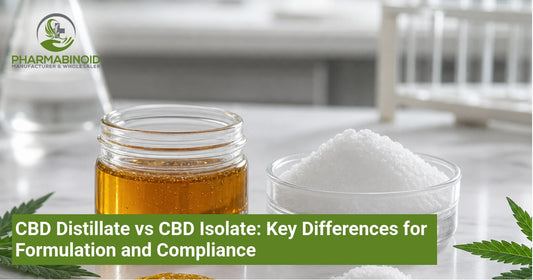
Distillat de CBD ou isolat de CBD : principales...
Distillat de CBD ou isolat de CBD : la distinction concerne principalement la composition, le niveau de pureté recherché, le comportement en formulation et la stratégie de conformité. Tous deux...
Distillat de CBD ou isolat de CBD : principales...
Distillat de CBD ou isolat de CBD : la distinction concerne principalement la composition, le niveau de pureté recherché, le comportement en formulation et la stratégie de conformité. Tous deux...
-
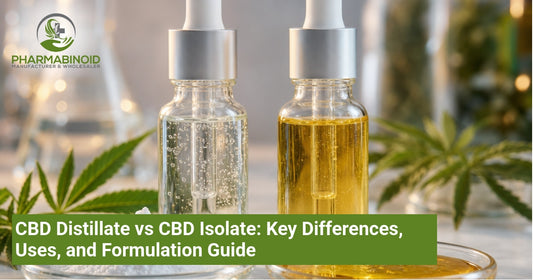
Distillat de CBD ou isolat de CBD : différences...
Le distillat de CBD et l’isolat de CBD constituent une comparaison importante pour les marques, les formulateurs et les acheteurs qui travaillent avec des ingrédients dérivés du chanvre. Les deux...
Distillat de CBD ou isolat de CBD : différences...
Le distillat de CBD et l’isolat de CBD constituent une comparaison importante pour les marques, les formulateurs et les acheteurs qui travaillent avec des ingrédients dérivés du chanvre. Les deux...
-
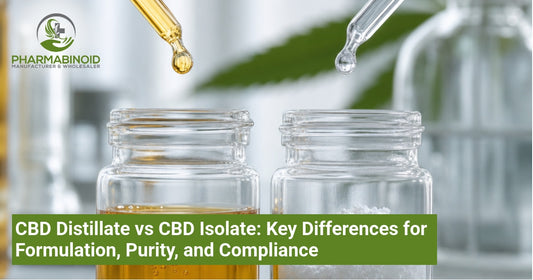
Distillat de CBD ou isolat de CBD : principales...
Le distillat de CBD et l’isolat de CBD font partie des comparaisons courantes pour les marques, les formulateurs et les acheteurs qui travaillent avec des ingrédients dérivés du chanvre. Les...
Distillat de CBD ou isolat de CBD : principales...
Le distillat de CBD et l’isolat de CBD font partie des comparaisons courantes pour les marques, les formulateurs et les acheteurs qui travaillent avec des ingrédients dérivés du chanvre. Les...
