Risks of CBD Oil: Safety, Interactions, Testing, and EU Market Considerations
Understanding the risks of CBD oil is important for brands, formulators, retailers, and professional buyers working with cannabinoid products. CBD is widely discussed in scientific and consumer contexts, but product quality, serving size, formulation, interactions, and regulatory classification all influence how a CBD oil should be evaluated. This guide provides a responsible, non-medical overview for European businesses and informed purchasers.
This page is not medical advice and does not diagnose, treat, or prevent any condition. Anyone taking medication, pregnant or breastfeeding, living with a medical condition, or uncertain about CBD suitability should consult a qualified healthcare professional before use.
What are the main risks of CBD oil?
The potential risks of CBD oil depend on the product, the amount used, the route of administration, the person using it, and the quality of the supporting documentation. Important considerations include tolerability, interactions with medicines, inaccurate labelling, contamination, inappropriate claims, and differences between product categories.
- Product variability: Concentration, carrier oil, cannabinoid profile, and terpene content can differ considerably between products.
- Label uncertainty: A percentage alone may not clearly communicate milligrams per serving or per bottle.
- Quality concerns: Poorly controlled materials may contain unwanted solvents, pesticides, heavy metals, microbiological contamination, or cannabinoid levels that do not match the label.
- Individual factors: Sensitivity, previous exposure, age, medication use, and general health can affect how a person responds.
CBD oil tolerability and responsible use
Some people may experience unwanted effects or may not tolerate a particular CBD oil. These effects can be influenced by concentration, formulation, consumption pattern, and individual sensitivity. A responsible approach is to follow the product label, avoid combining multiple unfamiliar cannabinoid products, and stop use if unexpected symptoms occur.
Consumers should not assume that a natural origin makes a product risk-free. The carrier oil, flavouring system, added terpenes, and other ingredients also need to be assessed. For professional buyers, a complete specification sheet and batch-specific Certificate of Analysis are essential starting points.
CBD oil and medication interactions
CBD may interact with some medicines because cannabidiol can affect metabolic pathways involved in drug processing. The relevance of an interaction depends on the medicine, the amount of CBD, the frequency of use, and the individual. This is why people using prescription or clinically monitored medicines should seek advice from a qualified healthcare professional rather than relying on general online dosage guidance.
Businesses should avoid implying that CBD oil is suitable for everyone or that it can replace professional treatment. Responsible product communication should use clear qualifiers and should not present preliminary research as established clinical evidence.
Quality testing can reduce avoidable product risks
Testing cannot eliminate every risk, but it can identify important quality problems before a product reaches the market. Buyers should request a current, batch-specific COA and check whether it includes cannabinoid identity and potency, THC levels where relevant, residual solvents, pesticides, heavy metals, microbiological parameters, and other tests appropriate to the formulation.
Testing should be connected to traceable batch information. A document without a matching lot number, test date, laboratory identification, or clear sample description is less useful for procurement decisions. Professional buyers should also review the technical data sheet, safety data sheet where applicable, storage conditions, shelf life, packaging, and transport requirements.
Regulatory and EU market considerations
CBD oil compliance depends on the intended product category and destination market. Food supplements, novel foods, cosmetics, vaping products, and technical ingredients may be subject to different requirements. A product that is acceptable in one market or application may require a different assessment elsewhere.
Businesses should verify the current position of the relevant national authorities, review applicable EU requirements, and obtain specialist regulatory advice before making products available. Claims must be supported and appropriate to the category. Avoid disease claims, therapeutic promises, and language suggesting guaranteed outcomes.
How formulators and buyers can evaluate CBD oil safely
- Define the intended application and target market before selecting an ingredient.
- Confirm the total CBD content, concentration, serving information, carrier oil, and cannabinoid profile.
- Request current batch documentation and verify that the COA matches the supplied lot.
- Review contaminant testing and investigate results that are incomplete or unclear.
- Assess stability, storage, packaging compatibility, and transport conditions.
- Use conservative, factual product language and obtain regulatory review where necessary.
Frequently asked questions
Is CBD oil risk-free because it is plant-derived?
No. Plant-derived products can still vary in composition, interact with medicines, be contaminated, or be unsuitable for particular people. Quality documentation and responsible use remain important.
What should a CBD oil COA include?
A suitable COA should clearly identify the batch and normally report cannabinoid potency and relevant contaminant testing. The exact panel depends on the material and intended application.
Can CBD oil interact with medication?
It may interact with some medicines. Anyone using prescription or clinically monitored medication should consult a qualified healthcare professional before using CBD.
Are CBD oil risks the same in every European country?
No. Product classification, claims, THC limits, novel food status, and market requirements can differ. Businesses should check the rules that apply to the specific product and destination market.
Conclusion
The risks of CBD oil are best managed through careful formulation, transparent testing, accurate labelling, conservative communication, and appropriate professional advice. For B2B procurement, the strongest safeguards are traceable batches, complete specifications, reliable COAs, documented storage conditions, and a clear understanding of the intended European market.
For sourcing and formulation discussions, businesses can review Pharmabinoid's CBD oil collection and request a professional quotation.
TryPharma
Ring til os eller send os en e-mail for mere information
Gratis prøve
Opdag fordelene ved vores produkter på første hånd ved at besøge vores hjemmeside for at få din eksklusive TryPharma-kode. Når du afgiver en ordre med denne særlige kode, sikrer du ikke blot de produkter, du ønsker, men vi inkluderer også en gratis prøve med hvert køb. Denne mulighed giver dig mulighed for at opleve kvaliteten af vores sortiment, før du forpligter dig til hovedforsendelsen. Vores mål er at sikre, at du er fuldt ud tilfreds med dit valg, og denne proces giver dig en risikofri måde at udforske vores omfattende produktsortiment på. Kontakt os i dag for at komme i gang og tage det første skridt mod en givende oplevelse med vores førsteklasses produkter.
Forsendelsesforsikring
Når du køber CBD-isolater, olier og andre produkter i større mængder hos os, er din forsendelse fuldt forsikret af os uden ekstra omkostninger for dig. Vi benytter velrenommerede fragtfirmaer som FedEx og UPS til transporten, mens vi selv håndterer forsikringsdækningen for at sikre hver eneste forsendelse fra vores lager til din dør. Hos TryPharma er vi engagerede i at fremme forretningsvækst ved at tilbyde en risikofri engrosservice. I det usandsynlige tilfælde af et forsendelsesproblem garanterer vi en tilbagebetaling inden for fem hverdage fra den dato, hvor hændelsen bekræftes. Vores omfattende tilgang eliminerer effektivt 99,9 % af alle potentielle risici forbundet med forsendelse af CBD i større mængder og sikrer dig fuld tryghed.

30 dages returret
Vi opfordrer dig til at teste den gratis prøve, der følger med din ordre, før du åbner hovedforsendelsen. Hvis kvaliteten ikke lever op til dine forventninger, kan du benytte dig af vores 30-dages returpolitik. Denne politik giver dig mulighed for at returnere produktet inden for 30 dage og få fuld refusion, hvilket garanterer din fulde tilfredshed. Kontakt os i dag for at udforske vores enestående produktsortiment og opleve vores dedikerede kundeservice.
Cannabinoid-isolater
-
CBD-isolat - Cannabidiol
Almindelig pris From €24.99 to €369.99Almindelig prisEnhedspris / pr.€0.00Tilbudspris €24.99 -
CBG - Cannabigerol
Almindelig pris From €49.99 to €799.99Almindelig prisEnhedspris / pr.€0.00Tilbudspris €49.99 -
CBN - Cannabinol
Almindelig pris From €79.99 to €1,299.99Almindelig prisEnhedspris / pr.€0.00Tilbudspris €79.99 -
CBC – cannabichromen-isolat
Almindelig pris From €99.99 to €1,999.99Almindelig prisEnhedspris / pr.€0.00Tilbudspris €99.99 -
CBDV - Cannabidivarin
Almindelig pris From €13.99 to €3,149.99Almindelig prisEnhedspris / pr.€0.00Tilbudspris €13.99 -
Cannabicitran-isolat - CBT
Almindelig pris From €49.99 to €4,349.99Almindelig prisEnhedspris / pr.€0.00Tilbudspris €49.99 -
Cannabidiolsyre - CBDA
Almindelig pris From €49.99 to €1,499.99Almindelig prisEnhedspris / pr.€0.00Tilbudspris €49.99 -
Cannabigerolsyre - CBGA
Almindelig pris From €59.99 to €1,749.99Almindelig prisEnhedspris / pr.€0.00Tilbudspris €59.99
Kollektioner
-
PPB - Pharmabinoids psykoaktive blandinger
PPB-psykoaktive blandinger til professionelle købereUdforsk Pharmabinoids PPB-kollektion til professionel produktudvikling, sourcing gennem...
-
CBD-kosmetik
CBD-kosmetik: guide til grossistkøbereEn kommerciel kollektion til brands, producenter og private-label-teams, der...
-
CBD-destillat en gros
CBD-destillat en gros til europæiske købereSammenlign CBD-destillater til professionelle formuleringer, private-label-projekter og...
Blogindlæg
Se alle-
CBD-destillat vs. CBD-isolat: Vigtige forskelle...
CBD-destillat vs. CBD-isolat handler først og fremmest om sammensætning, ønsket renhedsgrad, formuleringsegenskaber og strategi for overholdelse af regler. Begge er raffinerede, hampbaserede CBD-ingredienser, men de kan ikke udskiftes direkte. CBD-destillat...
CBD-destillat vs. CBD-isolat: Vigtige forskelle...
CBD-destillat vs. CBD-isolat handler først og fremmest om sammensætning, ønsket renhedsgrad, formuleringsegenskaber og strategi for overholdelse af regler. Begge er raffinerede, hampbaserede CBD-ingredienser, men de kan ikke udskiftes direkte. CBD-destillat...
-
CBD-destillat vs. CBD-isolat: forskelle, anvend...
CBD-destillat vs. CBD-isolat er en vigtig sammenligning for brands, formuleringseksperter og købere, der arbejder med hampbaserede ingredienser. Begge materialer kan være rige på cannabidiol, men de adskiller sig i sammensætning,...
CBD-destillat vs. CBD-isolat: forskelle, anvend...
CBD-destillat vs. CBD-isolat er en vigtig sammenligning for brands, formuleringseksperter og købere, der arbejder med hampbaserede ingredienser. Begge materialer kan være rige på cannabidiol, men de adskiller sig i sammensætning,...
-
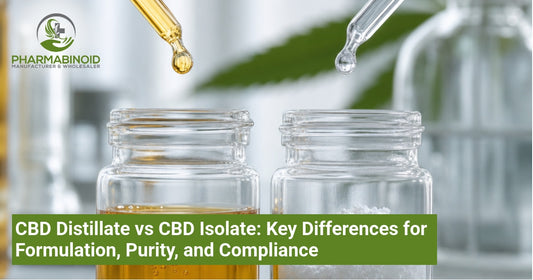
CBD-destillat vs. CBD-isolat: Vigtige forskelle...
CBD-destillat vs. CBD-isolat er en almindelig sammenligning for brands, formuleringseksperter og købere, der arbejder med hampbaserede ingredienser. Begge kan være CBD-kilder af høj kvalitet, men de adskiller sig i formuleringsegenskaber,...
CBD-destillat vs. CBD-isolat: Vigtige forskelle...
CBD-destillat vs. CBD-isolat er en almindelig sammenligning for brands, formuleringseksperter og købere, der arbejder med hampbaserede ingredienser. Begge kan være CBD-kilder af høj kvalitet, men de adskiller sig i formuleringsegenskaber,...