What is Hydrogenated CBD? H4CBD, Testing and Compliance
What is Hydrogenated CBD? Hydrogenated CBD is a modified form of cannabidiol produced by adding hydrogen atoms to the CBD molecule, creating a cannabinoid commonly referred to as H4CBD. It matters in the cannabinoid industry because it sits at the intersection of hemp-derived cannabinoids, chemical conversion, formulation science, analytical testing, and evolving European compliance requirements.
Definition of Hydrogenated CBD
Hydrogenated CBD is cannabidiol that has undergone hydrogenation, a chemical process that saturates specific bonds in the CBD molecule with hydrogen. The best-known hydrogenated CBD derivative is H4CBD, also called tetrahydrocannabidiol.
What Is Hydrogenated CBD?
Hydrogenated CBD is not simply another name for standard CBD. It is a structurally modified cannabinoid made from CBD, usually through a controlled manufacturing process that uses hydrogen gas and a catalyst. The result is a cannabinoid with a different molecular structure, different physicochemical behaviour, and potentially different interactions with cannabinoid-related biological systems compared with unmodified CBD.
In practical industry language, when people ask “what is H4CBD?”, they are usually asking about hydrogenated CBD. H4CBD explained simply means CBD that has been chemically altered by adding four hydrogen atoms. This change affects the molecule’s degree of saturation and may influence stability, solubility, receptor affinity, and formulation behaviour. However, research remains limited, and H4CBD should not be described as having proven medical benefits.
A clear hydrogenated CBD definition should also include its production context. H4CBD is generally considered a semi-synthetic cannabinoid because it is typically produced from hemp-derived CBD rather than extracted in meaningful quantities directly from the cannabis plant. This makes manufacturing controls, impurity profiling, and certificate of analysis documentation particularly important.
Scientific Background of Hydrogenated CBD
Hydrogenation is a well-established chemical process used across pharmaceutical, food, and fine chemical industries. In cannabinoid chemistry, hydrogenation changes unsaturated bonds in a molecule by adding hydrogen atoms. For CBD, this conversion can produce H4CBD, a more saturated analogue of cannabidiol.
The starting material is usually purified CBD, often CBD isolate or a highly refined CBD extract. During production, CBD is exposed to hydrogen under controlled conditions in the presence of a catalyst such as palladium, platinum, or another suitable catalytic system. After the reaction, the material must be purified to remove residual catalysts, solvents, reaction by-products, and unwanted isomers.
From a pharmacology perspective, hydrogenated cannabinoids are discussed in cannabinoid research because small structural changes can influence how a molecule behaves in relation to cannabinoid receptors, enzymes, transporters, and lipid-based formulations. Some early or preclinical research has investigated how CBD analogues may interact differently from CBD, but the available scientific literature on H4CBD is still developing. Responsible suppliers should avoid overstating effects and should rely on analytical evidence rather than marketing claims.
Terpenes are not part of the hydrogenated CBD molecule itself, but they may be relevant in finished formulations. If H4CBD is formulated into a broad-spectrum hemp product, manufacturers must consider the terpene profile, cannabinoid profile, carrier oil, oxidation stability, flavour, viscosity, and compatibility with the intended product format.
Key Characteristics of Hydrogenated CBD
- Structurally modified CBD: Hydrogenated CBD is derived from cannabidiol but has additional hydrogen atoms added through hydrogenation, producing a different cannabinoid structure known as H4CBD.
- Usually semi-synthetic: H4CBD is typically made from hemp-derived CBD through chemical conversion rather than isolated directly from the plant in significant natural concentrations.
- Requires advanced testing: Reliable analysis should confirm cannabinoid identity, potency, isomer profile, residual solvents, heavy metals, pesticides, microbial safety, and potential catalyst residues.
- Different formulation behaviour: Changes in molecular structure may affect solubility, stability, viscosity, and compatibility with carrier oils or other cannabinoid ingredients.
- Limited research base: H4CBD is newer in commercial cannabinoid markets than CBD, so scientific evidence remains more limited and should be interpreted carefully.
Uses and Industry Applications
Hydrogenated CBD is mainly relevant in cannabinoid formulation, research, and product development. Manufacturers may evaluate H4CBD for use in specialist cannabinoid blends, oil-based formulations, research materials, and controlled product development projects. Because it is structurally different from CBD, it should be treated as its own cannabinoid ingredient rather than as a direct substitute for conventional cannabidiol.
For industrial buyers, the most important considerations are consistency, purity, documentation, and compliance. A high-quality hydrogenated CBD ingredient should be supported by a certificate of analysis showing potency and contaminant screening. For converted cannabinoids, additional attention should be paid to residual catalysts, reaction impurities, unidentified peaks in chromatograms, and batch-to-batch reproducibility.
In the European market, regulatory assessment is essential. Cannabinoid rules vary by country and may depend on intended use, product category, THC content, novel food considerations, and whether the material is classified as natural, extracted, or chemically modified. Businesses should verify local requirements before placing hydrogenated CBD products on the market.
Related Cannabinoids, Terpenes, or Terms
To understand hydrogenated CBD in a broader cannabinoid context, it is useful to compare it with CBD, HHC-type cannabinoids, and other modified hemp-derived compounds. Pharmabinoid provides additional background on H4CBD as the hydrogenated form of cannabidiol, broader cannabinoid research, and detailed H4CBD research and studies.
Related terms include cannabidiol, CBD isolate, H4CBD, hydrogenation, cannabinoid profile, certificate of analysis, residual solvent testing, terpene profile, semi-synthetic cannabinoids, and cannabinoid formulation.
FAQ About Hydrogenated CBD
What is H4CBD?
H4CBD is a hydrogenated form of CBD created by adding hydrogen atoms to the cannabidiol molecule. It is commonly described as hydrogenated CBD or tetrahydrocannabidiol and is usually produced from hemp-derived CBD through controlled chemical conversion.
Is hydrogenated CBD the same as CBD?
No. Hydrogenated CBD is derived from CBD, but it is chemically different. The hydrogenation process changes the molecular structure, which can influence its analytical profile, formulation properties, and how it is assessed for quality and compliance.
How is hydrogenated CBD made?
Hydrogenated CBD is generally made by exposing purified CBD to hydrogen in the presence of a catalyst under controlled manufacturing conditions. The resulting material must then be purified and tested to confirm identity, potency, residual solvents, and possible catalyst residues.
Does hydrogenated CBD have proven medical effects?
No proven medical claims should be made for hydrogenated CBD. H4CBD is discussed in cannabinoid research, but human clinical evidence remains limited. It should not be promoted as treating, curing, or preventing any disease.
Is hydrogenated CBD legal in Europe?
The legal status of hydrogenated CBD can vary across European countries and product categories. Factors may include THC content, intended use, novel food status, national cannabinoid rules, and whether the substance is considered chemically modified. Businesses should obtain qualified regulatory advice before commercialisation.
Conclusion
What is Hydrogenated CBD? In simple terms, it is CBD that has been chemically modified through hydrogenation to create H4CBD, a distinct cannabinoid with its own structure, testing requirements, and formulation considerations. For the cannabinoid industry, its importance lies not in exaggerated claims but in careful chemistry, transparent documentation, strong analytical testing, and responsible compliance within the European market.
TryPharma
Ring oss eller skicka oss ett e-postmeddelande för mer information
Gratisprov
Upptäck fördelarna med våra produkter på nära håll genom att besöka vår webbplats för att få din exklusiva kod TryPharma. När du lägger en beställning med denna specialkod säkrar du inte bara de produkter du önskar, utan vi inkluderar också ett kostnadsfritt prov med varje köp. Denna möjlighet låter dig uppleva kvaliteten på vårt sortiment innan du binder dig till huvudleveransen. Vårt mål är att säkerställa att du är helt nöjd med ditt val, och denna process ger dig ett riskfritt sätt att utforska vårt omfattande produktsortiment. Kontakta oss idag för att komma igång och ta första steget mot en givande upplevelse med våra premiumerbjudanden.
Fraktförsäkring
När du köper CBD-isolat, oljor och andra produkter i bulk från oss är din försändelse helt försäkrad av oss utan någon extra kostnad för dig. Vi använder välrenommerade fraktbolag som FedEx och UPS för transporten, samtidigt som vi själva hanterar försäkringsskyddet för att säkra varje leverans från vårt lager till din dörr. På TryPharma är vi engagerade i att främja affärstillväxt genom att erbjuda en riskfri grossisttjänst. I det osannolika fallet att ett fraktproblem uppstår garanterar vi återbetalning inom fem arbetsdagar från det datum då incidenten bekräftas. Vår heltäckande strategi eliminerar effektivt 99,9 % av alla potentiella risker förknippade med bulkfrakt av CBD, vilket säkerställer din fullständiga trygghet.
30 dagars returrätt
Vi uppmanar dig att testa det kostnadsfria provet som ingår i din beställning innan du öppnar huvudleveransen. Om kvaliteten inte motsvarar dina förväntningar kan du dra nytta av vår 30-dagars returpolicy. Denna policy gör det möjligt för dig att returnera produkten inom 30 dagar för full återbetalning, vilket garanterar din fullständiga tillfredsställelse. Kontakta oss idag för att utforska vårt exceptionella produktsortiment och uppleva vår engagerade kundservice.
Cannabinoidisolat
-
CBD-isolat - cannabidiol
Ordinarie pris From €24.99 to €369.99Ordinarie prisJämförpris / per€0.00Reapris €24.99 -
CBG - Cannabigerol
Ordinarie pris From €49.99 to €799.99Ordinarie prisJämförpris / per€0.00Reapris €49.99 -
CBN - Cannabinol
Ordinarie pris From €79.99 to €1,299.99Ordinarie prisJämförpris / per€0.00Reapris €79.99 -
CBC - Cannabikromen
Ordinarie pris From €99.99 to €1,999.99Ordinarie prisJämförpris / per€0.00Reapris €99.99 -
CBDV - Cannabidivarin
Ordinarie pris From €13.99 to €3,149.99Ordinarie prisJämförpris / per€0.00Reapris €13.99 -
Cannabicitran-isolat - CBT
Ordinarie pris From €49.99 to €4,349.99Ordinarie prisJämförpris / per€0.00Reapris €49.99 -
Cannabidiolsyra - CBDA
Ordinarie pris From €49.99 to €1,499.99Ordinarie prisJämförpris / per€0.00Reapris €49.99 -
Cannabigerolsyra - CBGA
Ordinarie pris From €59.99 to €1,749.99Ordinarie prisJämförpris / per€0.00Reapris €59.99
Kollektioner
-
Psykoaktiva extrakt
Psykoaktiva extrakt – Guide för grossistköpare Psykoaktiva extrakt samlar specialiserade cannabinoidformat för...
-
CBD-kosmetik
CBD-kosmetik – Guide för grossistköpare CBD-kosmetik samlar kosmetiska CBD-format för varumärken som...
-
CBD-destillat
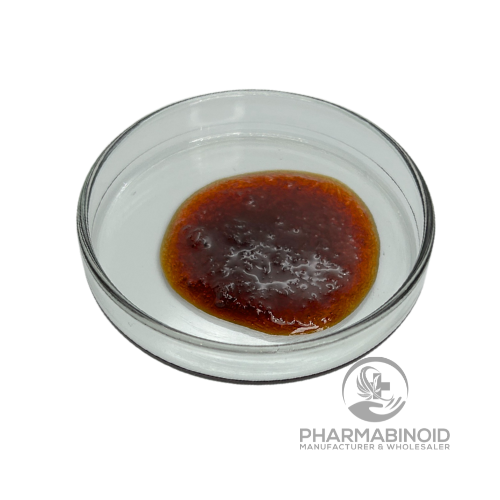
CBD-destillat – grossistguide för köpare CBD-destillat samlar produktalternativ för professionella köpare som...
Blogginlägg
Visa alla-
CBD Gummies vs CBD Oil: Key Differences, Benefi...
CBD Gummies vs CBD Oil is a practical comparison that comes down to formulation, absorption, consistency, ingredient quality, and personal preference. Both formats can contain the same cannabinoid, cannabidiol, but...
CBD Gummies vs CBD Oil: Key Differences, Benefi...
CBD Gummies vs CBD Oil is a practical comparison that comes down to formulation, absorption, consistency, ingredient quality, and personal preference. Both formats can contain the same cannabinoid, cannabidiol, but...
-
Risks of CBD Edibles: Safety, Side Effects, and...
The risks of CBD edibles are usually linked less to CBD itself and more to formulation quality, delayed onset, unclear labelling, possible interactions, and how the edible is used. Gummies,...
Risks of CBD Edibles: Safety, Side Effects, and...
The risks of CBD edibles are usually linked less to CBD itself and more to formulation quality, delayed onset, unclear labelling, possible interactions, and how the edible is used. Gummies,...
-
CBD Edibles Dosage: A Responsible Guide to Serv...
CBD Edibles Dosage is one of the most common questions European consumers and formulators ask because edible products behave differently from oils, vapes, or topical formats. A responsible serving size...
CBD Edibles Dosage: A Responsible Guide to Serv...
CBD Edibles Dosage is one of the most common questions European consumers and formulators ask because edible products behave differently from oils, vapes, or topical formats. A responsible serving size...