What is Cannabidiol Monoethyl Ether? CBDO Explained
What is Cannabidiol Monoethyl Ether? Cannabidiol Monoethyl Ether is a synthetic or semi-synthetic ether derivative of cannabidiol, commonly discussed in specialist cannabinoid chemistry contexts and sometimes abbreviated as CBDO. It matters because it illustrates how researchers can modify the CBD molecule to study changes in stability, solubility, analytical behaviour, and potential biological interaction, although public data on this specific compound remains limited.
Definition of Cannabidiol Monoethyl Ether
Cannabidiol Monoethyl Ether is an engineered cannabidiol analogue in which one phenolic hydroxyl group of cannabidiol has been converted into an ethoxy ether group. In simple terms, the cannabidiol monoethyl ether definition refers to a chemically modified CBD molecule rather than a naturally abundant cannabinoid found in hemp or cannabis plants.
What Is Cannabidiol Monoethyl Ether?
Cannabidiol Monoethyl Ether, or CBDO in some research and industry contexts, is not the same as standard cannabidiol. CBD contains two phenolic hydroxyl groups on its resorcinol ring. In cannabidiol monoethyl ether, one of these hydroxyl groups is etherified, meaning it is chemically changed into an ethoxy group. This small structural change can influence how the molecule behaves in solvents, analytical systems, formulations, and potentially in biological research models.
CBDO explained plainly: it is a CBD-derived analogue made by chemical modification, not a conventional extractable cannabinoid like CBD, CBG, CBC, or CBN. Because the abbreviation CBDO is not as universally standardised as CBD or THC, the identity of any material described as CBDO should always be confirmed by its molecular structure, certificate of analysis, and analytical method rather than by abbreviation alone.
At present, Cannabidiol Monoethyl Ether is best understood as a research compound. There is no broad evidence base supporting consumer use, approved medical application, or common commercial availability. For commercial cannabinoid supply chains, this makes documentation, purity testing, impurity profiling, and regulatory review especially important.
Scientific Background of Cannabidiol Monoethyl Ether
The scientific interest in cannabidiol ethers comes from medicinal chemistry and cannabinoid structure-activity research. By changing functional groups on the CBD molecule, researchers can investigate how molecular features influence lipophilicity, chemical stability, metabolism, receptor interaction, and behaviour in formulation systems. However, findings from CBD itself or from other CBD analogues should not be automatically applied to Cannabidiol Monoethyl Ether without direct supporting data.
From a chemistry perspective, Cannabidiol Monoethyl Ether is typically associated with etherification of cannabidiol. This means one hydroxyl group on CBD is converted into an ether bond using controlled laboratory chemistry. The process requires careful reaction control because cannabinoid molecules can be sensitive to heat, acids, oxidation, light exposure, and unwanted isomerisation. In professional manufacturing or research settings, the resulting material would normally require confirmation by analytical techniques such as HPLC, LC-MS, GC-MS where appropriate, and NMR spectroscopy.
This compound should also be distinguished from a full-spectrum or broad-spectrum hemp extract. Botanical extracts contain a cannabinoid profile, terpene profile, waxes, minor compounds, and sometimes degradation products depending on extraction and post-processing. Cannabidiol Monoethyl Ether is a defined chemical entity, so its quality assessment focuses less on natural terpene profile and more on identity, purity, residual reagents, residual solvents, by-products, and batch-to-batch consistency.
Pharmacologically, public information is limited. Cannabidiol itself has been widely investigated in cannabinoid research, but a monoethyl ether derivative may behave differently due to its altered polarity and molecular recognition. Any discussion of biological activity should therefore remain cautious, preclinical where applicable, and based on compound-specific evidence.
Key Characteristics of Cannabidiol Monoethyl Ether
- Modified CBD structure: Cannabidiol Monoethyl Ether is based on the cannabidiol scaffold but contains an ethoxy ether substitution, making it chemically distinct from CBD.
- Research-oriented compound: It is primarily relevant to cannabinoid chemistry, analytical method development, and preclinical investigation rather than mainstream hemp extract production.
- Not a typical natural cannabinoid: It is not generally described as a naturally abundant phytocannabinoid and should not be treated as equivalent to plant-derived CBD extract.
- Analytical confirmation is essential: Identity should be supported by robust testing such as HPLC, LC-MS, and NMR, alongside a certificate of analysis showing purity and impurity profile.
- Limited public data: Safety, pharmacology, regulatory classification, and commercial relevance are not as well documented as better-known cannabinoids such as CBD, CBG, or CBN.
Uses and Industry Applications
The most realistic applications of Cannabidiol Monoethyl Ether are in research, reference material development, analytical chemistry, and cannabinoid analogue studies. It may be relevant when scientists are comparing how structural changes to CBD affect physicochemical properties such as solubility, stability, chromatographic separation, and degradation behaviour.
In formulation work, a compound like CBDO would need to be evaluated carefully. Etherification may change how the molecule dissolves in oils, emulsions, carrier systems, or other formulation matrices. It may also affect bioavailability assumptions, storage behaviour, compatibility with excipients, and analytical recovery during quality control testing. None of these properties should be assumed without batch-specific and compound-specific testing.
In manufacturing, Cannabidiol Monoethyl Ether would normally fall outside standard extraction workflows. Conventional cannabinoid production often begins with hemp biomass, followed by extraction, winterisation, distillation, crystallisation, or chromatography. By contrast, CBDO would usually require an additional chemical derivatisation step from a purified cannabinoid starting material. That introduces additional quality considerations, including reagent control, reaction by-products, residual solvent limits, and documentation under appropriate production standards.
For regulatory and compliance teams in the European cannabinoid sector, the key issue is that modified cannabinoid analogues can have uncertain classification depending on jurisdiction, intended use, concentration, production route, and product category. Before any commercial development, companies should obtain legal and regulatory review and ensure that claims, labelling, and safety documentation are appropriate.
Related Cannabinoids, Terpenes, or Terms
Related concepts include cannabidiol, cannabinoid analogues, ether derivatives, semi-synthetic cannabinoids, cannabinoid reference standards, certificates of analysis, HPLC testing, LC-MS identification, terpene profile, cannabinoid profile, and formulation bioavailability. Cannabidiol Monoethyl Ether is most closely connected to CBD chemistry, but it should not be confused with natural hemp extracts or terpene-rich formulations.
For further scientific context on cannabinoid analogues and related research, PubMed provides access to peer-reviewed literature: cannabidiol analogue research on PubMed.
FAQ About Cannabidiol Monoethyl Ether
What is Cannabidiol Monoethyl Ether?
Cannabidiol Monoethyl Ether is a chemically modified derivative of cannabidiol in which one hydroxyl group has been converted into an ethoxy ether group. It is mainly relevant to cannabinoid research, chemical analysis, and compound development rather than standard hemp extraction.
What is CBDO?
CBDO is sometimes used as a shorthand reference for Cannabidiol Monoethyl Ether, although the abbreviation is not as universally recognised as CBD, CBG, or CBN. Because cannabinoid abbreviations can vary, CBDO should always be verified by chemical structure, laboratory documentation, and certificate of analysis.
Is Cannabidiol Monoethyl Ether naturally found in hemp?
It is not generally considered a naturally abundant hemp cannabinoid. Cannabidiol Monoethyl Ether is better described as a synthetic or semi-synthetic CBD analogue produced through chemical modification of cannabidiol.
Is Cannabidiol Monoethyl Ether the same as CBD?
No. It is structurally related to CBD but not identical. The ether modification can change its chemical properties, analytical behaviour, and potentially its biological interactions, so it should not be treated as interchangeable with cannabidiol.
Is there strong research on Cannabidiol Monoethyl Ether?
Publicly available research appears limited compared with better-known cannabinoids. Any claims about performance, safety, or biological activity should be approached cautiously and supported by compound-specific analytical and scientific evidence.
Conclusion
Cannabidiol Monoethyl Ether is an under-documented CBD-derived ether analogue that belongs more to cannabinoid chemistry and research than to conventional hemp extract terminology. Understanding what is Cannabidiol Monoethyl Ether requires looking at its modified molecular structure, analytical verification requirements, formulation implications, and limited public evidence base. For industry professionals, the most important considerations are identity confirmation, purity, certificate of analysis, regulatory review, and careful avoidance of unsupported assumptions based on CBD alone.
TryPharma
Ring oss eller skicka oss ett e-postmeddelande för mer information
Gratisprov
Upptäck fördelarna med våra produkter på nära håll genom att besöka vår webbplats för att få din exklusiva kod TryPharma. När du lägger en beställning med denna specialkod säkrar du inte bara de produkter du önskar, utan vi inkluderar även ett kostnadsfritt prov med varje köp. Denna möjlighet låter dig uppleva kvaliteten på vårt sortiment innan du förbinder dig till huvudleveransen. Vårt mål är att säkerställa att du är helt nöjd med ditt val, och denna process ger dig ett riskfritt sätt att utforska vårt omfattande produktsortiment. Kontakta oss idag för att komma igång och ta det första steget mot en givande upplevelse med våra premiumerbjudanden.
Fraktförsäkring
När du köper CBD-isolat, oljor och andra produkter i bulk från oss är din försändelse fullt försäkrad av oss utan extra kostnad för dig. Vi använder välrenommerade fraktbolag som FedEx och UPS för transporten, samtidigt som vi själva hanterar försäkringsskyddet för att säkra varje leverans från vårt lager till din dörr. På TryPharma är vi engagerade i att främja affärstillväxt genom att erbjuda en riskfri grossisttjänst. I det osannolika fallet att ett fraktproblem uppstår garanterar vi återbetalning inom fem arbetsdagar från det datum då händelsen bekräftas. Vår heltäckande strategi eliminerar effektivt 99,9 % av alla potentiella risker i samband med frakt av CBD i bulk, vilket säkerställer din fullständiga trygghet.
30 dagars returrätt
Vi uppmanar dig att testa det kostnadsfria provet som ingår i din beställning innan du öppnar huvudleveransen. Om kvaliteten inte motsvarar dina förväntningar kan du dra nytta av vår 30-dagars returpolicy. Denna policy gör det möjligt för dig att returnera produkten inom 30 dagar för full återbetalning, vilket garanterar din fullständiga tillfredsställelse. Kontakta oss idag för att utforska vårt exceptionella produktsortiment och uppleva vår engagerade kundservice.
Cannabinoidisolat
-
CBD-isolat - cannabidiol
Ordinarie pris From €24.99 to €369.99Ordinarie prisJämförpris / per€0.00Reapris €24.99 -
CBG - Cannabigerol
Ordinarie pris From €49.99 to €799.99Ordinarie prisJämförpris / per€0.00Reapris €49.99 -
CBN - Cannabinol
Ordinarie pris From €79.99 to €1,299.99Ordinarie prisJämförpris / per€0.00Reapris €79.99 -
CBC - Cannabikromen
Ordinarie pris From €99.99 to €1,999.99Ordinarie prisJämförpris / per€0.00Reapris €99.99 -
CBDV - Cannabidivarin
Ordinarie pris From €13.99 to €3,149.99Ordinarie prisJämförpris / per€0.00Reapris €13.99 -
Cannabicitran-isolat - CBT
Ordinarie pris From €49.99 to €4,349.99Ordinarie prisJämförpris / per€0.00Reapris €49.99 -
Cannabidiolsyra - CBDA
Ordinarie pris From €49.99 to €1,499.99Ordinarie prisJämförpris / per€0.00Reapris €49.99 -
Cannabigerolsyra - CBGA
Ordinarie pris From €59.99 to €1,749.99Ordinarie prisJämförpris / per€0.00Reapris €59.99
Kollektioner
-
Psykoaktiva extrakt
Psykoaktiva extrakt – Guide för grossistköpare Psykoaktiva extrakt samlar specialiserade cannabinoidformat för...
-
CBD-kosmetik
CBD-kosmetik – Guide för grossistköpare CBD-kosmetik samlar kosmetiska CBD-format för varumärken som...
-
CBD-destillat
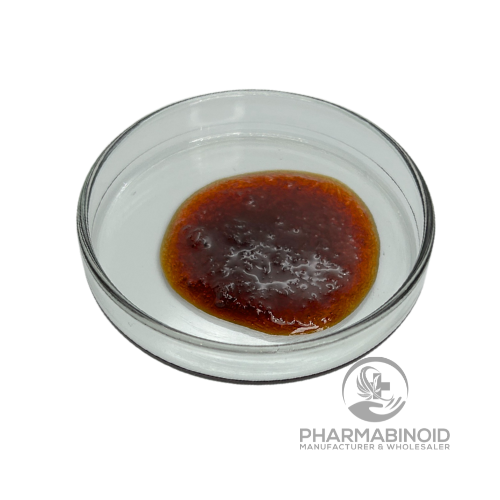
CBD-destillat – grossistguide för köpare CBD-destillat samlar produktalternativ för professionella köpare som...
Blogginlägg
Visa alla-
Private Label CBD Cosmetics: A Practical Guide ...
Private Label CBD Cosmetics are increasingly attractive for European beauty brands that want to enter the cannabinoid skincare category without building a full production, filling, testing, and packaging operation from...
Private Label CBD Cosmetics: A Practical Guide ...
Private Label CBD Cosmetics are increasingly attractive for European beauty brands that want to enter the cannabinoid skincare category without building a full production, filling, testing, and packaging operation from...
-
Risks of CBD Cosmetics: Safety, Side Effects, a...
The risks of CBD cosmetics are usually not about CBD alone. For European buyers, formulators, and brands, the real safety picture depends on ingredient quality, cannabinoid purity, concentration, skin compatibility,...
Risks of CBD Cosmetics: Safety, Side Effects, a...
The risks of CBD cosmetics are usually not about CBD alone. For European buyers, formulators, and brands, the real safety picture depends on ingredient quality, cannabinoid purity, concentration, skin compatibility,...
-
CBD Cosmetics Formulation: A Practical Guide fo...
CBD Cosmetics Formulation is not simply a matter of adding cannabidiol to a cream, serum, balm, or body oil. A reliable CBD cosmetic formulation requires the right raw material specification,...
CBD Cosmetics Formulation: A Practical Guide fo...
CBD Cosmetics Formulation is not simply a matter of adding cannabidiol to a cream, serum, balm, or body oil. A reliable CBD cosmetic formulation requires the right raw material specification,...