CBD distiliato tyrimuose nagrinėjama, kaip gaminami, apibūdinami, testuojami ir naudojami kanabidiolio turtingi distiliatai kanabinoidų sudėtyse. Skirtingai nuo bendrų CBD ekstrakto tyrimų, ši tema konkrečiai orientuojasi į rafinuotus kanapių distiliatus: koncentruotas medžiagas, kuriose gali būti CBD kartu su išmatuojamais mažųjų kanabinoidų kiekiais, likusiais terpenais, su procesu susijusiomis priemaišomis ir augalinės kilmės junginiais be nešiklių. Gamintojams, laboratorijoms ir formulių kūrėjams CBD distiliato tyrimų mokslinė vertė slypi ne tiek plačiuose teiginiuose apie sveikatą, kiek sudėties, grynumo, stabilumo, biologinio prieinamumo veiksnių ir analitinio patvirtinimo supratime.
Kas yra CBD distiliatas?
CBD distiliatas yra rafinuotas kanapių ekstraktas, gaunamas koncentruojant ir gryninant kanabinoidų turtingą medžiagą po ekstrakcijos. Procesas paprastai prasideda biomasės ekstrakcija naudojant etanolį, angliavandenilius arba superkritinį CO2, po to atliekami rafinavimo etapai, tokie kaip winterizacija, filtravimas, tirpiklio pašalinimas, dekarboksilinimas ir distiliacija. Trumpakelė arba plonasluoksnė distiliacija dažnai naudojama kanabinoidams atskirti nuo žemesnės virimo temperatūros lakiųjų junginių, vaškų, chlorofilo ir sunkesnių liekanų.
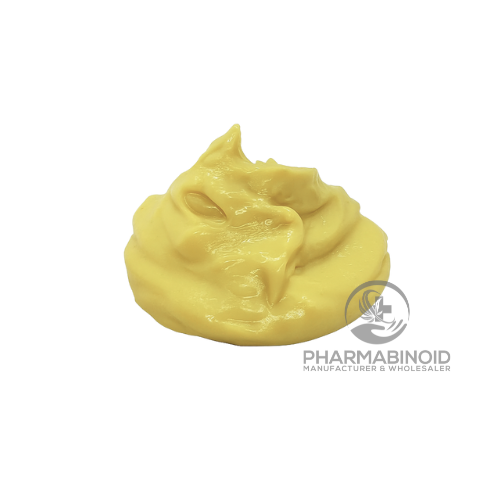
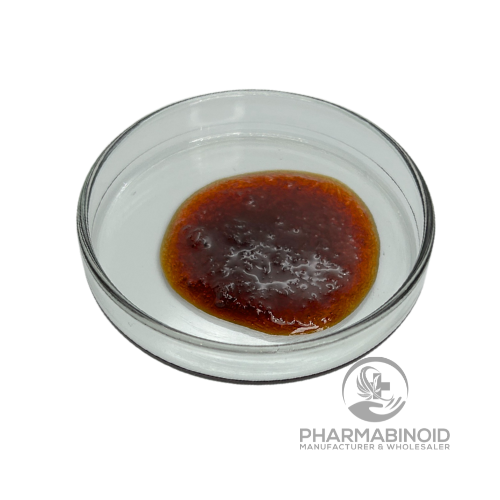
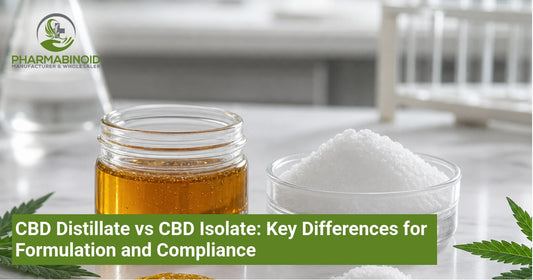
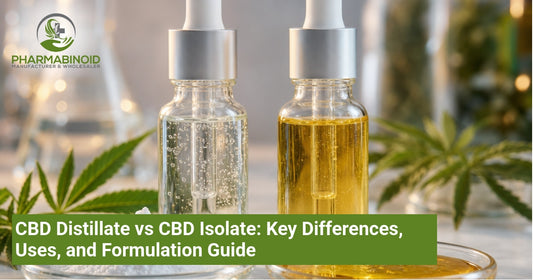
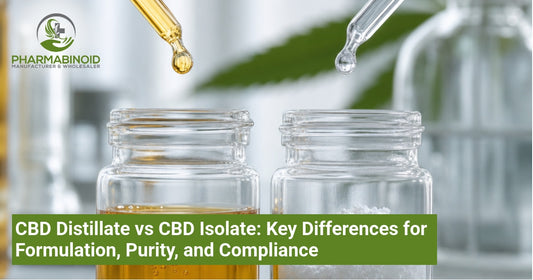
Rezultatas yra klampus, nuo gintarinės iki auksinės spalvos aliejus su didele CBD koncentracija. Priklausomai nuo pradinės medžiagos ir rafinavimo strategijos, CBD distiliate taip pat gali būti mažųjų kanabinoidų, tokių kaip CBG, CBC, CBN ar pėdsakinių rūgštinių kanabinoidų, taip pat kintamas terpenų kiekis. Tuo tarpu CBD izoliatas yra toliau gryninamas į kristalinę medžiagą, kurioje yra labai didelis CBD procentas ir minimalus lydinčių junginių kiekis. Palyginimui su į izoliatą orientuotu mokslu, „Pharmabinoid“ taip pat pateikia tyrimų kontekstą apie CBD izoliato tyrimus ir studijas.
Taigi CBD distiliatas nėra viena fiksuota cheminė medžiaga. Tai iš kanapių gautos tarpinės medžiagos kategorija, kurios kokybė priklauso nuo botaninių žaliavų, ekstrakcijos metodo, rafinavimo parametrų ir analitinių kontrolės priemonių.
Dabartinis mokslinis CBD distiliato tyrimų supratimas
Dabartiniai CBD distiliato tyrimai geriausiai suprantami kaip kanabinoidų chemijos, ekstrakcijos mokslo, analitinių tyrimų ir formulių kūrimo derinys. Dauguma paskelbtų tyrimų nevertina „CBD distiliato“ kaip vienos standartizuotos medžiagos. Vietoj to jie nagrinėja kanabidiolį, kanapių ekstraktus, kanabinoidų skilimą, ekstrakto sudėtį, teršalus arba tiekimo sistemas. Šis skirtumas yra svarbus, nes išgryninto CBD tyrimų išvados ne visada gali būti tiesiogiai taikomos sudėtingiems distiliatams.
Mokslinis susidomėjimas kanapių distiliato tyrimais dažnai apima kanabinoidų profilio nuoseklumą, mažųjų kanabinoidų išlaikymą, terpenų praradimą kaitinimo metu, likutinių tirpiklių kontrolę, pesticidų pernašą, sunkiųjų metalų patikrą ir su oksidacija susijusius pokyčius. Distiliacija gali pagerinti grynumą sumažindama daugelį netikslinių augalinių junginių, tačiau ji nepakeičia konkrečios partijos analitinių tyrimų. Distiliato kokybė turi būti patvirtinta, o ne numanoma.
Platesni kanabidiolio tyrimai nagrinėjo CBD sąveiką su keliais biologiniais taikiniais, tačiau įrodymai skiriasi priklausomai nuo tyrimo dizaino, modelio ir naudotos medžiagos. Apžvalgos, indeksuotos PubMed kanabidiolio farmakologijos literatūroje rodo, kad CBD yra farmakologiškai sudėtingas ir negali būti apibūdinamas tik per vieną receptorių kelią. Kalbant konkrečiai apie CBD distiliatą, mokslinis dėmesys turėtų išlikti sutelktas į sudėtį, atkuriamumą, saugos tyrimus ir formulių elgseną, o ne į nepatvirtintus teiginius apie poveikį.
Farmakologija ir veikimo mechanizmas
CBD farmakologinis profilis skiriasi nuo svaiginančių kanabinoidų, kurie stipriai veikia CB1 receptorius. Tyrimai rodo, kad CBD turi mažą tiesioginį afinitetą CB1 ir CB2 receptoriams, tuo pačiu eksperimentinėmis sąlygomis sąveikaudamas su keliais nekanabinoidiniais taikiniais ir signalinėmis sistemomis. Tai apima jonų kanalus, fermentus, pernešėjus ir receptorių sistemas, aptariamas kanabinoidų farmakologijos literatūroje. Tačiau šių mechanizmų reikšmė labai priklauso nuo koncentracijos, formulės, vartojimo būdo, tyrimo modelio ir kitų junginių buvimo.
CBD distiliate farmakologinis aiškinimas yra sudėtingesnis nei izoliuoto CBD atveju. Mažieji kanabinoidai ir terpenai gali daryti įtaką fizinėms savybėms, skoniui, stabilumui ir galbūt biologinėms sąveikoms, tačiau moksliniai įrodymai apie nuspėjamą sinerginį poveikį išlieka riboti ir turėtų būti aprašomi atsargiai. Terpenų kiekis dažnai sumažėja rafinavimo aukštoje temperatūroje metu, nebent jie būtų pakartotinai įterpiami arba išsaugomi procesų projektavimo būdu. Todėl, aptariant tikėtiną medžiagos elgseną, kanabinoidų distiliato analizė yra būtina.
Formulių kūrimo požiūriu CBD lipofiliškumas yra ypač svarbus. CBD ir CBD turtingi distiliatai pasižymi mažu tirpumu vandenyje, o tai gali paveikti dispersiją, emulsijų projektavimą, absorbcijos elgseną ir produkto vienodumą. Formulių kūrėjai gali naudoti lipidinius nešiklius, emulsiklius, savaime emulguojančias sistemas, kapsuliavimą ar kitas tiekimo technologijas, kad pagerintų apdorojimą ir nuoseklumą. Susiję formulių kūrimo aspektai aptariami Pharmabinoid puslapyje apie CBD valgomųjų produktų tyrimus, biologinio prieinamumo testavimą ir formulių kūrimą.
Pagrindinės tyrimų sritys
-
Kanabinoidų profilis ir partijų nuoseklumas: Vienas iš pagrindinių tyrimų prioritetų yra nustatyti, kaip nuosekliai CBD distiliatas gali būti gaminamas iš kintamos kanapių biomasės. Tyrimuose ir laboratorinėse ataskaitose paprastai nagrinėjamas CBD procentinis kiekis, mažųjų kanabinoidų lygiai, rūgštinių kanabinoidų konversija ir su THC susiję atitikties parametrai. Net ir naudojant tą patį ekstrahavimo metodą, botaninė įvairovė ir apdorojimo sąlygos gali paveikti galutinį profilį.
-
Su procesu susijęs grynumas ir teršalų kontrolė: CBD distiliato tyrimuose dažnai vertinamas rafinavimo efektyvumas mažinant vaškų, pigmentų, chlorofilo ir lakiųjų likučių kiekį. Tačiau tokiems teršalams kaip pesticidai, sunkieji metalai, tirpiklių likučiai, mikotoksinai ir proceso šalutiniai produktai reikia specialaus testavimo. Distiliacija gali koncentruoti pageidaujamus kanabinoidus, tačiau taip pat gali koncentruoti tam tikrus nepageidaujamus junginius, jei ankstesnių etapų kontrolė yra silpna.
-
Šiluminis stabilumas ir skilimas: Distiliacija, dekarboksilinimas ir formulių apdorojimas gali paveikti kanabinoidus karščiu, deguonimi ir šviesa. Kanabinoidų stabilumo tyrimai padeda gamintojams suprasti skilimo kelius, įskaitant oksidaciją ir konversijos modelius. CBN susidarymas, terpenų išgaravimas ir spalvos ar klampumo pokyčiai gali būti svarbūs kokybės rodikliai, priklausomai nuo laikymo ir apdorojimo sąlygų.
-
Formulės veikimas: CBD distiliato tyrimai yra svarbūs produktų kūrėjams, dirbantiems su aliejais, emulsijomis, kapsulėmis, vietinio poveikio priemonėmis ir kitais pateikimo formatais. Prieš komercinį naudojimą turi būti įvertintas klampumas, tirpumas, pagalbinių medžiagų suderinamumas, homogeniškumas ir stabilumas galiojimo laikotarpio sąlygomis. Distiliatas nėra automatiškai pakeičiamas izoliatu, nes kartu esantys junginiai gali pakeisti formulės elgseną.
-
Analitinio metodo validavimas: Patikimas testavimas priklauso nuo validuotų metodų, tokių kaip HPLC kanabinoidams, GC-MS likutiniams tirpikliams ir terpenams, ICP-MS sunkiesiems metalams bei mikrobiologiniai tyrimai, kai tai aktualu. Kanabinoidų distiliato analizėje turi būti atsižvelgiama į matricos efektus, etaloninius standartus, kalibravimo intervalus ir mėginių paruošimo procedūras.
Tyrimų ribotumai
CBD distiliato tyrimai tebėra riboti, nes „distiliatas“ nėra viena standartizuota tyrimų medžiaga. Du CBD distiliatai gali reikšmingai skirtis pagal kanabinoidų profilį, terpenų kiekį, likutinių tirpiklių būklę, degradacijos žymenis ir smulkiuosius komponentus. Dėl to tiesioginis tyrimų palyginimas yra sudėtingas, nebent medžiaga būtų išsamiai apibūdinta.
Kitas ribotumas yra tas, kad daugelis mokslinių straipsnių orientuojasi į išgrynintą CBD arba plačius kanapių ekstraktus, o ne į komercinės kokybės CBD distiliatą. Išvados apie išgrynintą CBD negali būti automatiškai pritaikomos distiliatams, kuriuose yra papildomų kanabinoidų ir augalinės kilmės junginių. Panašiai vieno vartojimo būdo ar formulės tipo duomenys gali būti netaikomi kitam.
Taip pat yra skirtumas tarp analitinių tyrimų ir žmonių baigčių tyrimų. Partija gali būti chemiškai gerai apibūdinta, tačiau tai neįrodo jokio konkretaus poveikio sveikatai. Žmonių tyrimuose, susijusiuose su CBD vartojimu, naudojamos kontroliuojamos sąlygos ir aiškiai apibrėžtos medžiagos, o daugelis komercinių distiliatų skiriasi pagal tiekėją ir gamybos metodą. Dėl šios priežasties CBD distiliato tyrimai turėtų būti aiškinami moksliškai atsargiai ir pagrįsti skaidria dokumentacija.
Pramoninė ir formulių kūrimo svarba
B2B kanabinoidų verslams CBD distiliato tyrimai yra tiesiogiai svarbūs tiekimui, produktų kūrimui, gamybos kontrolei ir reguliaciniam deramam patikrinimui. Distiliatas dažnai naudojamas kaip tarpinė sudedamoji dalis, nes jis suteikia koncentruotą kanabinoidų įnašą, kartu išlaikydamas daugiau sudėtingumo nei izoliatas. Tai gali būti naudinga formulių kūrėjams, kuriems reikalingas apibrėžtas kanapių ekstrakto profilis, o ne vienas išgrynintas junginys.
Pramoninė svarba prasideda nuo specifikacijų sudarymo. Aukštos kokybės CBD distiliato specifikacijoje gali būti nurodyta CBD koncentracija, smulkiųjų kanabinoidų ribos, THC atitikties parametrai, likutinių tirpiklių ribos, terpenų profilis, kai taikoma, mikrobiologiniai kriterijai, sunkiųjų metalų ribos, pesticidų patikra ir išvaizdos arba klampumo lūkesčiai. Be šių parametrų pirkimo sprendimai gali pernelyg stipriai remtis vien tik pagrindiniu CBD procentu.
Formulių kūrėjai taip pat turi atsižvelgti į apdorojimo elgseną. CBD distiliato klampumas gali paveikti dozavimo tikslumą, maišymo laiką, pildymo efektyvumą ir homogeniškumą galutiniuose produktuose. Kaitinimas gali pagerinti tekėjimą, tačiau taip pat gali padidinti oksidacijos riziką arba terpenų nuostolius, jei jis blogai kontroliuojamas. Nešančiuosius aliejus, emulsiklius, antioksidantus, pakavimo medžiagas ir laikymo sąlygas reikėtų parinkti remiantis suderinamumo tyrimais, o ne prielaidomis.
Platesniam moksliniam kontekstui apie patį kanabidiolį papildomos su CBD ekstrakto tyrimais susijusios mokslinės informacijos pateikiama Pharmabinoid kanabidiolio CBD tyrimų puslapyje.
Tyrimų, kokybės ir atitikties aspektai
Tyrimai yra pagrindinis atsakingo CBD distiliato naudojimo elementas. Analizės sertifikatas turėtų būti skirtas konkrečiai partijai ir išduotas kompetentingos laboratorijos, naudojančios tinkamus analitinius metodus. Mažiausiai įmonės turėtų peržiūrėti kanabinoidų stiprumą, su THC susijusius parametrus, likutinius tirpiklius, pesticidus, sunkiuosius metalus, mikrobiologinius rodiklius, kai tai aktualu, ir visus papildomus tyrimus, reikalingus pagal numatytą produkto kategoriją.
HPLC dažnai naudojamas kanabinoidų kiekiui nustatyti, nes juo galima išmatuoti rūgštinius ir neutralius kanabinoidus nereikalaujant aukštos temperatūros konversijos analizės metu. GC pagrįsti metodai gali būti naudojami lakiems junginiams, tokiems kaip likutiniai tirpikliai ir terpenai, tirti, o ICP-MS plačiai naudojamas sunkiųjų metalų analizei. Rezultatų patikimumas priklauso nuo validuotų metodų, reprezentatyvios mėginių atrankos, kalibravimo standartų ir aiškiai nurodytų ataskaitų ribų.
Atitiktis Europoje reikalauja ypatingo dėmesio. Kanabinoidų reglamentavimas gali skirtis priklausomai nuo šalies, numatomo naudojimo, THC ribos, naujo maisto statuso, kosmetikos taisyklių ir kontroliuojamų medžiagų aiškinimo. Europos Komisijos ištekliai apie naujo maisto autorizacijas yra svarbūs įmonėms, vertinančioms su maistu susijusį kanabinoidų taikymą, tačiau jie nepakeičia specializuotų reguliavimo konsultacijų. Bet koks CBD distiliatas, skirtas komerciniam naudojimui, turėtų būti vertinamas pagal taikomą jurisdikciją ir produkto kategoriją.
Kokybės dokumentacija turėtų apimti ne tik COA, bet ir atsekamumą, informaciją apie gamybos metodą, saugos duomenis, kai taikoma, laikymo gaires ir pokyčių kontrolės užtikrinimą. Profesionaliose kanabinoidų tiekimo grandinėse analitinis patvirtinimas nėra rinkodaros priedas; tai yra atsakingos gamybos pagrindas.
Susiję kanabinoidai, terpenai ar tyrimų temos
CBD distiliatas užima tarpinę vietą tarp žalio kanapių ekstrakto ir itin išgryninto CBD izoliato. Susijusios tyrimų temos apima kanabidiolio farmakologiją, CBD izoliato apibūdinimą, plataus spektro ekstrakto kūrimą, terpenų išlaikymą, kanabinoidų skilimą, likutinių tirpiklių tyrimus ir į biologinį prieinamumą orientuotą formulių kūrimą. Šių gretimų temų supratimas padeda atskirti CBD ekstrakto tyrimus, kanapių distiliato studijas ir galutinio produkto veikimo bandymus.
Formulių kūrėjai, lyginantys ingredientų galimybes, turėtų apsvarstyti, kuo CBD distiliatas skiriasi nuo CBD izoliato, plataus spektro aliejaus ir kanabinoidų mišinių. Distiliatas gali suteikti platesnę kanabinoidų matricą nei izoliatas, o izoliatas gali pasiūlyti paprastesnį grynumą ir standartizaciją tam tikriems formulių tikslams. Nė vienas formatas nėra savaime pranašesnis kiekviename pritaikyme; tinkamas pasirinkimas priklauso nuo techninės specifikacijos, atitikties reikalavimų ir numatyto produkto dizaino.
DUK apie CBD distiliato tyrimus
Ar CBD distiliato tyrimai yra tas pats, kas CBD tyrimai?
Ne. CBD tyrimuose dažnai nagrinėjamas išgrynintas kanabidiolis arba apibrėžta farmacinės kokybės medžiaga, o CBD distiliato tyrimuose daugiausia dėmesio skiriama rafinuoto kanapių ekstrakto matricai, kurioje gali būti CBD, mažųjų kanabinoidų, terpenų ir su procesu susijusių kintamųjų. Gryno CBD tyrimų rezultatai gali suteikti naudingą kontekstą, tačiau jų nereikėtų automatiškai taikyti kiekvienam CBD distiliatui be analitinio patvirtinimo.
Ką turėtų apimti CBD distiliato analizės sertifikatas?
Išsamus analizės sertifikatas turėtų apimti kanabinoidų stiprumą, su THC susijusius atitikties duomenis, likutinių tirpiklių tyrimus, pesticidų patikrą, sunkiųjų metalų analizę ir kitus kokybės tyrimus, svarbius numatytam pritaikymui. Priklausomai nuo produkto kategorijos, taip pat gali būti tikslinga pateikti terpenų profilį, mikrobiologinius tyrimus, mikotoksinų analizę arba stabilumo duomenis.
Kodėl CBD distiliatas skiriasi tarp tiekėjų?
Skirtumus gali lemti kanapių genetika, auginimo sąlygos, derliaus nuėmimo laikas, ekstrahavimo tirpiklis, rafinavimo parametrai, dekarboksilinimo sąlygos, distiliavimo įranga, laikymas ir tyrimų metodai. Kadangi CBD distiliatas nėra viena standartizuota medžiaga, tiksliam medžiagų palyginimui būtina partijai specifinė kanabinoidų distiliato analizė.
Išvada
CBD distiliato tyrimai yra vertingiausi tada, kai jie neapsiriboja vien paprastu CBD procentu ir nagrinėja visą mokslinį bei techninį medžiagos profilį. Dabartiniai tyrimai patvirtina būtinybę kruopščiai vertinti kanabinoidų sudėtį, priemaišų kontrolę, terminį stabilumą, formulių elgseną ir validuotus analitinius tyrimus. Nors kanabidiolio tyrimai toliau plečiasi, CBD distiliatas turėtų būti vertinamas kaip sudėtingas rafinuotas kanapių ekstraktas, o ne kaip visuotinai tapatus ingredientas. Gamintojams, tiekėjams ir formuliuotojams stipriausias požiūris yra įrodymais pagrįsta specifikacija, skaidri dokumentacija ir atsargus tyrimų rezultatų aiškinimas.