What Is Cannabidiphorol? CBDP Structure, Uses and Research
Cannabidiphorol, commonly abbreviated as CBDP, is a rare phytocannabinoid found in cannabis and hemp in very small quantities. It is best understood as the seven-carbon side-chain analogue of cannabidiol, meaning it is structurally related to CBD but has a longer alkyl side chain. Within the cannabinoid industry, CBDP matters because it expands the known diversity of naturally occurring cannabinoids and raises important questions for research, analytical testing, formulation, and regulatory evaluation.
Definition of Cannabidiphorol
The simplest cannabidiphorol definition is: Cannabidiphorol is a rare, naturally occurring cannabinoid structurally similar to cannabidiol, but with a seven-carbon side chain instead of CBD’s five-carbon side chain. It is also known by the abbreviation CBDP.
What Is Cannabidiphorol?
What is Cannabidiphorol? Cannabidiphorol is one of the lesser-known cannabinoids identified in Cannabis sativa. Like CBD, it belongs to the broader family of non-classical cannabinoids that do not share the same intoxicating profile typically associated with delta-9-THC. However, CBDP should not be described as “CBD but stronger” without context, because scientific research on its pharmacology, safety profile, bioavailability, and formulation behavior remains limited.
For users asking what is CBDP, the key point is structural: CBDP is a homolog of CBD. A homolog is a compound that shares the same general chemical framework but differs by a repeated structural unit. In CBDP’s case, the difference is the length of the side chain. CBD has a pentyl, or five-carbon, side chain, while CBDP has a heptyl, or seven-carbon, side chain.
This longer side chain is scientifically interesting because side-chain length can influence how cannabinoids interact with biological targets. That said, cannabinoid activity is not determined by side-chain length alone. Molecular shape, receptor affinity, metabolism, formulation matrix, purity, and route of exposure can all affect how a cannabinoid behaves in research settings.
Scientific Background of Cannabidiphorol
CBDP gained attention after researchers reported the identification of rare heptyl cannabinoids in cannabis, including tetrahydrocannabiphorol and cannabidiphorol. A widely cited publication indexed on PubMed discusses the isolation and structural characterization of these rare phytocannabinoids in Cannabis sativa: PubMed cannabinoid research reference.
From a chemistry perspective, CBDP is closely related to cannabidiol but contains two additional carbon atoms in its side chain. This apparently small structural change is relevant because cannabinoids often interact with biological systems through highly specific molecular recognition. In cannabinoid science, subtle structural differences can influence receptor binding, solubility, chromatographic behavior, and how the molecule performs in finished formulations.
From an extraction and manufacturing standpoint, CBDP is not typically present in hemp extract at high concentrations. Standard hemp biomass is usually dominated by cannabinoids such as CBD, CBDA, CBG, CBGA, CBC, and trace minor cannabinoids. Detecting CBDP requires suitable analytical methods, reference standards, and validated instrumentation, commonly involving high-performance liquid chromatography or mass spectrometry-based approaches.
For formulators, CBDP presents both interest and uncertainty. Because it is rare and still under-studied, responsible product development would require careful identity confirmation, purity testing, residual solvent analysis where relevant, contaminant screening, cannabinoid profile verification, and stability assessment. Any commercial use in Europe should also be evaluated against the applicable regulatory framework, including novel food considerations and country-specific cannabinoid rules.
Key Characteristics of Cannabidiphorol
- Seven-carbon side chain: CBDP differs from CBD by having a heptyl side chain. This makes it part of a group of longer-chain cannabinoid homologs that are scientifically interesting but not yet fully understood.
- Rare natural occurrence: CBDP appears only in trace quantities in cannabis and hemp. Because of this, its detection and quantification depend heavily on sensitive analytical testing and reliable reference materials.
- Structurally related to CBD: CBDP shares key similarities with cannabidiol, but it should not be assumed to have the same pharmacological, sensory, or formulation profile as CBD.
- Limited research base: Compared with major cannabinoids, CBDP has far fewer published studies. Claims about potency, effects, or applications should therefore remain cautious and evidence-based.
- Analytical relevance: CBDP may be relevant for advanced cannabinoid profiling, especially when laboratories are characterising rare or emerging cannabinoids in complex extracts.
Uses and Industry Applications
At present, CBDP is most relevant in research, analytical testing, and specialist cannabinoid development rather than mainstream formulation. The industry interest around CBDP comes from its rarity, its structural relationship to CBD, and the broader desire to map the full phytochemical complexity of cannabis and hemp.
In analytical laboratories, CBDP may be included in expanded cannabinoid panels when validated standards are available. This is important because rare cannabinoids can be difficult to distinguish from structurally similar compounds without suitable methods. Laboratories may need to confirm retention time, mass spectral data, calibration accuracy, and method specificity before reporting CBDP confidently on a certificate of analysis.
In extraction and manufacturing, CBDP is not usually the primary target of standard hemp processing. Conventional extraction methods such as ethanol extraction, hydrocarbon extraction, or supercritical CO₂ extraction may collect trace cannabinoids from the plant, but concentrating a specific rare cannabinoid requires deeper refinement and robust quality control. Distillation, chromatography, or synthesis-based pathways may be discussed in the industry, but any such process must be supported by identity testing, impurity profiling, and production standards appropriate for the intended market.
In formulation, CBDP would need to be evaluated for solubility, stability, compatibility with carrier oils or other excipients, cannabinoid profile consistency, and bioavailability. Because the evidence base is still developing, responsible formulators should avoid exaggerated claims and focus on product quality, transparency, and analytical verification.
Related Cannabinoids, Terpenes, or Terms
CBDP is most closely related to cannabidiol because both share a similar cannabinoid framework, but CBDP has a longer side chain. It is also often discussed alongside other rare cannabinoids such as THCP, CBG, CBC, CBN, and CBDV. In broader hemp chemistry, CBDP may appear in conversations about minor cannabinoids, cannabinoid homologs, phytocannabinoid profiling, chromatography, certificates of analysis, and cannabinoid reference standards.
Terpenes are not structurally related to CBDP, but they remain relevant in full-spectrum and broad-spectrum formulation work because terpene profile, cannabinoid profile, and extract purity all influence the technical and sensory properties of finished hemp ingredients. However, any interaction between CBDP and terpenes remains a research question rather than a settled commercial claim.
FAQ About Cannabidiphorol
What is CBDP?
CBDP is the abbreviation for cannabidiphorol, a rare cannabinoid structurally similar to CBD. Its main distinguishing feature is a seven-carbon side chain, compared with the five-carbon side chain found in cannabidiol.
Is CBDP the same as CBD?
No. CBDP and CBD are related, but they are not the same compound. CBDP has a longer alkyl side chain, which may influence its chemical and biological behavior. However, research is still limited, so CBDP should not be treated as interchangeable with CBD.
Is CBDP intoxicating?
CBDP is not generally described as a THC-like intoxicating cannabinoid, but the available research is limited. It is more accurate to say that its pharmacological profile is still being investigated and should not be overstated.
Why is cannabidiphorol important in cannabinoid research?
Cannabidiphorol is important because it shows that the cannabis plant contains more structural cannabinoid diversity than was previously recognised. Its discovery supports the need for advanced analytical testing and careful scientific evaluation of rare cannabinoids.
Can CBDP be used in finished cannabinoid products?
Any use of CBDP in finished products would require proper identity confirmation, purity testing, contaminant screening, stability data, and regulatory assessment. In Europe, companies should also consider novel food rules and national cannabinoid regulations before placing CBDP-containing products on the market.
Conclusion
What is Cannabidiphorol? Cannabidiphorol, or CBDP, is a rare cannabinoid and seven-carbon side-chain analogue of CBD. It is scientifically interesting because small structural differences can matter in cannabinoid chemistry, analytical testing, and formulation development. At the same time, CBDP explained responsibly means recognising the limits of current research. For the cannabinoid industry, its value today is mainly in research, advanced profiling, and the continued development of high-quality, transparent cannabinoid science.
TryPharma
Nazovite nas ili nam pošaljite e-poštu za više informacija
Besplatan uzorak
Otkrijte prednosti naših proizvoda iz prve ruke posjetom našoj web stranici kako biste dobili svoj ekskluzivni kod TryPharma. Kada izvršite narudžbu koristeći ovaj posebni kod, ne samo da ćete osigurati željene proizvode, već ćemo uz svaku kupnju uključiti i besplatan uzorak. Ova vam prilika omogućuje da iskusite kvalitetu naše ponude prije nego što se obvežete na glavnu pošiljku. Naš je cilj osigurati da budete potpuno zadovoljni svojim odabirom, a ovaj proces pruža način bez rizika za istraživanje našeg opsežnog asortimana proizvoda. Kontaktirajte nas danas kako biste započeli i napravili prvi korak prema vrijednom iskustvu s našom vrhunskom ponudom.

Osiguranje pošiljke
Kada od nas kupujete CBD izolate, ulja i druge proizvode u velikim količinama, vaša je pošiljka u potpunosti osigurana s naše strane bez dodatnih troškova za vas. Za prijevoz koristimo renomirane dostavne tvrtke poput FedExa i UPS-a, dok osiguranje pokrića upravljamo sami kako bismo zaštitili svaku pošiljku od našeg skladišta do vaših vrata. U tvrtki TryPharma predani smo poticanju poslovnog rasta nudeći veleprodajnu uslugu bez rizika. U malo vjerojatnom slučaju problema s dostavom, jamčimo povrat novca u roku od pet radnih dana od datuma potvrde incidenta. Naš sveobuhvatan pristup učinkovito uklanja 99,9 % svih mogućih rizika povezanih s otpremom CBD-a u velikim količinama, osiguravajući vaš potpuni mir.

Povrat u roku od 30 dana
Pozivamo vas da isprobate besplatni uzorak uključen uz vašu narudžbu prije otvaranja glavne pošiljke. Ako kvaliteta ne ispuni vaša očekivanja, možete iskoristiti našu politiku povrata u roku od 30 dana. Ova vam politika omogućuje povrat proizvoda unutar 30 dana uz puni povrat novca, jamčeći vaše potpuno zadovoljstvo. Kontaktirajte nas danas kako biste istražili naš izniman asortiman proizvoda i iskusili našu predanu korisničku podršku.
Kanabinoidni izolati
-
CBD izolat - kanabidiol
Redovna cijena From €24.99 to €369.99Redovna cijenaJedinična cijena / po€0.00Akcijska cijena €24.99 -
CBG - Kanabigerol
Redovna cijena From €49.99 to €799.99Redovna cijenaJedinična cijena / po€0.00Akcijska cijena €49.99 -
CBN - Kanabinol
Redovna cijena From €79.99 to €1,299.99Redovna cijenaJedinična cijena / po€0.00Akcijska cijena €79.99 -
CBC – kanabikromenski izolat
Redovna cijena From €99.99 to €1,999.99Redovna cijenaJedinična cijena / po€0.00Akcijska cijena €99.99 -
CBDV – kanabidivarin
Redovna cijena From €13.99 to €3,149.99Redovna cijenaJedinična cijena / po€0.00Akcijska cijena €13.99 -
Izolat kanabicitrana - CBT
Redovna cijena From €49.99 to €4,349.99Redovna cijenaJedinična cijena / po€0.00Akcijska cijena €49.99 -
CBDA izolat – kanabidiolna kiselina
Redovna cijena From €49.99 to €1,499.99Redovna cijenaJedinična cijena / po€0.00Akcijska cijena €49.99 -
Kanabigerolna kiselina - CBGA
Redovna cijena From €59.99 to €1,749.99Redovna cijenaJedinična cijena / po€0.00Akcijska cijena €59.99
Kolekcije
-
Psihoaktivne PPB mješavine za profesionalne kupce
Psihoaktivne PPB mješavine za profesionalne kupceIstražite Pharmabinoid PPB kolekciju za profesionalni razvoj...
-
CBD vapeovi
CBD vape proizvodi i podrška formulaciji za profesionalni razvoj kanabinoidnih proizvoda Ova...
-
CBD kozmetika
CBD kozmetika: vodič za veleprodajne kupceKomercijalna kolekcija za brendove, proizvođače i private-label...
-
CBD destilati na veliko
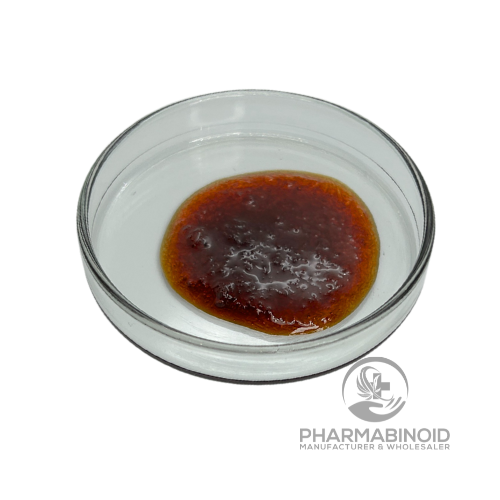
CBD destilati na veliko za europske kupceUsporedite CBD destilate za profesionalne formulacije,...
Objave na blogu
Prikaži sve-
Rizici mircena: što pokazuju dokazi o sigurnosti
Uravnotežen pregled dokaza o sigurnosti mircena, uključujući toksikologiju na životinjama, putove izloženosti, ograničene podatke o ljudima i rukovanje koncentriranim materijalima.
Rizici mircena: što pokazuju dokazi o sigurnosti
Uravnotežen pregled dokaza o sigurnosti mircena, uključujući toksikologiju na životinjama, putove izloženosti, ograničene podatke o ljudima i rukovanje koncentriranim materijalima.
-
CBD destilat naspram CBD izolata: ključne razli...
CBD destilat naspram CBD izolata prvenstveno je pitanje sastava, ciljne čistoće, ponašanja u formulaciji i strategije usklađenosti. Oba su rafinirani CBD sastojci dobiveni iz konoplje, ali nisu međusobno zamjenjivi. CBD...
CBD destilat naspram CBD izolata: ključne razli...
CBD destilat naspram CBD izolata prvenstveno je pitanje sastava, ciljne čistoće, ponašanja u formulaciji i strategije usklađenosti. Oba su rafinirani CBD sastojci dobiveni iz konoplje, ali nisu međusobno zamjenjivi. CBD...
-
CBD destilat i CBD izolat: razlike, primjene i ...
CBD destilat i CBD izolat važna su usporedba za brendove, formulatore i kupce koji rade sa sastojcima dobivenima iz konoplje. Oba materijala mogu biti bogata kanabidiolom, ali se razlikuju po...
CBD destilat i CBD izolat: razlike, primjene i ...
CBD destilat i CBD izolat važna su usporedba za brendove, formulatore i kupce koji rade sa sastojcima dobivenima iz konoplje. Oba materijala mogu biti bogata kanabidiolom, ali se razlikuju po...