
Kannabinoidide uurimine
Kannabinoidide uuringud
Kannabinoidide uuringuid tuleks vaadata ostja vaatenurgast: identiteet, partii tõendusmaterjal, sobivus koostisega, turutee ja vastutustundlik sõnastus. Uuringulehed on kõige kasulikumad siis, kui need aitavad meeskonnal otsustada, mida enne hankimist või turuletoomist kontrollida.
Kannabinoidide uuringute puhul ei seisne kaubanduslik väärtus üldiste väidete kordamises. See seisneb olemasoleva tõendusmaterjali sidumises tegeliku tooteotsuse, selge dokumendifaili ja praktilise järgmise sammuga.
Uuringute muutmine ostjakontekstiks
| Otsustusvaldkond | Mida kontrollida |
|---|---|
| Tõendusmaterjali tüüp | Eralda varajased uuringud, tarnija dokumendid ja valmistoodete tõendusmaterjal. |
| Toote asjakohasus | Kontrolli, kas teave kehtib arendatava vormingu kohta. |
| Kvaliteeditoimik | Seo iga hankeotsus COA-de, spetsifikatsioonide ja jälgitavusega. |
| Kliendile suunatud sõnastus | Hoia avalik tekst hariv ja konservatiivne. |
Kontrollid enne teabe ärilist kasutamist
- Millisele küsimusele peaks uuring vastama?
- Kas see kehtib tegeliku tootevormingu kohta või ainult laiema kontseptsiooni kohta?
- Milliseid dokumente on vaja enne hankimist või avaldamist?
- Kas teema saab toetada ostuotsust ilma meditsiiniliseks väiteks muutumata?
- Kuhu peaks lugeja Pharmabinoidi saidil järgmisena minema?
Kuidas see ostjat aitab
Üldine kannabinoidide uuringute leht peaks toimima tõendusmaterjali keskusena, aidates lugejatel eristada varajasi leide, tootedokumentatsiooni, formulatsiooni tegelikkust ja vastutustundlikku kliendisõnastust. Praktikas peaks see leht aitama ostjatel otsustada, mida küsida, mida testida ja millist väidete keelt vältida enne proovide või kordustarne juurde liikumist.
Mida leht ei tohiks vihjata
Kannabinoidide uuringud võivad toetada paremate küsimuste esitamist, kuid neid ei tohiks kopeerida meditsiinilisteks, toime- ega seaduslikkuse väideteks. Hoia järeldus seotud konkreetse partii, tootevormingu ja turuteega.
Jätka ülevaadet
kannabinoidide uuringud, puhtad kannabinoidid, küsi hinnapakkumist.
Kuidas ostjad peaksid seda uuringulehte kasutama
Kasuta kannabinoidide uuringuid viisina küsida täpsemaid hankeküsimusi. Eesmärk ei ole tsiteerida teadust kontekstist välja, vaid mõista, mida tõendusmaterjal saab ja ei saa päris tootetoimikus toetada.
Praktilised märkused tõendusmaterjali kohta
- Eralda üldised uuringud valmistoodete tõendusest.
- Hoia partiidokumendid formulatsioonimärkmete kõrval.
- Kontrolli, kas teema muudab pakendi, etiketi või turutee otsuseid.
- Vaata kliendile suunatud tekst üle enne, kui leht või toode avalikuks läheb.
Viimane äriline kontroll
Enne kannabinoidide uuringutega edasi liikumist kinnita, et lehe selgitus vastab tegelikule tootele, partiidokumentidele, turuteele ja kliendihariduse plaanile. Just see viimane kontroll muudab hea sisu kasulikuks äriliseks juhiseks.
Kuidas ostjale mõeldud märkus võiks kõlada
Kannabinoidide uurimise puhul võiks kasulik märkus kõlada nii: „Vaatame selle materjali läbi kindlaksmääratud tootevormi ja sihtriigi jaoks. Palun kinnitage ühendi identiteet, partii COA, asjakohased THC või lisandite tulemused, säilitamisjuhised ning kas proovi saab sama spetsifikatsiooni alusel uuesti esitada.”
Mis nõrgestaks lehte
- Üldised teaduslikud väited ilma seoseta hankimise või tootealaste otsustega.
- Väited, mis viitavad ravile, ennetusele või garanteeritud mõjudele.
- Dokumendid, mis kirjeldavad teistsugust partiid kui see, mille kohta hinnapakkumist tehakse.
- Proovitagasiside, mida kordustellimuste jaoks ei salvestata.
Lõplik hankimise kontroll
Enne kui see leht avalikuks läheb, veenduge, et termin, lehe pealkiri, siselingid ja hinnapakkumise teekond toetavad kõik sama eesmärki. Lugeja peaks lahkuma selgema arusaamaga kannabinoidide uurimisest ja realistliku järgmise sammuga.
Kannabinoidid
Beeta-pineen
Discover Beta-Pinene, a terpene with fresh, pine-like aromas. Learn about its potential benefits, uses, and role in enhancing your wellness journey. Read more
Kannabikromeen - CBC
Cannabichromene, or CBC, is a non-intoxicating cannabinoid found in cannabis and hemp plants. Recognized for its unique interaction with the endocannabinoid system, CBC is gaining attention for its potential applications in wellness and cosmetic products. Read more
Kannabitsitraan - CBT
Cannabicitran, commonly referred to as CBT, is a rare and lesser-known cannabinoid found in cannabis plants. Unlike its more famous counterparts, CBT is non-intoxicating and has garnered interest for its unique potential applications in wellness and cannabis product formulations. Read more
Kannabidiool - CBD
Cannabidiol, or CBD, is a naturally occurring non-intoxicating cannabinoid found in the cannabis plant. Known for its therapeutic potential and wellness applications, CBD has become one of the most widely recognized cannabinoids in both medical and recreational markets. Read more
Kannabidioolhape - CBDA
Cannabidiolic Acid, or CBDA, is the acidic precursor to CBD found in raw cannabis plants. Both CBDA and CBD are non-intoxicating, but CBDA is gaining recognition for its unique properties and potential wellness benefits. Read more
Kannabidiooldiatsetaat - CBD-O
Cannabidiol Diacetate, or CBD-O, is an acetylated derivative of cannabidiol (CBD). Known for its enhanced bioavailability and chemical stability, CBD-O is a promising cannabinoid for advanced wellness and therapeutic applications. Read more
Kannabidiforool - CBDP
Cannabidiphorol, or CBDP, is a rare and emerging cannabinoid closely related to CBD. Known for its extended alkyl side chain, CBDP may have unique therapeutic potential and is being explored for applications in wellness products. Read more
Kannabidivariin - CBDV
Cannabidivarin, or CBDV, is a non-intoxicating cannabinoid found in cannabis and hemp plants. Structurally similar to CBD, CBDV is gaining attention for its unique potential benefits and emerging applications in wellness products. Read more
Kannabigerool - CBG
CBG, or cannabigerol, is a non-intoxicating compound found in cannabis plants, often referred to as the "mother cannabinoid." It is a precursor to other well-known cannabinoids such as THC and CBD, making it a critical component in cannabis biochemistry. Read more
Kannabigerooldiatsetaat - CBG-O
Cannabigerol Diacetate, or CBG-O, is an acetylated derivative of Cannabigerol (CBG). Known for its enhanced stability and bioavailability, CBG-O is an emerging cannabinoid with potential applications in therapeutic and wellness-focused products. Read more
Cannabinol - CBN
Cannabinol, or CBN, is a mildly psychoactive cannabinoid that forms as THC degrades over time. Known for its calming properties, CBN is widely associated with sleep support and stress relief, making it a key ingredient in wellness-focused products. Read more
Cannabinol-O Acetate Isolate - CBNO
Cannabinol-O Acetate, or CBNO, is a semi-synthetic cannabinoid derived from cannabinol (CBN). Known for its unique properties and enhanced stability, CBNO offers potential applications in wellness and therapeutic products, particularly for relaxation and sleep support. Read more
Cannabiphorol - CBNP
Cannabiphorol, or CBNP, is a rare cannabinoid closely related to cannabinol (CBN). Known for its unique molecular structure and potential wellness benefits, CBNP is emerging as a valuable addition to cannabinoid-based products. Read more
CBD Distillate
CBD Distillate Studies examine how cannabidiol-rich distillates are produced, characterized, tested, and used in cannabinoid formulations. Unlike general CBD extract research, this topic focuses specifically on refined hemp distillates: Read more
CBD Edibles
CBD Edibles Studies examine how cannabidiol behaves when incorporated into oral products such as gummies, confectionery-style formats, capsules, beverages, and other ingestible formulations. Read more
CBD Manufacturing
CBD Manufacturing Studies examine how cannabidiol is extracted, purified, formulated, tested, packaged, and controlled at industrial scale. For cannabinoid manufacturers, laboratories, formulators, and B2B buyers, the research matters because product quality is not determined by CBD content alone. Read more
CBD Paste
CBD Paste Studies examine how concentrated hemp extracts behave chemically, pharmacologically, and industrially when presented as dense, resin-rich formulations. Unlike isolated cannabidiol, CBD paste may contain a broader cannabinoid profile, waxes, lipids, flavonoids, and sometimes terpenes depending on extraction and post-processing methods. Read more
CBD Packaging
CBD Packaging Research examines how packaging materials, label information, container design, and quality controls influence the stability, safety, usability, and compliance profile of CBD products. For manufacturers, formulators, laboratories, and B2B suppliers, packaging is not a final cosmetic step; it is part of the product control strategy. Read more
CBD Vape Studies - CBD
CBD Vape Studies examine how cannabidiol behaves when it is aerosolised and inhaled, including pharmacokinetics, formulation performance, analytical quality, and safety considerations. Read More
Delta 3 Carene (Δ3 Carene)
Delta 3 Carene is a naturally occurring terpene found in various plants, including some cannabis strains, known for its earthy aroma with hints of pine and citrus. Read more
Delta-9-Tetrahydrocannabioctol - THC-C8/THC-JD
Delta-9-Tetrahydrocannabioctol, also known as THC-C8 or THC-JD, is a rare cannabinoid distinguished by its octyl side chain. Known for its potential heightened potency and unique effects, THC-C8 is gaining attention as an advanced cannabinoid for recreational and therapeutic applications. Read more
Delta-8-Tetrahydrocannabiphorol - D8-THCP
Delta-8-Tetrahydrocannabiphorol, or D8-THCP, is a highly potent analog of Delta-8 THC, known for its stronger binding affinity to cannabinoid receptors. D8-THCP’s enhanced potency and unique effects are driving its popularity in recreational and wellness-focused cannabinoid formulations. Read more
Delta-9-Tetrahydrocannabiphorol - D9-THCP
Delta-9-Tetrahydrocannabiphorol, or D9-THCP, is a highly potent cannabinoid discovered in 2019. Known for its strong binding affinity to CB1 receptors, D9-THCP delivers intense psychoactive effects and is rapidly gaining interest in cannabinoid research and product development. Read more
Delta-9-Tetrahydrocannabiphorol-O Acetate - D9-THCPO
Delta-9-Tetrahydrocannabiphorol-O Acetate, or D9-THCPO, is an acetylated derivative of Delta-9-THCP. Known for its extraordinary potency and long-lasting effects, D9-THCPO is gaining recognition as a highly advanced cannabinoid for recreational and therapeutic applications. Read more
Delta-8 Tetrahydrocannabivarin - D8-THCV
Delta-8 Tetrahydrocannabivarin, or D8-THCV, is a rare cannabinoid found in cannabis plants, known for its mild psychoactive effects and potential wellness applications. It is chemically similar to Delta-8 THC but distinguished by its unique interaction with the body's endocannabinoid system. Read more
Delta-9-Tetrohydracannabivarin - D9-THCV
Delta-9-Tetrahydrocannabivarin, or D9-THCV, is a rare cannabinoid found in cannabis plants. Known for its unique effects on energy and appetite modulation, D9-THCV is chemically similar to THC but offers distinct benefits without the same intense psychoactive properties. Read more
Delta-9-Tetrahydrocannabutol - D9-THCB
Delta-9-Tetrahydrocannabutol, or D9-THCB, is a rare cannabinoid closely related to Delta-9 THC. Known for its psychoactive effects, D9-THCB has a unique molecular structure that enhances its interaction with the endocannabinoid system (ECS), offering potential therapeutic and recreational applications. Read more
Hexahydro-Cannabidiol - H4CBD
Hexahydro-Cannabidiol, or H4CBD, is a hydrogenated form of cannabidiol (CBD) known for its enhanced bioavailability and stability. Read more
Hexahydrocannabinol - HHC
Hexahydrocannabinol, or HHC, is a hydrogenated derivative of THC found naturally in cannabis plants. Known for its stability and mild psychoactive effects, HHC is gaining popularity in wellness and recreational products. Read more
Hexahydrocannabihexol - HHCH
Hexahydrocannabihexol, or HHCH, is a hydrogenated derivative of THCH, recognized for its enhanced stability and moderate psychoactive effects. Known for its extended shelf life and balanced properties, HHCH is emerging as a versatile cannabinoid for recreational and wellness products. Read more
Hexahydrocannabinol-O Acetate Isolate - HHCO
Hexahydrocannabinol-O Acetate, or HHCO, is a semi-synthetic cannabinoid derived from HHC. Known for its enhanced psychoactive effects and longer-lasting stability, HHCO is emerging as a key player in the cannabinoid industry for recreational and therapeutic applications. Read more
Hexahydrocannabiphorol - HHCP
Hexahydrocannabiphorol, or HHCP, is a highly potent hydrogenated derivative of THC, known for its enhanced psychoactive effects and long-lasting stability. Its unique properties make HHCP an emerging cannabinoid in recreational and therapeutic applications. Read more
Hexahydrocannabiphorol-O Acetate - HHCPO
Hexahydrocannabiphorol-O Acetate, or HHCPO, is a hydrogenated and acetylated derivative of THCP, offering extraordinary potency, enhanced chemical stability, and prolonged effects. Its unique properties make HHCPO an exciting cannabinoid for advanced recreational and wellness products. Read more
Ocimene
Ocimene is a naturally occurring monoterpene that is found in a wide range of plants and fruits, notable for its sweet, herbal aroma. It plays a crucial role in plant protection and pollinator attraction. Read more
Terpinolene
Terpinolene is a terpene found in many plants, including cannabis, known for its fresh, piney aroma and potential therapeutic properties. Read more
Terpenes
Terpenes are naturally occurring compounds found in plants, responsible for their unique aroma and flavor profiles. These compounds play a crucial role in various industries, notably in essential oils and aromatherapy, offering potential therapeutic benefits without psychoactive effects. Read more
Tetrahydrocannabihexol - THCH
Tetrahydrocannabihexol, or THCH, is a rare, naturally occurring cannabinoid distinguished by its hexyl side chain. Known for its potential psychoactive effects and unique molecular structure, THCH is gaining attention as an advanced cannabinoid with both recreational and therapeutic applications. Read more
Water Soluble Cannabinoids
Water Soluble Cannabinoids Studies examine how poorly water-compatible cannabinoid molecules can be formulated into dispersible systems for beverages, oral liquids, functional ingredients, and research applications. Because cannabinoids such as CBD, CBG, CBC, THC variants, and many minor cannabinoids are naturally lipophilic, they do not dissolve readily in water. Read more
Blog posts
Vaata kõiki-
CBD Distillate vs CBD Isolate: Key Differences ...
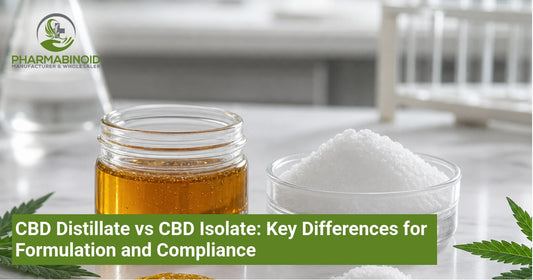
CBD Distillate vs CBD Isolate is mainly a question of composition, purity target, formulation behaviour, and compliance strategy. Both are refined hemp-derived CBD ingredients, but they are not interchangeable. CBD...
CBD Distillate vs CBD Isolate: Key Differences ...
CBD Distillate vs CBD Isolate is mainly a question of composition, purity target, formulation behaviour, and compliance strategy. Both are refined hemp-derived CBD ingredients, but they are not interchangeable. CBD...
-
CBD Distillate vs CBD Isolate: Key Differences,...
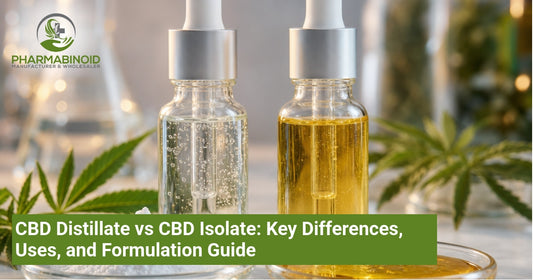
CBD Distillate vs CBD Isolate is one of the most important comparisons for brands, formulators, and buyers working with hemp-derived ingredients. Both materials can be rich in cannabidiol, but they...
CBD Distillate vs CBD Isolate: Key Differences,...
CBD Distillate vs CBD Isolate is one of the most important comparisons for brands, formulators, and buyers working with hemp-derived ingredients. Both materials can be rich in cannabidiol, but they...
-
CBD Distillate vs CBD Isolate: Key Differences ...
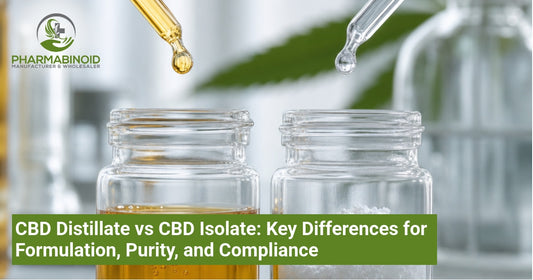
CBD Distillate vs CBD Isolate is one of the most common comparisons for brands, formulators, and buyers working with hemp-derived ingredients. Both materials can be high-quality sources of cannabidiol, but...
CBD Distillate vs CBD Isolate: Key Differences ...
CBD Distillate vs CBD Isolate is one of the most common comparisons for brands, formulators, and buyers working with hemp-derived ingredients. Both materials can be high-quality sources of cannabidiol, but...
